By Doug Esse
The following was my presentation with the Institute of Global Transformation where I present a (non-expert) overview of the Perennial Tradition. I try to describe the Perennial Tradition, present some distinctions in different views of Perennial Tradition, and how to embody any given teachings so that they are received, digested, and incarnated into a lived praxis.
Audio:
Apple: https://podcasts.apple.com/us/podcast/the-building-4th-podcast/id1620041729?i=1000629577833
Android: https://www.podbean.com/ep/pb-r6g5g-14b8ee9
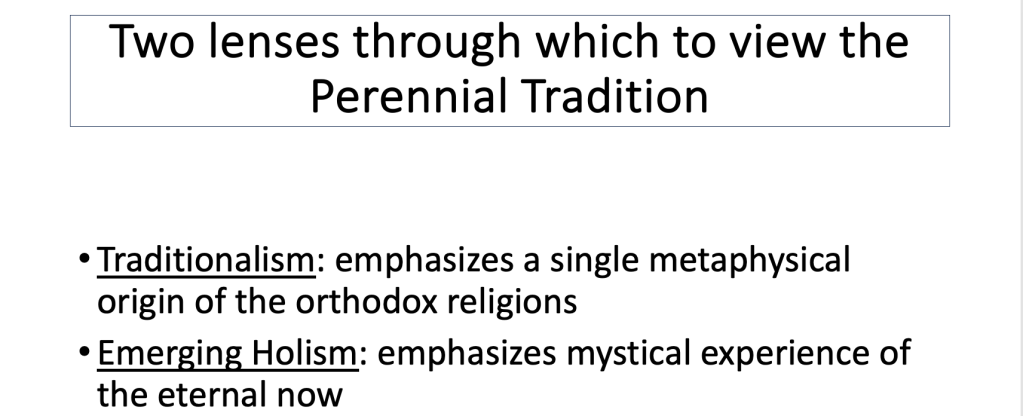
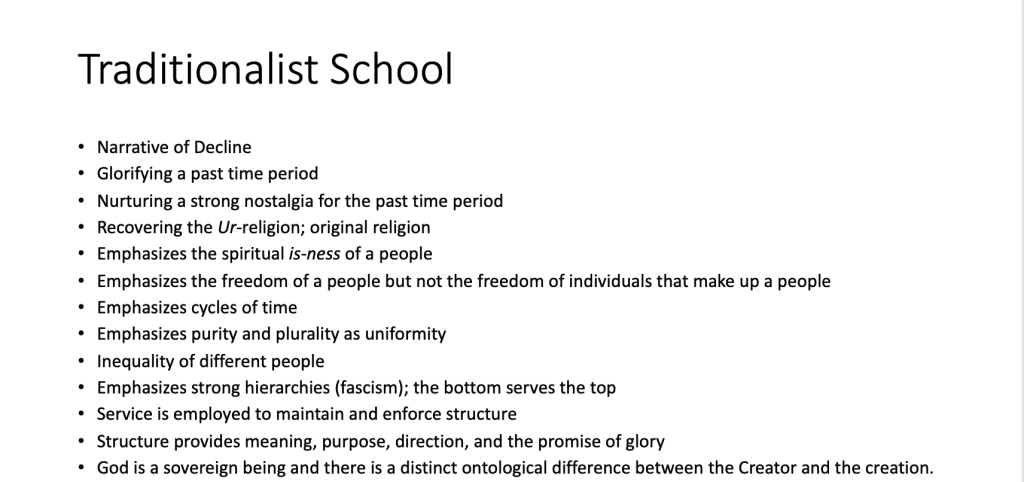
•Narrative of Decline
•Glorifying a past time period
•Nurturing a strong nostalgia for the past time period
•Recovering the Ur-religion; original religion
•Emphasizes the spiritual is-ness of a people
•Emphasizes the freedom of a people but not the freedom of individuals that make up a people
•Emphasizes cycles of time
•Emphasizes purity and plurality as uniformity
•Inequality of different people
•Emphasizes strong hierarchies (fascism); the bottom serves the top
•Service is employed to maintain and enforce structure
•Structure provides meaning, purpose, direction, and the promise of glory God is a sovereign being and there is a distinct ontological difference between the Creator and the creation.
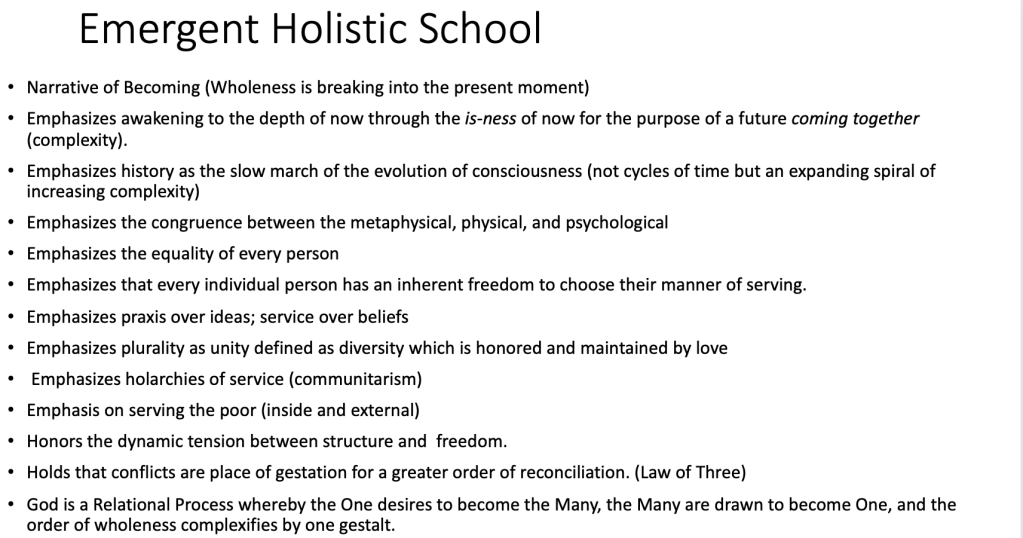
•Narrative of Becoming (Wholeness is breaking into the present moment)
•Emphasizes awakening to the depth of now through the is-ness of now for the purpose of a future coming together (complexity).
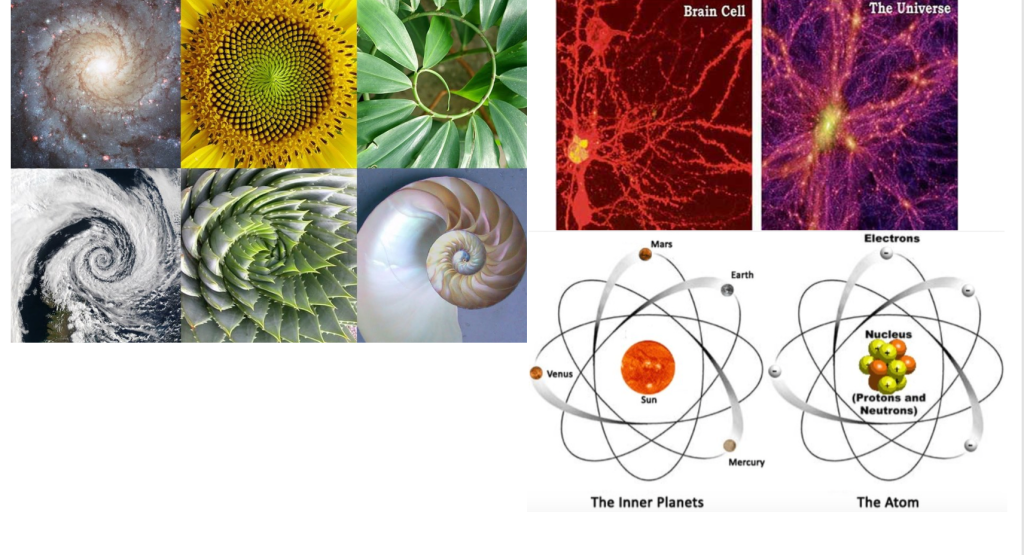
•Emphasizes history as the slow march of the evolution of consciousness (not cycles of time but an expanding spiral of increasing complexity)
•Emphasizes the congruence between the metaphysical, physical, and psychological
•Emphasizes the equality of every person
•Emphasizes that every individual person has an inherent freedom to choose their manner of serving.
•Emphasizes praxis over ideas; service over beliefs
•Emphasizes plurality as unity defined as diversity which is honored and maintained by love
• Emphasizes holarchies of service (communitarism)
•Emphasis on serving the poor (inside and external)
•Honors the dynamic tension between structure and freedom.
•Holds that conflicts are place of gestation for a greater order of reconciliation. (Law of Three)
•God is a Relational Process whereby the One desires to become the Many, the Many are drawn to become One, and the order of wholeness complexifies by one gestalt.
 Building 4th Cosmic Christ