
by Doug Scott, MA, MSW, LCSW
AUDIO OF PRESENTATION
Introduction
In a world increasingly characterized by polarization, conflict, and seemingly irreconcilable differences, many of us find ourselves trapped in repetitive cycles of struggle in our most important relationships—with ourselves, with loved ones, and with the divine. What if there exists a fundamental pattern, woven into the very fabric of reality, that could help us navigate these tensions and transform them into opportunities for growth and deeper connection? This pattern, known as the “Law of Three” or the “principle of teleopotentiation,” offers a profound framework for understanding how meaningful change and development occur—not by eliminating tension, but by engaging with it consciously and purposefully.
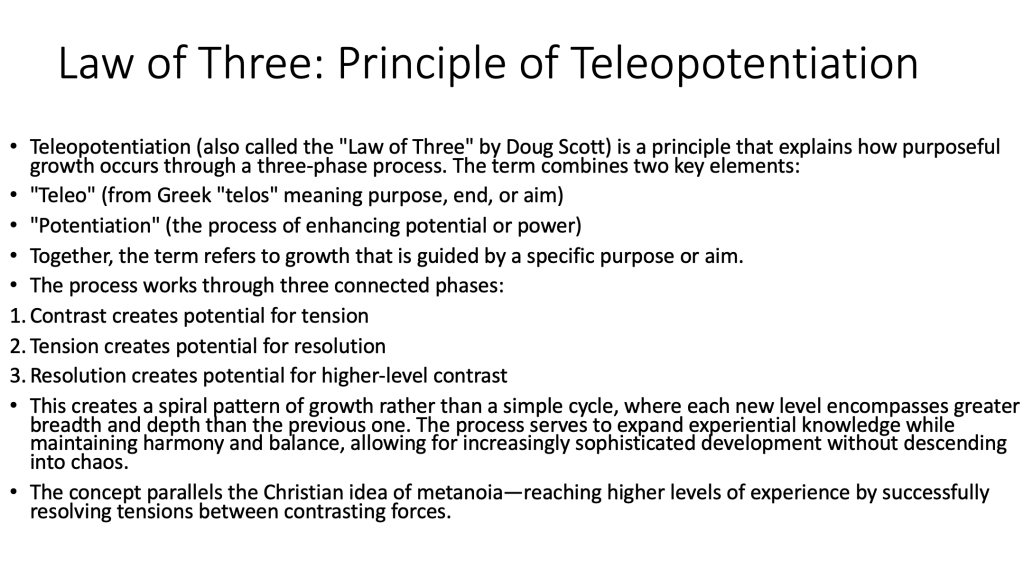
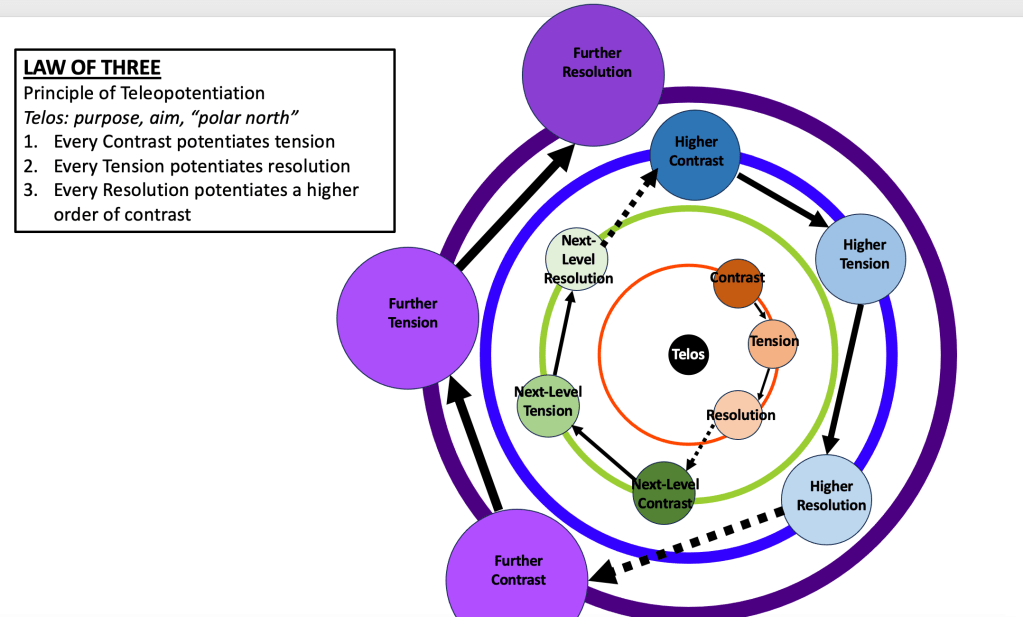
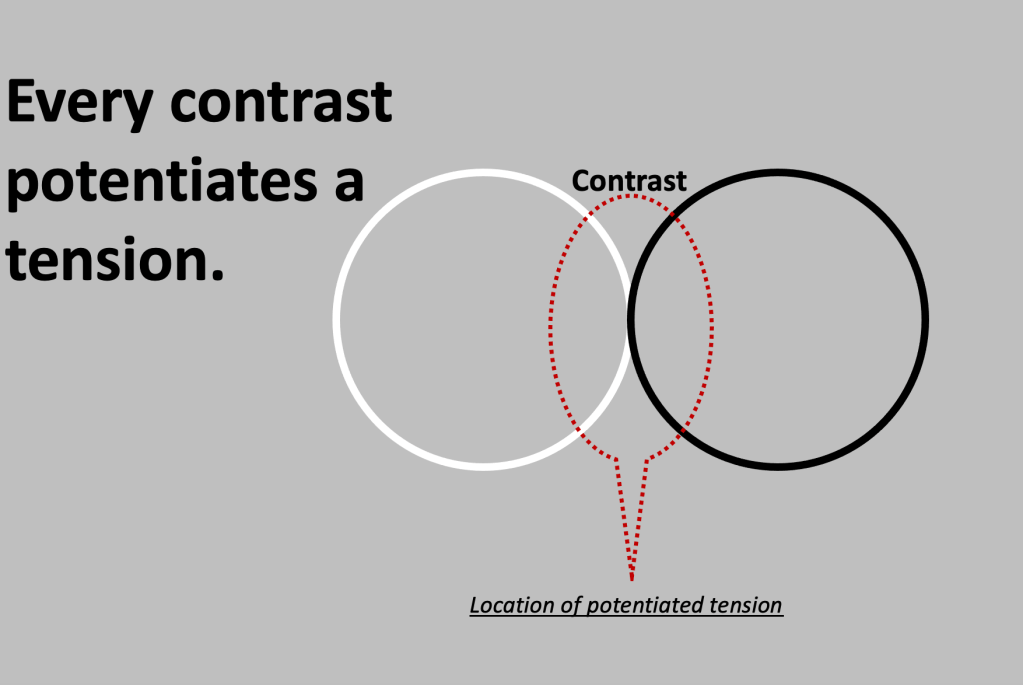
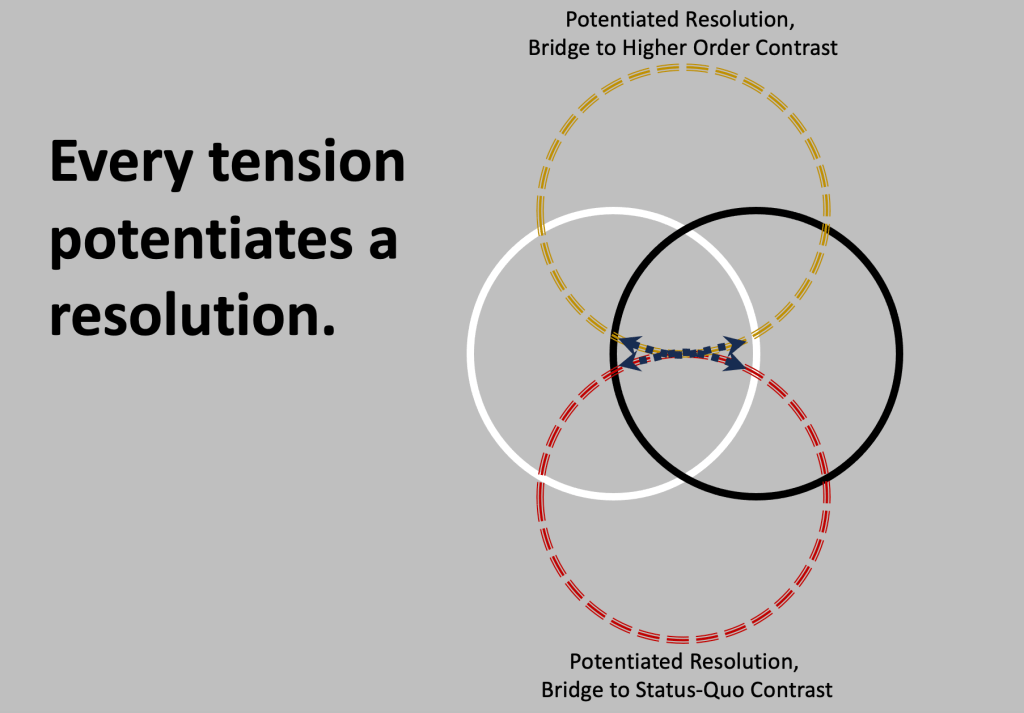
The Law of Three describes a consistent process through which all genuine growth and transformation unfold: every contrast creates potential for tension; every tension creates potential for resolution; and every resolution creates potential for a higher-level contrast. Rather than a simple back-and-forth cycle that returns to its starting point, this principle creates a spiral pattern of development, where each resolution leads to a more sophisticated and expansive level of experience. This is not mere theoretical abstraction but a practical description of how everything from biological organisms to psychological development to spiritual awakening progresses through increasingly complex levels of integration while maintaining harmony and balance.
Why does this matter? Because this pattern appears to be the fundamental operating principle behind all evolutionary processes—from the emergence of life from inorganic matter to the development of consciousness to the refinement of spiritual insight. As philosopher Alfred North Whitehead suggested, this pattern allows the universe to continuously expand its experiential knowledge of itself through increasingly sophisticated expressions while maintaining coherence. The three phases—contrast, tension, and resolution—create the basic rhythm through which all growth occurs, whether in cell division, psychological maturation, relationship development, or spiritual transformation.
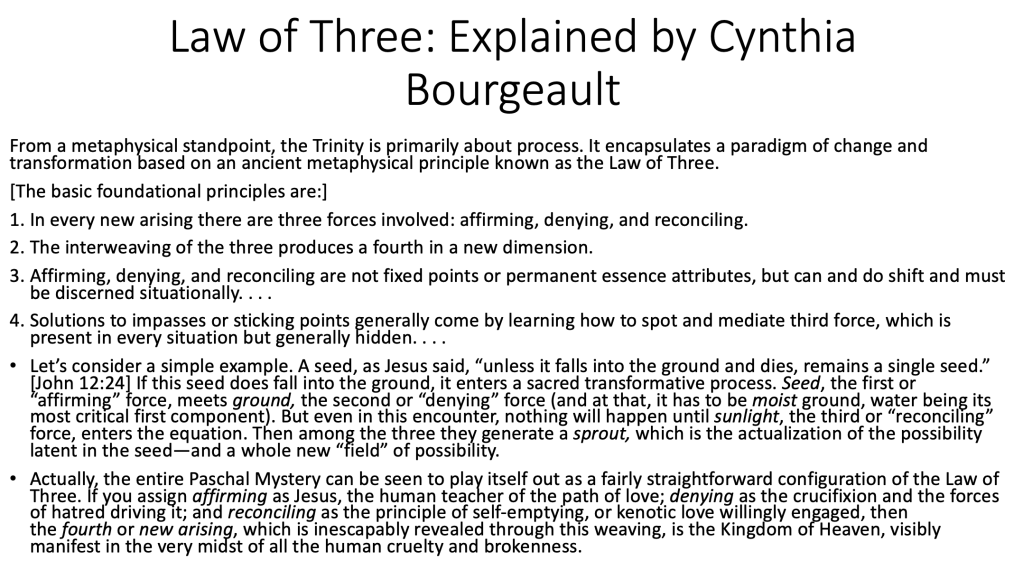
The wisdom traditions have long recognized this pattern. In Christianity, Cynthia Bourgeault reframes the Trinity not as static entities but as dynamic forces—affirming, denying, and reconciling—that generate new possibilities when they interact. Similarly, Eastern traditions speak of the interplay between opposing forces generating a “third thing” that transcends and includes its origins. What makes this principle so powerful is its universal applicability across domains and scales, suggesting it reflects something fundamental about how reality itself unfolds.
The developmental process this pattern describes is neither random nor predetermined but guided by what I term a “telos” or “polar north”—a guiding purpose that orients growth toward increasingly harmonious and complex expressions. This developmental journey isn’t about eliminating contrast or tension—these remain essential to the process—but about engaging with them consciously, from increasingly sophisticated levels of awareness, guided by our highest values and purposes.
Our exploration of this principle examines how it manifests in human relationships at multiple levels. First, in “The Tension Between Mirrors: Emily and Marcus,” we see a couple whose contrasting childhood wounds—Emily’s experience with a controlling, perfectionistic mother and emotionally absent father, and Marcus’s exposure to an alcoholic father’s unpredictable rage and a mother’s internalized depression—created unconscious patterns that played out in their relationship. Their journey illustrates how bringing these tensions into conscious awareness allowed them to transform projections into understanding, victimhood into agency, and pain into growth. Through their growing capacity to recognize ambivalence, articulate values, and maintain orientation toward a “polar north” of mutual flourishing, Emily and Marcus gradually moved up the developmental spiral, creating a relationship that healed rather than perpetuated intergenerational wounds.
In “The Sacred Deconstruction: Emily and Marcus Find God Anew,” we witness how the Law of Three operates in spiritual development. Emily’s journey from seeing God as a cosmic scorekeeper to experiencing divine presence as unconditional love, and Marcus’s evolution from emotional distance to foundational trust in divine consistency, demonstrate how our unconscious projections shape our spiritual lives. Their parallel processes of deconstruction (“death”), uncertainty (“tomb time”), and reconstruction (“resurrection”) illustrate how spiritual growth often requires passing through phases of disorientation before emerging into more expansive understanding. Their reconstructed faith integrates multiple levels of consciousness—traditional, modern, postmodern, and integral—while maintaining connection to their deepest values.
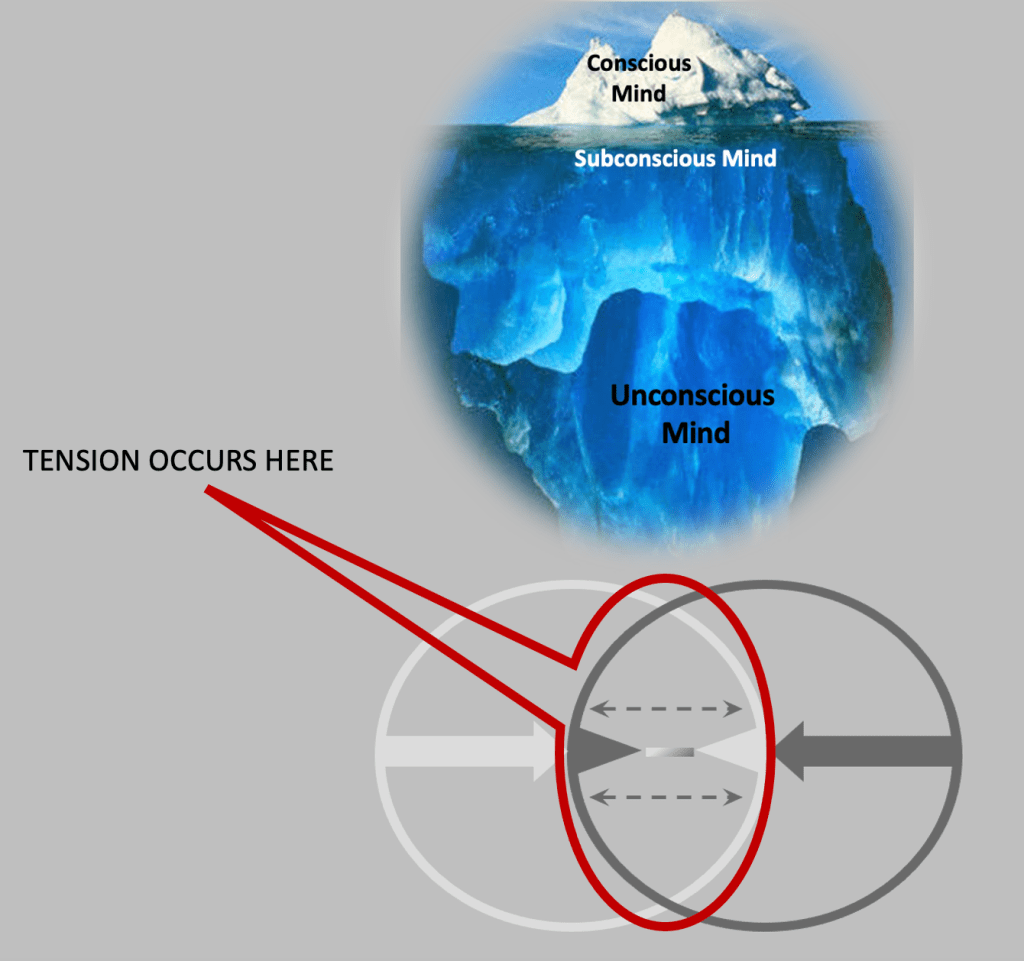
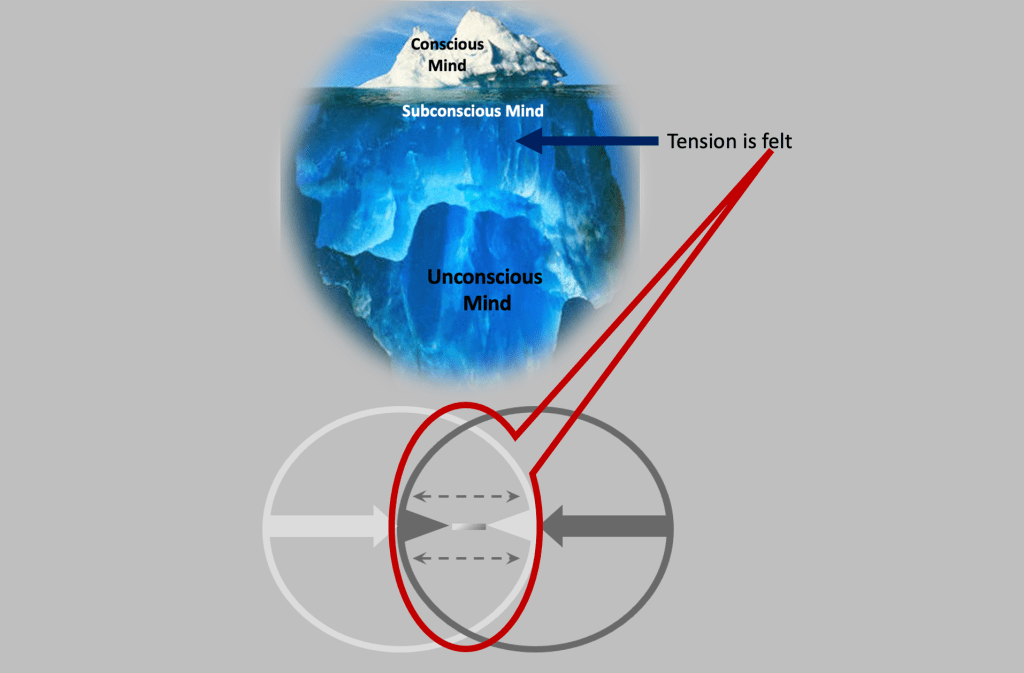
What follows in this article explores practical applications of the Law of Three across dimensions of human experience. You’ll discover how recognizing the location of tension—whether unconscious, subconscious, or conscious—dramatically affects your capacity for growth. You’ll learn specific practices for “midwifing resolution” in situations of conflict by locating ambivalence, identifying shared values, and maintaining orientation toward higher purposes. And you’ll explore how this principle can transform your understanding of spiritual development, offering a framework that honors both ancient wisdom and contemporary insights about human consciousness.
The Law of Three isn’t a technique to eliminate life’s challenges but a wisdom tradition that helps us engage with those challenges in ways that foster growth rather than stagnation, connection rather than division, and transformation rather than transmission of pain. By understanding and applying this principle, we can learn to navigate life’s inevitable tensions with greater consciousness, compassion, and creativity—transforming our relationships with ourselves, others, and the divine in the process.
The Tension Between Mirrors: Emily and Marcus
Emily Mitchell stood at the kitchen counter, her hands gripping the marble edge as she tried to steady her breathing. The argument with Marcus had erupted seemingly from nowhere – a simple question about dinner plans had somehow transformed into a heated exchange about responsibility, expectations, and accusations of not listening.
“I’m just trying to coordinate our schedules,” she had said, but somewhere beneath those words lay a current of frustration that seemed disproportionate to the situation.
Marcus had responded with that all-too-familiar withdrawal, his face shifting from engagement to a distant mask as he retreated emotionally. “Whatever you think is best,” he’d said, in that tone that wasn’t quite passive-aggressive but somehow suggested she was making too big a deal out of nothing.
Now, alone in the kitchen after Marcus had retreated to his home office, Emily found herself wrestling with a familiar cycle of emotions: anger at Marcus for shutting down, followed by guilt for pushing too hard, followed by a creeping sense of shame that whispered she was becoming just like her mother.
The Contrasting Origins
Emily had grown up in a household where excellence wasn’t celebrated—it was expected. Her mother, Catherine, ran the family with military precision, measuring love in achievements and obedience. Report cards with anything less than A’s were met with icy disappointment, not because Catherine didn’t care, but because in her mind, demanding perfection was the ultimate expression of maternal love. “I just want what’s best for you,” she would say, as Emily fought back tears over a B+ in calculus.
Her father, Richard, had provided financially but remained emotionally absent, disappearing into work and emerging only to nod approvingly at achievements or to back up Catherine’s disciplinary decisions. Their home functioned with clock-like efficiency, but warmth was the sacrificial lamb on the altar of achievement.
Marcus Reeves had navigated an entirely different chaos. His father, James, oscillated between charismatic charm and terrifying rage, with alcohol serving as the unpredictable catalyst between states. One night, James would be the life of an impromptu living room dance party; the next, he’d be hurling verbal grenades at Marcus and his mother, Linda.
Linda had once been vibrant but had gradually disappeared into herself, her unprocessed rage manifesting as debilitating fibromyalgia and chronic fatigue. She spent days in darkened rooms while Marcus learned to make himself invisible or useful, depending on which strategy might keep the peace. His natural intelligence became his escape hatch, books and academics offering a world where rules made sense and excellence brought consistent rewards.
The Contrasting Forces
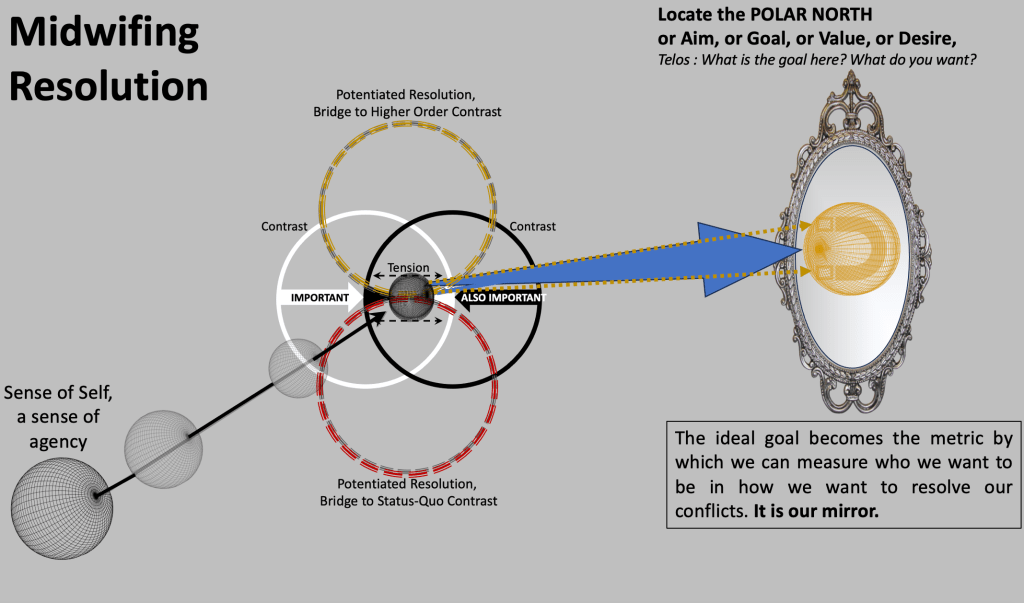
“Every contrast creates potential for tension,” Emily remembered reading in a book on relationships. She and Marcus represented contrasting adaptations to childhood wounds—she had become hypervigilant and controlling, while he had mastered the art of emotional withdrawal.
Their early relationship had felt like liberation. Marcus admired Emily’s drive and clarity, while she was drawn to his intellectual depth and calm demeanor. Each represented what the other lacked, creating a powerful affirming force in their connection.
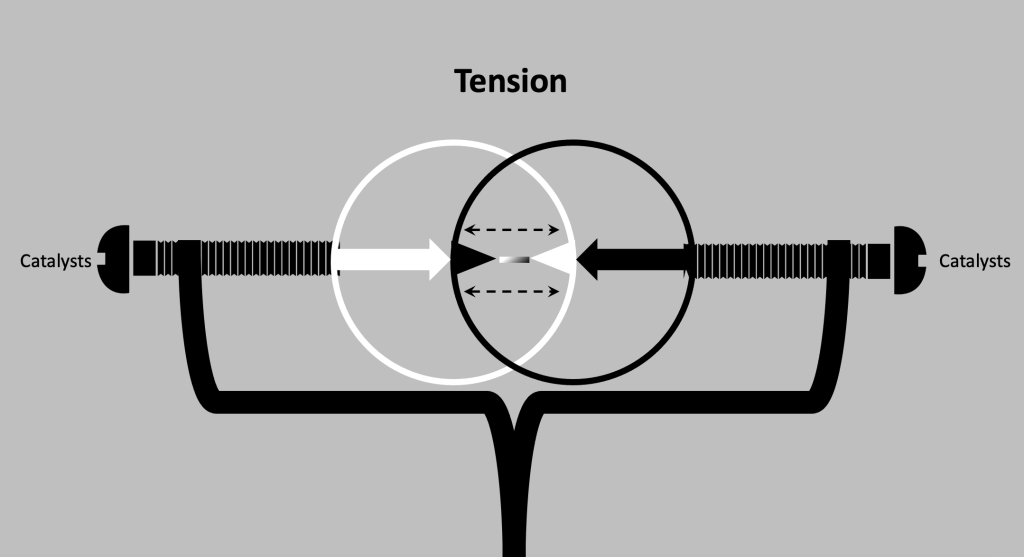
But as the honeymoon phase waned, the denying force emerged. Emily’s organizational tendencies began to feel to Marcus like the same controlling environment he’d escaped. Meanwhile, Marcus’s emotional distance triggered Emily’s deepest fears of abandonment and insignificance—the same feelings she’d experienced with her emotionally unavailable father.
“I feel like I’m always chasing you,” Emily had said during a recent argument.
“I feel like I can never do enough to meet your standards,” Marcus had countered.
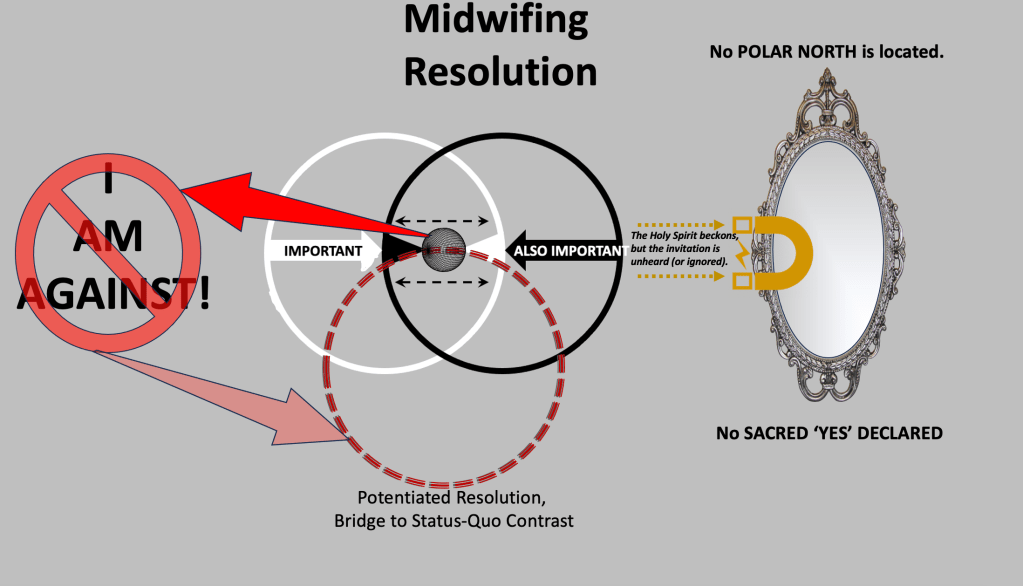
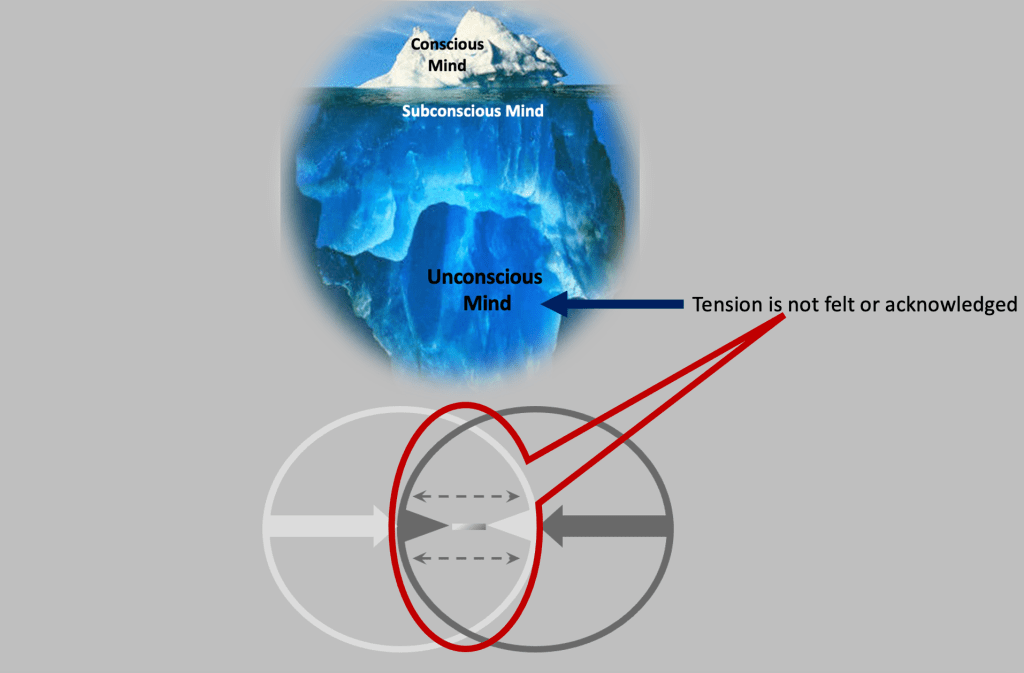
Both felt victimized by the other, neither recognizing how they were each transmitting rather than transforming their childhood pain. The tension between them remained largely in their subconscious minds—felt but unacknowledged, creating what their couple’s therapist had called “an itch that cannot be scratched.”
The Midwife Moment
The breakthrough came unexpectedly, through planning a memorial service for Marcus’s mother, who had passed away after years of declining health. As they sat together sorting through old photographs, Marcus found himself sharing stories Emily had never heard.
“She used to paint, you know,” he said, showing Emily a watercolor landscape. “Before everything got so dark for her.”
Emily looked at the vibrant colors on the canvas—so different from the faded woman she had met only a few times. “What happened?”
“The life just drained out of her year by year,” Marcus said quietly. “She never fought back against Dad. She just… absorbed it all until there was nothing left.”
Emily felt something shift as she watched tears form in Marcus’s eyes—a rare display of emotion from him. “That’s what you’re afraid of, isn’t it?” she asked gently. “That if you engage with conflict, you’ll either become your father or disappear like your mother.”
The question hung in the air between them, creating what Emily would later recognize as a “potentiated resolution” moment.
“I think,” Marcus said slowly, “I’ve been afraid of both our tempers. Yours reminds me of my father sometimes. But my withdrawal hurts you like your father hurt you by being absent.”
It was the most insight Marcus had ever voiced about their dynamic, and Emily felt a rush of connection. “We’re both so afraid of becoming what we hated in our parents that we’re triggering each other’s worst fears.”
Finding Their Polar North
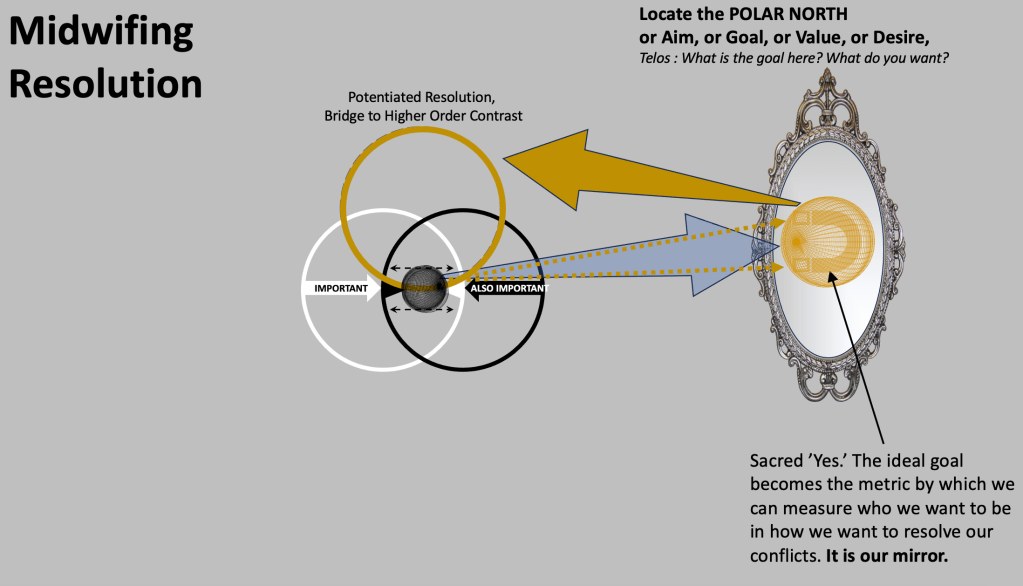
That conversation became what their therapist later called their “telos moment”—when they identified a higher purpose that could guide their resolution process. They realized they both wanted the same thing: to create a relationship unlike the ones they had grown up witnessing, one where emotions could be expressed safely and where love didn’t come with conditions.
“What if we stop seeing our conflicts as me-versus-you,” Emily suggested, “and start seeing them as us-versus-the patterns we inherited?”
This reframing represented what they would later understand as the reconciling force—the third element that could transform their opposition into growth. They weren’t just Emily and Marcus with conflicting needs; they were two people working together to heal intergenerational wounds.
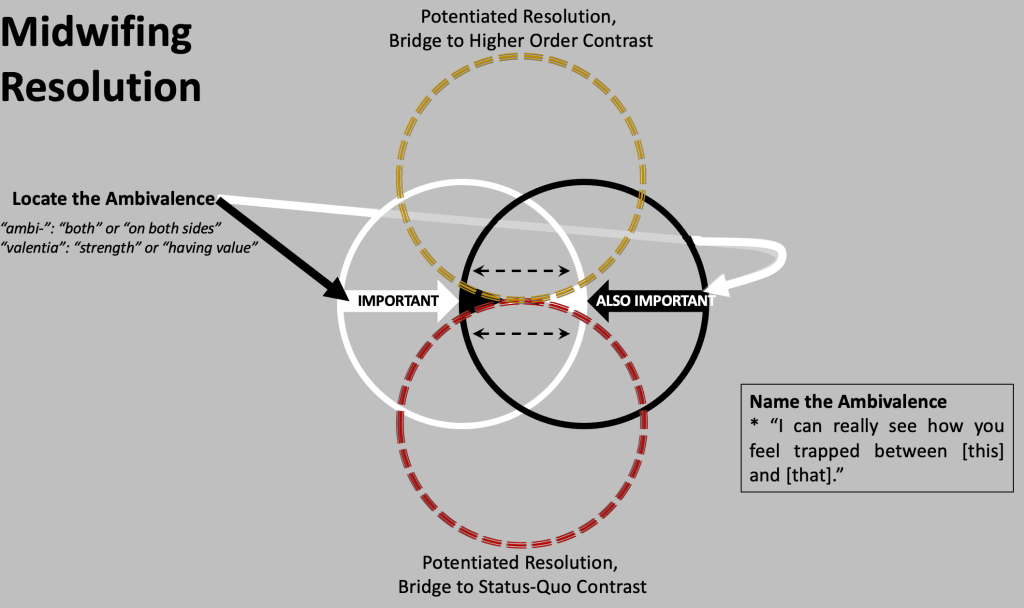
Their therapist introduced them to the concept of “ambivalence” in its truest sense—recognizing that both sides of their conflict held importance and value. Emily’s desire for clarity and communication wasn’t wrong, nor was Marcus’s need for emotional space. The challenge wasn’t to determine which person was right, but to honor both needs simultaneously.
“Name the ambivalence,” their therapist encouraged. “Acknowledge feeling trapped between important values.”
“I feel trapped between my need for connection and my fear of being controlled,” Marcus practiced saying.
“I feel trapped between my need for responsiveness and my fear of being too demanding,” Emily acknowledged.
The Spiral Upward
As they learned to work with their tensions consciously, Emily and Marcus began moving up what their therapist called the “developmental spiral.” Each successfully navigated conflict became a bridge to a higher order of relationship.
One significant breakthrough came when they discussed their shared desire to raise children in the Christian faith, despite their complicated relationships with religion. Both had grown up with images of God that mirrored their parents—for Emily, a demanding perfectionist keeping score of failures; for Marcus, an unpredictable force alternating between comfort and punishment.
“I don’t want our children to inherit our wounded images of God,” Emily said one evening. “But I don’t know how to offer something different when it’s all I know.”
This honest confession created another moment of potentiated tension. Rather than dismissing her concern or offering a quick solution, Marcus sat with the question. “Maybe healing our relationship with each other is the first step toward healing our relationship with God,” he suggested. “Maybe love is learned relationally first.”
This insight marked another turn in their developmental spiral—a resolution that created potential for engaging with an even higher-level contrast.
Becoming Midwives
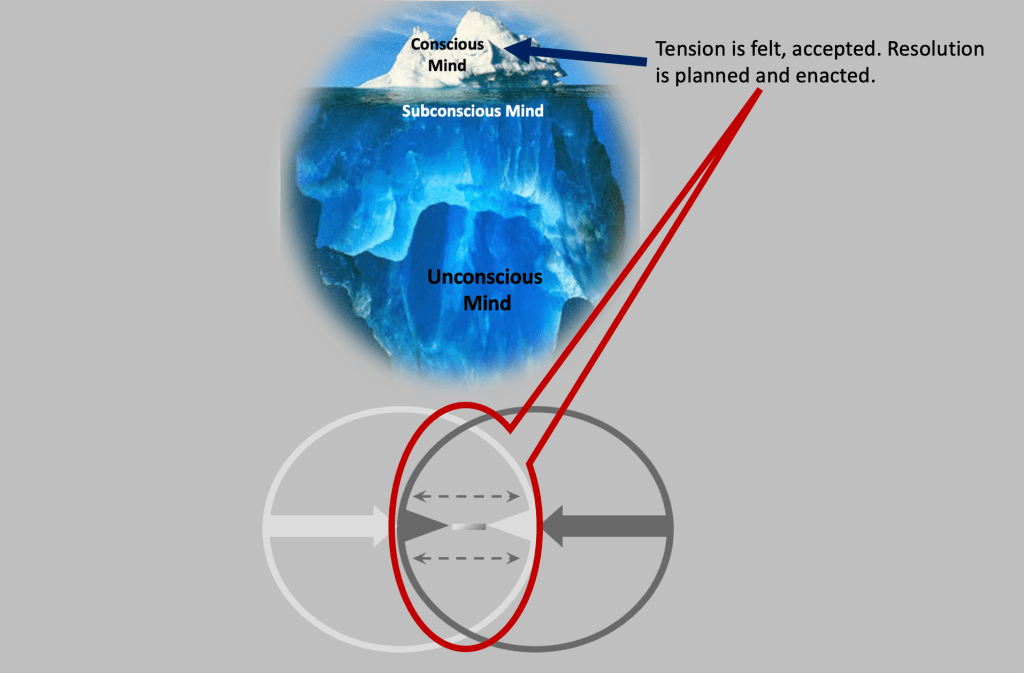
Over time, Emily and Marcus became more skilled at what they called “midwifing resolution” for each other. They learned to recognize when tensions were going unconscious—emerging as projection, blame, or withdrawal—and gently bring them into conscious awareness where they could be worked with productively.
Emily became more aware of how her critical inner voice—her internalized mother—drove her to impossible standards that she then projected onto Marcus. Marcus began to recognize how his emotional withdrawal wasn’t protection but a reenactment of his father’s emotional unavailability after the charming facade dropped away.
“We carry these internal conflicts,” their therapist explained, “but when we bring them into the light together, they become opportunities for growth rather than forces of destruction.”
The transformation wasn’t immediate or perfect. They still argued, still triggered each other’s deepest wounds. But increasingly, they could step back and recognize when they were caught in old patterns.
“I notice I’m feeling that anxious pressure in my chest,” Emily would say, catching herself before launching into criticism. “I think I’m afraid of losing control.”
“I notice I’m shutting down,” Marcus would acknowledge. “I think I’m afraid of being overwhelmed by emotion.”
These acknowledgments created space for their higher values—their “polar north”—to guide their responses rather than reacting from unconscious fear.
The New Arising
Five years into marriage, Emily and Marcus welcomed their daughter, Sophia. As they held her between them in the hospital room, they experienced what Marcus called “a fourth dimension”—a new arising that transcended their individual stories and even their relationship.
“I look at her, and I feel both terrified and hopeful,” Emily whispered. “I don’t want to pass on what hurt me.”
Marcus nodded. “I think that awareness itself is the breakthrough. Our parents didn’t know what they were passing on.”
In Sophia’s presence, they found themselves confronting a new level of contrast—between the parenting they had received and the parenting they wanted to provide. This created fresh tensions that required even more conscious resolution.
But they now had tools their parents had never possessed—not just therapeutic concepts but a lived experience of transforming pain rather than transmitting it. They had discovered that the Law of Three wasn’t just a philosophical framework but a practical path for moving from unconscious reactivity to conscious growth.
“Every contrast creates potential for tension,” Emily often reminded Marcus when they found themselves in conflict. “Every tension creates potential for resolution.”
“And every resolution creates potential for a higher-level contrast,” Marcus would complete the principle, smiling at how far they had come.
Together, they continued their spiral journey upward, not eliminating contrast or tension from their lives, but learning to engage with it consciously—creating from their inherited pain a legacy of awareness, intention, and love that would shape not just their lives but generations to come.
The Sacred Deconstruction: Emily and Marcus Find God Anew
Emily’s Journey: From Performance to Presence
The first crack in Emily’s image of God appeared during a particularly stressful work deadline. She had been praying nightly for strength to complete a major project, meticulously following her spiritual disciplines as she always had—morning devotionals, scripture memorization, Sunday service attendance. All the things that should have pleased the God she had known since childhood.
Yet lying awake at 3 AM, overwhelmed by anxiety despite her faithful adherence to the spiritual “rules,” a troubling question surfaced: What if God isn’t impressed by my spiritual performance any more than He’s impressed by my professional performance?
The thought was both terrifying and oddly liberating. It reminded her of something her therapist had mentioned about her relationship with Marcus—that she often related to him through achievement rather than connection.
“I think I’ve been treating God the way my mother treated me,” Emily confessed during a session with her spiritual director, a gentle woman named Sarah who specialized in helping people through faith transitions. “Like He’s keeping score, waiting for me to make a mistake.”
“That’s a profound insight,” Sarah acknowledged. “We often project our earliest authority relationships onto God without realizing it. Would you be willing to explore what might lie beyond that image?”
This question marked the beginning of Emily’s deconstruction process—what Doug Scott might call “the death of old beliefs.” Her image of God as cosmic scorekeeper had provided certainty and structure. She knew exactly what God wanted (perfection) and exactly how she was failing to provide it (in countless ways). There was comfort in that clarity, even as it exhausted her.
As Emily began questioning this fundamental image, other aspects of her faith started unraveling as well. The sermons at her church about God’s unwavering standards suddenly felt less like spiritual truth and more like projections of human rigidity. The emphasis on moral purity and doctrinal certainty began to seem at odds with Jesus’s embrace of the marginalized and his challenges to religious authorities.
“I feel like I’m in free fall,” Emily told Sarah during a particularly difficult session. “If God isn’t who I thought He was, then who am I? What’s the point of all my striving?”
Sarah recognized this as what Scott described as “tomb time”—that necessary period of uncertainty and transformation between deconstruction and reconstruction. “This is holy ground,” she assured Emily. “This discomfort is not failure; it’s growth.”
Emily found herself drawn to different spiritual voices during this period—contemplatives and mystics who spoke of God’s presence rather than God’s demands. She began practicing centering prayer, learning to sit in silence without agenda or achievement. At first, the practice felt excruciating—a waste of time that produced nothing tangible. But gradually, she began experiencing moments of deep peace that couldn’t be manufactured or earned.
“I think I’ve been trying to earn what was already being freely given,” she realized one morning after a particularly profound prayer experience. “What if God is less concerned with my moral performance and more interested in my capacity for presence and love?”
This insight marked Emily’s movement toward what Scott called “post-postmodern” or “integral” consciousness in her faith journey. She began reconstructing an image of God that integrated her earlier understandings but transcended their limitations—a God who valued order and truth (traditional) and scientific understanding (modern) and inclusivity (postmodern), yet couldn’t be reduced to any single framework.
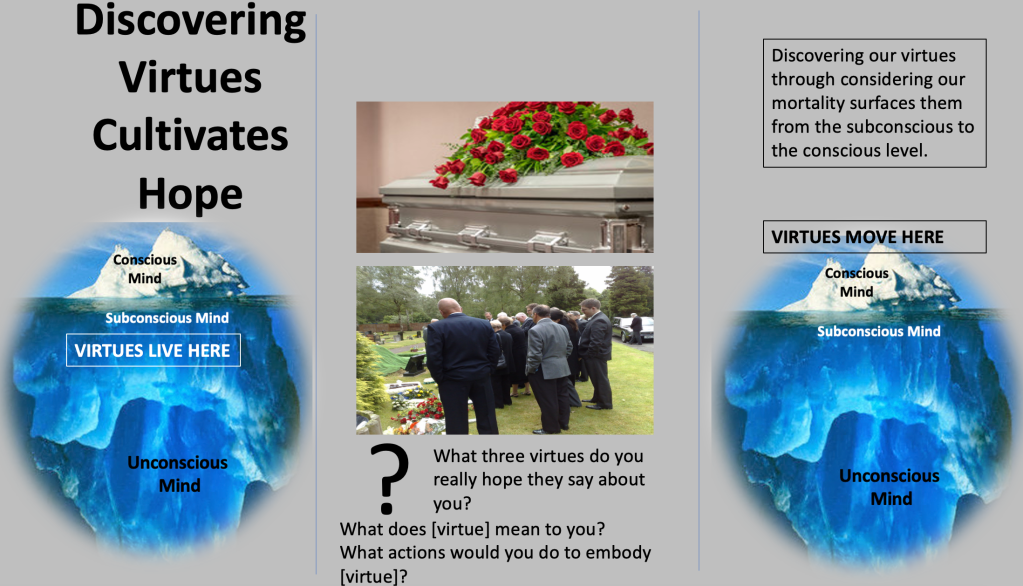
Most importantly, Emily began recognizing that her deepest values—authenticity, compassion, growth—were not just her personal preferences but reflections of divine qualities. The virtues she hoped to embody weren’t external standards imposed by a demanding deity but expressions of her truest self, created in God’s image.
“I’m beginning to think that God doesn’t want my perfection,” she shared with Marcus one evening. “I think He wants my authentic presence—my whole self, including the parts I’ve been trying to hide or fix.”
The reconstruction wasn’t instant or complete. Emily still experienced moments of reverting to her old performance-based spirituality, particularly during stress. But increasingly, she found herself able to recognize these regressions with compassion rather than shame.
When she and Marcus welcomed their daughter Sophia, Emily was struck by a profound realization about God’s love. Looking at her newborn, she felt an overwhelming love that had absolutely nothing to do with achievement or performance. Sophia hadn’t accomplished anything; she simply existed, and that existence alone was worthy of complete love.
“Is this how God feels about us?” she wondered aloud to Marcus as they watched their daughter sleep. “Not waiting for us to earn His love, but loving us simply because we exist?”
This insight became the cornerstone of Emily’s reconstructed faith—a God whose love preceded her efforts rather than resulting from them, whose presence offered belonging before behavior, who desired connection more than compliance. She found herself drawn to Jesus’s incarnation as a profound statement about divine vulnerability and presence rather than power and judgment.
“The cross isn’t about God demanding payment,” she realized. “It’s about God entering into our suffering rather than remaining distant from it.”
As Emily’s image of God transformed, so did her relationship with herself and others. The harsh inner critic that had driven her relentless achievement softened into a more compassionate guide. Her tendency to judge others by their productivity or moral performance gave way to a deeper curiosity about their inherent dignity and worth.
Even her relationship with Marcus shifted as she stopped trying to “fix” him or manage his spiritual journey. She found herself able to hold space for his questions and doubts without anxiety, recognizing that growth often required passing through uncertainty.
“I think I’m learning to love more like the God I’m coming to know,” Emily reflected, “not through control or demand, but through presence and acceptance.”
Marcus’s Journey: From Unpredictability to Trustworthiness
Marcus’s deconstruction began differently than Emily’s—not with questioning but with emotional distance. Throughout his life, God had seemed as unpredictable as his alcoholic father—sometimes the source of transcendent comfort, other times seemingly absent or arbitrary. Rather than confronting this dissonance directly, Marcus had intellectualized his faith, focusing on theological concepts and historical analyses rather than personal relationship.
“I notice you speak about God in the third person,” his therapist observed during a session focused on Marcus’s spiritual life. “As an object of study rather than a subject of relationship.”
The comment caught Marcus off guard. “Isn’t that appropriate?” he asked. “God is the ultimate Other, after all.”
“Perhaps,” the therapist replied. “But I wonder if keeping God at that analytical distance serves another purpose for you.”
The question lingered with Marcus for weeks, eventually prompting a realization: he had been protecting himself from divine disappointment or abandonment by maintaining emotional distance from God, just as he had learned to do with his unpredictable father.
This insight initiated what Doug Scott would call Marcus’s “death” phase—the beginning of deconstruction. If his intellectual approach to faith was primarily a defense mechanism rather than authentic engagement, what might lie beneath it?
Unlike Emily, whose deconstruction involved questioning specific beliefs, Marcus’s process centered on his emotional relationship with God. He realized that beneath his theological sophistication lay a deeply embedded image of God as unpredictable and potentially unsafe—a deity who might offer profound connection one moment and crushing judgment the next.
“I think I’ve been afraid to trust God,” Marcus admitted during a men’s retreat focused on spiritual authenticity. “Not intellectually, but emotionally. I’ve never known if I’d get the ‘good God’ or the ‘angry God’ on any given day—just like with my dad.”
This confession marked Marcus’s entry into what Scott called “tomb time”—that necessary space between old understandings and new emergence. During this period, Marcus found himself drawn to books and teachers discussing God’s consistency and trustworthiness rather than divine power or judgment.
“What if God’s nature isn’t capricious at all?” his spiritual mentor suggested. “What if divine love is the most reliable constant in existence?”
The possibility was both attractive and terrifying. If God was truly trustworthy, Marcus would have to risk vulnerability rather than maintaining safe intellectual distance. He would need to engage his faith not just with his mind but with his emotions and body as well—precisely the integration he had always avoided.
Marcus began exploring contemplative practices that engaged his whole being rather than just his intellect. He started with walking meditation, finding that physical movement helped him stay present when silent sitting triggered too much anxiety. He tried painting as prayer, allowing colors and forms to express spiritual longings he couldn’t yet verbalize.
“I think I’ve been operating at what Scott would call the ‘modern’ level of consciousness in my faith,” Marcus reflected in his journal. “Using reason and analysis to create distance from the traditional fearful God of my childhood. But both approaches miss something essential about direct relationship and experience.”
Marcus’s reconstruction began taking shape as he integrated insights from multiple levels of consciousness:
- The sense of awe and mystery from traditional faith
- The intellectual rigor and critical thinking from modernity
- The emphasis on inclusivity and questioning power structures from postmodernity
- The capacity to hold paradox and complexity from what Scott called “integral” consciousness
Unlike Emily, who reconstructed her faith primarily around the concept of divine love, Marcus found himself drawn to the theme of divine trustworthiness—a God whose character remained consistent even when circumstances changed.
“I’m beginning to think that God’s goodness isn’t random or conditional,” he shared with Emily. “It’s the unchanging foundation beneath everything else.”
This emerging image of God as fundamentally trustworthy helped Marcus address the emotional vigilance that had characterized his entire life. With a father whose mood could swing dramatically based on alcohol consumption, Marcus had developed a hyperawareness of emotional cues and potential threats. This vigilance had served as protection in childhood but had become a barrier to intimacy in adulthood.
As his trust in divine consistency grew, Marcus found himself less anxious about potential abandonment or rejection. This gradual healing influenced not only his relationship with God but also his connections with Emily and eventually their daughter Sophia.
The birth of Sophia presented both challenge and opportunity for Marcus’s reconstructed faith. Holding his newborn daughter, he felt a surge of protective love alongside a wave of terror—what if he became like his father? What if his love proved inconsistent or harmful?
In this moment of vulnerability, Marcus experienced what he later described as divine reassurance—not as a voice or vision, but as a deep knowing that the love he felt for Sophia reflected something true about God’s love for him. If he, with all his flaws and wounds, could love his daughter this fiercely and consistently, how much more might God’s love remain steadfast?
“I think God’s love is more like gravity than like mood,” Marcus explained to Emily as they discussed their evolving spiritual understandings. “It’s not something that comes and goes based on divine whim or our behavior. It’s the constant force that holds everything together, whether we acknowledge it or not.”
This reconstructed image of God as fundamentally trustworthy transformed Marcus’s approach to both spirituality and relationships. Rather than maintaining vigilant control or emotional distance as protection against potential abandonment, he began practicing what his spiritual director called “strategic vulnerability”—choosing to trust despite past experiences of betrayal or disappointment.
“The opposite of the anxiety I inherited isn’t certainty,” Marcus realized. “It’s trust in the face of uncertainty.”
As Marcus allowed his reconstructed faith to influence his relationships, Emily noticed profound changes in how he engaged with both her and Sophia. His tendency toward emotional withdrawal during conflict diminished as his trust in the resilience of connection grew. His comfort with expressing affection and delight increased as his fear of vulnerability decreased.
“I think I’m learning that God is not my father,” Marcus shared during a particularly meaningful spiritual direction session. “And that realization is helping me become a better father than the one I had.”
Their Shared Reconstruction
While Emily and Marcus each navigated unique deconstruction journeys shaped by their distinct family wounds, their reconstructed faith shared several common elements that strengthened both their individual spiritual lives and their relationship:
- An Emphasis on Divine Presence: Both found themselves drawn to a God of presence rather than performance, one who desired connection more than conformity.
- Integration of Multiple Ways of Knowing: Both learned to engage faith not just through doctrine or intellect but also through embodied practice, emotional experience, and communal wisdom.
- Comfort with Mystery and Paradox: Both developed what Scott would call an “integral” or “metamodern” capacity to hold seemingly contradictory truths without needing to resolve them prematurely.
- Values as Spiritual Compass: Both discovered that articulating and embodying their deepest values—authenticity, compassion, growth, trustworthiness—provided orientation during times of spiritual uncertainty.
- Vulnerability as Spiritual Practice: Both recognized that divine vulnerability, exemplified in the incarnation and crucifixion, invited their own vulnerability rather than power or control.
“I think we’re creating a spiritual legacy for Sophia that’s quite different from what either of us inherited,” Emily reflected as they watched their daughter playing in the backyard.
Marcus nodded. “We’re not giving her answers as much as we’re trying to model how to live with questions. Not certainty, but faithful presence in uncertainty.”
“That sounds like what Scott would call ‘holding tension,'” Emily smiled, referencing a concept from their therapy that had become central to their spiritual lives as well.
As they continued their individual and shared spiritual journeys, Emily and Marcus recognized that reconstruction wasn’t a destination but an ongoing process—a spiral of growth that continually integrated new insights while honoring the wisdom gleaned from previous stages. What remained constant was not their specific theological formulations but their commitment to authentic engagement with divine mystery and with each other.
“Every resolution creates potential for a higher-level contrast,” Marcus often reminded Emily when they encountered new spiritual questions or challenges.
“And every contrast creates potential for deeper understanding,” Emily would respond, grateful for a faith journey spacious enough to hold both their wounds and their wonder, their doubts and their devotion, their unique paths and their shared destination.
In their reconstructed faith, they had not eliminated contrast or tension, but had learned to engage with it consciously—transforming it from a source of anxiety into a catalyst for growth, from a threat to be feared into an invitation to be embraced. And in doing so, they were gradually healing not just their relationship with each other, but their understanding of the divine relationship that encompassed and sustained them all.
 Building 4th Cosmic Christ