by Doug Scott, MA, MSW, LCSW
Introduction
The Enneagram has emerged as one of the most important wisdom traditions for understanding human personality and spiritual development. More than a mere personality typing system, it offers a dynamic map of consciousness that reveals our core motivations, fears, and pathways to transformation. When integrated with the concepts of the Floating Self, Anchored Self, and Significant Self, the Enneagram becomes an even more powerful tool for psychological insight and spiritual growth.
This presentation explores how each of the nine Enneagram types represents a distinct expression of consciousness—what some spiritual traditions might call a “face of the Universal Christ”—and how each type navigates the journey from the Floating Self to the Anchored Self. We will examine how our Significant Self oscillates between these two states and how awareness of this movement creates opportunities for deeper integration and spiritual freedom.
The Universal Christ: Unity in Diversity
Before delving into the specifics of each Enneagram type, it’s important to understand the concept of the Universal Christ as it relates to the Enneagram. The Universal Christ represents the understanding that divine presence (what many call “God”) is both unified and diverse—a “plurality within unity.” Reality itself is fundamentally one, but this oneness contains within it the infinite diversity of expression we observe in the universe.
Unity is not uniformity. If everything were identical, there would be no possibility for experience or relationship. Using the metaphor of white light, which requires being broken into the spectrum of colors to experience itself, we can understand that true unity is “diversity maintained and balanced by love.” This provides the philosophical foundation for understanding the Enneagram’s nine distinct patterns of human consciousness as complementary rather than competing expressions of divine reality.
From this perspective, the Enneagram becomes a tool for recognizing how humans have developed different strategies for making sense of reality. The vastness of existence requires us to develop particular angles or entry points for understanding. As we become more aware of our own strategy or pattern, we gain the ability to access and appreciate the perspectives and gifts of other types as well.
The Triune Nature of the Self
The perennial wisdom tradition identifies what we might call a “Triune nature of the self”—a three-part understanding of human consciousness that aligns beautifully with the Enneagram system:
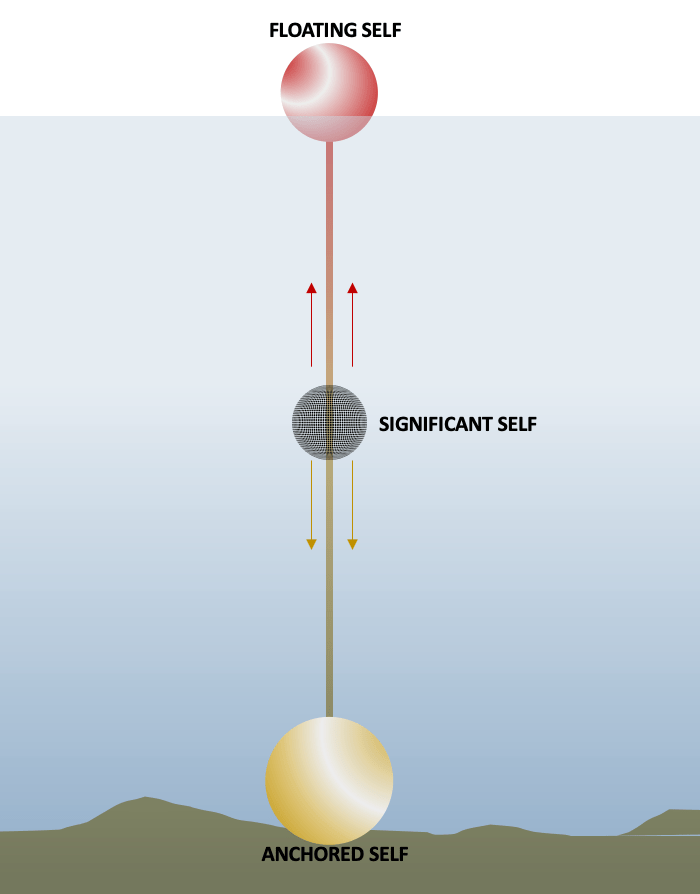
- The Floating Self: This is the false self, the ego-driven, reactive, and unintegrated aspects of personality. It operates from a rigid, narrow, and fragile perspective. The Floating Self is constantly concerned with its importance, easily offended, defensive, and seeking validation. Its ethos is “transcend and exclude”—it attempts to rise above others by separating from them. The Floating Self corresponds to what Richard Rohr calls the “false self” and what the Enneagram identifies as our compulsive patterns or “vices.”
- The Anchored Self: This is the true self, who we really are at the deepest levels, below any of our identities or roles. It is the “isness of you,” the beingness that remains when all else is stripped away. Living from the Anchored Self brings depth and freedom from egoic needs. From this place, it’s no longer about “me” but about doing good without taking ownership of successes or failures. Its ethos is “include and transcend”—it rises above limitations by embracing them. The Anchored Self corresponds to what many spiritual traditions call the “true self” and what the Enneagram identifies as our virtues and gifts.
- The Significant Self: This is the sense of self that a person operates from, capable of moving or oscillating between the depths of the Anchored Self and the surface of the Floating Self. It makes sense and meaning between “who I really am” (Anchored Self) and “what my ego wants me to be” (Floating Self). The perennial tradition offers a path for the Significant Self to learn how to “position itself within the depth of the Anchored Self” rather than being caught in the Floating Self.
Most people live primarily from their Floating Self unless they develop awareness of this pattern. Importantly, the Floating Self is not something to eliminate—it belongs and can be used by the Anchored Self to do good in the world when properly integrated. The spiritual journey involves bringing the Significant Self into alignment with the Anchored Self rather than allowing it to be pulled into the reactivity of the Floating Self.
The Enneagram System: Nine Life Strategies
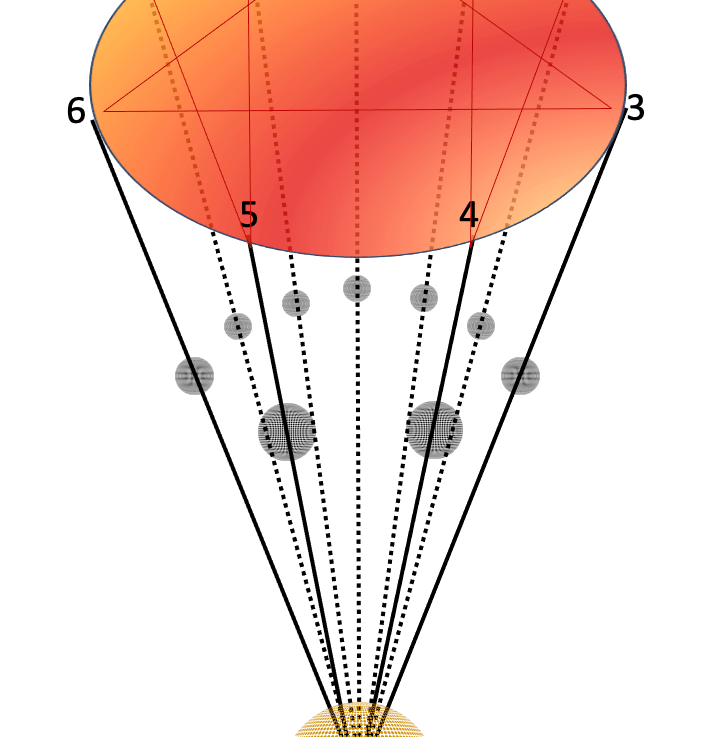
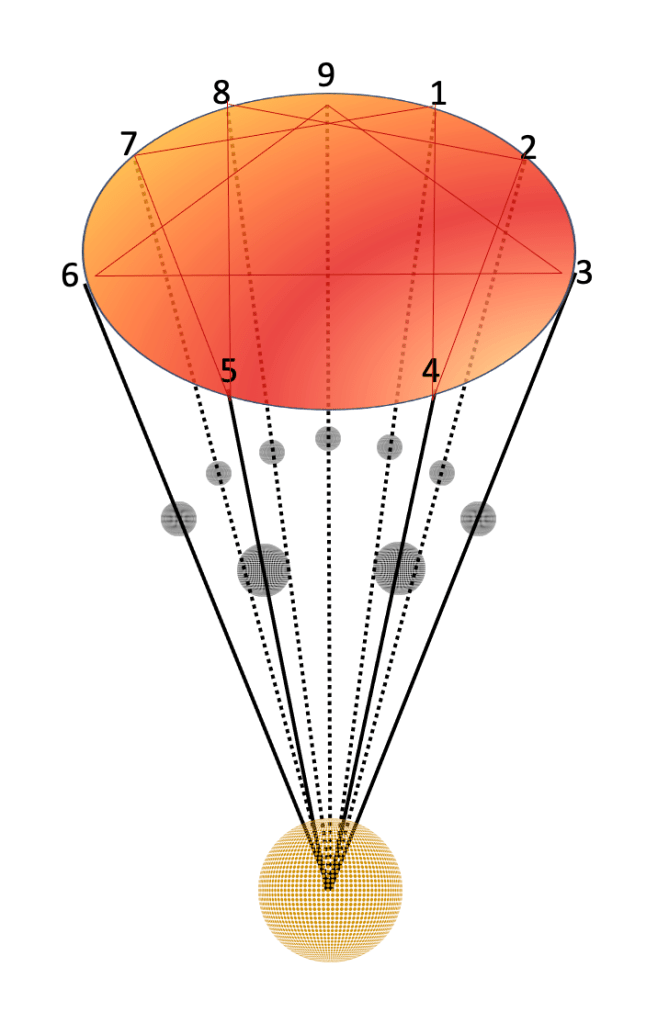
The word “Enneagram” derives from Greek roots: “ennea” meaning nine and “gram” meaning shape or figure. The system is represented by a geometric figure—a circle containing an irregular hexagon and a triangle—with nine points equally spaced around the perimeter.
The Enneagram identifies nine distinct life strategies or ways of perceiving and responding to reality. Each number on the Enneagram represents a different personality type, each with its own core motivations, fears, gifts, and challenges. While we all have aspects of all nine types within us, most individuals develop and “make an art form” of one dominant type. This primary type emerges through a combination of nature (genetics), nurture (childhood experiences and conditioning), and free will (our own choices about how to navigate life).
The purpose of learning about the Enneagram is not to put people in boxes but rather to help them get out of the unconscious boxes they’re already in. By bringing awareness to our habitual patterns, we gain freedom to access the positive qualities of all nine types and to move from the Floating Self (reactive, compulsive) to the Anchored Self (responsive, integrated).
Three Centers of Intelligence
One of the key organizational principles of the Enneagram is the division of the nine types into three centers of intelligence or perception. Each center represents a different primary mode of processing reality:
The Instinctive Center (Types 8, 9, 1)
Types in the Instinctive Center process reality primarily through gut reactions and immediate impressions. They tend to be action-oriented and have a strong connection to physical energy and bodily wisdom. Their challenges include becoming overly attached to their first impressions and having difficulty shifting perspectives once they’ve formed a judgment.
When operating from the Floating Self, Instinctive Center types become rigid, reactive, and dominated by anger in its various forms. When operating from the Anchored Self, they manifest as grounded, principled action that serves the greater good.
The Feeling Center (Types 2, 3, 4)
Types in the Feeling Center process reality primarily through emotional awareness. They are highly attuned to the feelings and needs of themselves and others, though they often struggle to distinguish between their own authentic emotions and those they believe others expect them to have.
When operating from the Floating Self, Feeling Center types become preoccupied with image, relationship, and identity in ways that create suffering. When operating from the Anchored Self, they manifest authentic connection, creative expression, and heartfelt service.
The Thinking Center (Types 5, 6, 7)
Types in the Thinking Center process reality primarily through conceptual understanding and mental frameworks. They approach life through analysis, planning, and theorizing. Their challenge is that they can become disconnected from their instincts and feelings, living primarily in their mental constructs rather than immediate experience.
When operating from the Floating Self, Thinking Center types become trapped in anxiety, doubt, and mental projections that separate them from direct experience. When operating from the Anchored Self, they offer clear perception, visionary planning, and courageous wisdom.
Understanding these three centers provides a foundation for appreciating how different types filter and process experience. Fully integrated individuals can access all three centers fluidly, while less integrated individuals remain stuck in the particular patterns and limitations of their dominant center.
The Nine Types as Faces of Christ
Let’s now explore each of the nine Enneagram types in detail, looking at how each represents a different “face” of Christ consciousness and how each navigates the movement between Floating Self and Anchored Self.
Type One: The Reformer/Perfectionist
The Gift and Shadow
Type One represents “the part of you that holds high values and sees what is ideal.” Ones are principled, ethical, and oriented toward improvement. They possess a keen eye for what needs correction and refinement in themselves and the world around them.
In the context of Christ consciousness, the One represents divine perfection and integrity—the aspect of the sacred that upholds moral order and ethical truth.
The Floating Self of the One
At the level of the Floating Self, Ones struggle with anger, resentment, rigid thinking, and uncompromising positions. Their vice is anger, though it’s often repressed and channeled into criticism rather than expressed directly. They can become judgmental, seeing the world in black and white terms, and struggle to tolerate imperfection or deviation from their standards.
Ones at the Floating Self level often adopt a severe, critical demeanor. They rarely smile or appreciate humor because they take the responsibilities of life so seriously. Their belonging was often reinforced in childhood when they were the “good” child who followed rules and maintained high moral standards. This conditioning leads adult Ones to be highly self-disciplined but also self-critical, as nothing—including their own performance—ever quite measures up to their ideal.
Ones typically present as Type A personalities who radiate a sense of judgment. Others often feel evaluated in their presence, though Ones are typically far more critical of themselves than of anyone else. This self-criticism stems from their core belief that reality should match their ideal vision, and when it inevitably falls short, resentment and frustration arise.
Movement of the Significant Self
For Ones, the Significant Self tends to be pulled into the Floating Self whenever:
- They encounter disorder, mess, or carelessness
- They feel their standards are being compromised
- Others seem indifferent to important principles or values
- They feel their criticisms are being ignored
- Time pressure makes perfection impossible to achieve
The Significant Self of Ones moves toward the Anchored Self when they:
- Recognize that perfection is not attainable in this life
- Accept that people change at different paces and cannot be forced
- Question whether self-criticism actually produces peace and belonging
- Get in touch with feelings beneath anger, particularly grief and sadness
- Recognize that when angry at others, they are often primarily angry at themselves
The Anchored Self of the One
At the level of the Anchored Self, Ones manifest serenity, conscientiousness, and principled living without rigidity. They maintain their high standards and ethical clarity but hold them with grace rather than judgment. Anchored Ones can “let their hair down” and enjoy life’s imperfections while still working constructively for meaningful improvement.
The Anchored One embodies the perfection of divine consciousness not through flawlessness but through wholeness—the integration of both light and shadow aspects of experience. They understand that true integrity comes not from meeting an external standard but from honest alignment between inner and outer life.
The Path of Integration
For Ones, the journey from Floating Self to Anchored Self involves:
- Developing self-compassion: Learning to treat themselves with the same kindness they would offer a beloved child or friend
- Embracing humor and playfulness: Finding joy in the messiness of life rather than battling against it
- Distinguishing between moral imperatives and preferences: Clarifying when something is truly a matter of right and wrong versus simply a personal preference
- Practicing acceptance: Developing the ability to accept what cannot be changed while working constructively on what can
- Cultivating servant leadership: Asking others what they need rather than imposing solutions
Type Two: The Helper/Giver
The Gift and Shadow
Type Two represents “the part of you that loves.” Twos are empathetic, caring, and relationally focused. They possess an intuitive understanding of others’ needs and readily offer support and assistance.
In the context of Christ consciousness, the Two represents divine love and compassion—the aspect of the sacred that reaches out to comfort, heal, and support.
The Floating Self of the Two
At the level of the Floating Self, Twos struggle with pride, manipulation, and smothering behaviors. Their vice is pride, specifically “an overestimation of their importance in others’ lives”—the belief that others couldn’t function without their help. Twos can become manipulative, using their awareness of others’ needs to create emotional dependencies.
Twos at the Floating Self level often lose contact with their own needs and feelings. In childhood, they learned that their worth and belonging came from being helpful and meeting others’ expectations. This conditioning leads adult Twos to believe that having needs is selfish, so they focus exclusively on others’ needs while neglecting their own.
This pattern creates an unconscious expectation of reciprocity—Twos give to others with the unacknowledged hope that others will recognize and meet their needs in return. When this doesn’t happen, resentment builds, though it’s rarely expressed directly since appearing needy contradicts the Two’s self-image as the provider.
Movement of the Significant Self
For Twos, the Significant Self tends to be pulled into the Floating Self whenever:
- They sense someone else has a need they could meet
- They feel unappreciated or taken for granted
- They perceive a threat to close relationships
- They experience their own needs and feel ashamed of them
- Others set boundaries that feel like rejection
The Significant Self of Twos moves toward the Anchored Self when they:
- Recognize that meeting one’s own needs is not selfish but necessary
- Examine motivations for helping others—is it truly unconditional?
- Ask people what they need rather than assuming or imposing help
- Practice “letting it be”—giving without reminding others of what was given
- Learn to spend time alone without feeling unworthy or unlovable
The Anchored Self of the Two
At the level of the Anchored Self, Twos manifest humility, emotional freedom, and truly unconditional love. They maintain their caring nature but offer it from a place of fullness rather than neediness. Anchored Twos can give without attachment to outcomes and receive without shame, participating in the natural flow of reciprocal care.
The Anchored Two embodies divine love not as self-sacrifice but as the authentic connection that arises when we recognize our shared humanity. They understand that true compassion begins with self-compassion and extends outward in ever-widening circles.
The Path of Integration
For Twos, the journey from Floating Self to Anchored Self involves:
- Developing self-awareness: Learning to identify and honor their own needs, feelings, and boundaries
- Practicing direct communication: Asking directly for what they need rather than hoping others will intuit it
- Cultivating healthy boundaries: Learning when to say yes and when to say no without guilt
- Receiving graciously: Allowing others to give to them and accepting help without feeling diminished
- Finding intrinsic worth: Developing a sense of value that doesn’t depend on being needed by others
Type Three: The Achiever/Performer
The Gift and Shadow
Type Three represents “the part of you that is your vocation in the world.” Threes are ambitious, efficient, and results-oriented. They possess remarkable energy for accomplishing goals and projecting success.
In the context of Christ consciousness, the Three represents divine creativity and manifestation—the aspect of the sacred that brings potential into form through focused intention.
The Floating Self of the Three
At the level of the Floating Self, Threes struggle with deceit, image-consciousness, and narcissism. Their vice is deceit—both deceiving others about their accomplishments and, more importantly, deceiving themselves about their worth apart from achievement. They can become fundamentally untrustworthy, as their decisions serve image rather than truth.
Threes at the Floating Self level often mistake “human doing” for “human being.” In childhood, they learned that their worth and belonging came from performance and measurable success. This conditioning leads adult Threes to build an identity around accomplishments, becoming their resume rather than the person behind it.
The Three’s challenge is that they come to believe their own “mask” of competence and success is who they truly are. They can excel at selling themselves and their ideas, but struggle to connect authentically beyond the façade of achievement.
Movement of the Significant Self
For Threes, the Significant Self tends to be pulled into the Floating Self whenever:
- They feel their competence or success is being judged
- They enter competitive environments
- They experience failure or setbacks
- They feel invisible or unnoticed for their contributions
- They’re asked to be vulnerable about their authentic feelings
The Significant Self of Threes moves toward the Anchored Self when they:
- Recognize that real success includes being honest, not just looking good
- Remember that external accomplishments don’t define inner worth
- Connect authentically with loved ones without agenda or performance
- Take regular breaks from productivity to simply be
- Explore who exists behind the mask of achievement
The Anchored Self of the Three
At the level of the Anchored Self, Threes manifest honesty, integrity, efficiency, and adaptability. They maintain their productive energy but channel it in service of authentic values rather than image. Anchored Threes can use their exceptional competence while remaining grounded in their inherent worth beyond accomplishments.
The Anchored Three embodies divine creativity not as ceaseless productivity but as authentic self-expression aligned with deeper purpose. They understand that true success comes not from external validation but from faithful embodiment of one’s unique gifts.
The Path of Integration
For Threes, the journey from Floating Self to Anchored Self involves:
- Cultivating self-awareness: Learning to distinguish between their authentic self and their cultivated image
- Practicing vulnerability: Sharing their real feelings, struggles, and limitations with trusted others
- Redefining success: Developing metrics for success beyond external achievement and recognition
- Embracing rest: Learning that their value doesn’t diminish when they’re not producing
- Finding meaning beyond achievement: Connecting with values and purposes that transcend accomplishment
Type Four: The Individualist/Romantic
The Gift and Shadow
Type Four represents “the part of you that sees beauty in all things.” Fours are sensitive, introspective, and attuned to depth and meaning. They possess an innate understanding of emotional nuance and aesthetic significance.
In the context of Christ consciousness, the Four represents divine beauty and depth—the aspect of the sacred that reveals meaning through emotional and aesthetic truth.
The Floating Self of the Four
At the level of the Floating Self, Fours struggle with envy, self-absorption, avoidance, and depression. Their vice is envy—a painful awareness of what they lack compared to others, coupled with the belief that others experience life more easily or completely. They can become isolated from ordinary life, believing themselves too complex or deep for mundane reality.
Fours at the Floating Self level experience an interesting tension: they pride themselves on emotional depth and authenticity while envying others’ apparent ease and belonging. They often see themselves as elite—”at least I’m not like those superficial people”—while simultaneously feeling painfully inadequate and excluded from normal life.
This creates a pattern of idealizing people or experiences, becoming disillusioned when reality doesn’t match the ideal, withdrawing into solitary emotional processing, then repeating the cycle with a new object of fascination. Fours can develop what might be called “avoidant personalities,” preferring emotional depth in isolation to engaged but potentially disappointing relationships.
Movement of the Significant Self
For Fours, the Significant Self tends to be pulled into the Floating Self whenever:
- They compare themselves to others and feel deficient
- They experience ordinary, mundane situations that feel meaningless
- They feel misunderstood or that others don’t appreciate their depth
- They encounter disappointment or disillusionment
- They see others experiencing joy or connection that seems unavailable to them
The Significant Self of Fours moves toward the Anchored Self when they:
- Recognize that feelings, while important, are not a reliable foundation for life decisions
- Avoid postponing action until feeling “in the right mood”
- Accept imperfection in themselves and engage with the world despite it
- Develop consistent self-discipline rather than waiting for inspiration
- Find beauty in ordinary, everyday experience rather than only in dramatic depth
The Anchored Self of the Four
At the level of the Anchored Self, Fours manifest equanimity, self-renewal, and engaged creativity. The term “equanimity” is particularly significant, as it represents emotional balance—the ability to feel deeply without being overwhelmed by feelings. Anchored Fours can access their emotional depth and aesthetic sensitivity while maintaining stable engagement with ordinary reality.
The Anchored Four embodies divine beauty not as ethereal perfection but as the soulful presence that perceives meaning in both joy and suffering. They understand that true depth comes not from avoiding the ordinary but from finding the extraordinary within it.
The Path of Integration
For Fours, the journey from Floating Self to Anchored Self involves:
- Embracing the ordinary: Finding value and beauty in everyday experiences rather than requiring drama or intensity
- Developing consistency: Building regular habits and disciplines rather than waiting for emotional inspiration
- Practicing gratitude: Focusing on what they have rather than what they lack
- Engaging in service: Moving beyond self-focus to contribute to others’ well-being
- Cultivating emotional resilience: Learning to feel deeply without being destabilized by feelings
Type Five: The Investigator/Observer
The Gift and Shadow
Type Five represents “the part of you that is wise and discerning.” Fives are perceptive, analytical, and knowledge-oriented. They possess remarkable powers of observation and conceptual understanding.
In the context of Christ consciousness, the Five represents divine wisdom and discernment—the aspect of the sacred that perceives underlying patterns and principles.
The Floating Self of the Five
At the level of the Floating Self, Fives struggle with greed, stinginess, aloofness, and detachment. Their vice is greed—not for material possessions but for knowledge and information, which they accumulate without necessarily applying or sharing it. They can become removed from direct experience, preferring to observe life rather than participate in it.
Fives at the Floating Self level often respond to others with non-committal phrases like “interesting” that reveal little about their own thoughts or feelings. They tend to ask many questions but share minimal personal information, creating an information imbalance that gives them a sense of control. This stems from their core belief that knowledge is power and vulnerability is dangerous.
Fives can function like professors or scientists who can lecture extensively on a subject but remain emotionally disengaged. They may lack social awareness or struggle to read body language, sometimes continuing to speak well past the point when others have lost interest, not from narcissism but from absorption in ideas.
Movement of the Significant Self
For Fives, the Significant Self tends to be pulled into the Floating Self whenever:
- They feel their resources (time, energy, knowledge) are threatened
- They’re asked to participate without adequate preparation
- Social situations demand emotional expression or vulnerability
- They feel overwhelmed by others’ needs or expectations
- They sense they don’t have enough information to proceed safely
The Significant Self of Fives moves toward the Anchored Self when they:
- Recognize when conceptual understanding is replacing direct experience
- Become comfortable with not knowing everything and embracing mystery
- Notice when thinking takes them out of immediate experience
- Get physically engaged with practical, hands-on activities
- Learn to trust people, not just ideas
The Anchored Self of the Five
At the level of the Anchored Self, Fives manifest engaged non-attachment, warmth, open-mindedness, and holistic vision. This paradoxical state allows them to be fully present to reality while maintaining objective clarity. Anchored Fives can apply their knowledge practically while connecting authentically with others, combining intellectual rigor with emotional engagement.
The Anchored Five embodies divine wisdom not as abstract knowledge but as the deep understanding that emerges from both intellectual insight and lived experience. They understand that true knowledge involves not just gathering information but integrating it through both head and heart.
The Path of Integration
For Fives, the journey from Floating Self to Anchored Self involves:
- Engaging physically: Developing greater awareness of and connection to their physical bodies
- Practicing generosity: Sharing their knowledge, time, and resources more freely
- Developing emotional intelligence: Learning to recognize and express feelings appropriately
- Building relationships: Taking risks to connect more deeply with others despite uncertainty
- Applying knowledge: Moving from theoretical understanding to practical application
Type Six: The Loyalist/Questioner
The Gift and Shadow
Type Six represents “the part of you that is loyal.” Sixes are committed, questioning, and security-oriented. They possess a keen awareness of potential threats and a strong drive to create safety through preparation.
In the context of Christ consciousness, the Six represents divine faithfulness and courage—the aspect of the sacred that remains steadfast through uncertainty and challenge.
The Floating Self of the Six
At the level of the Floating Self, Sixes struggle with fear, anxiety, paranoia, and sometimes fanaticism. Their vice is fear—a constant scanning for what might go wrong and dwelling on worst-case scenarios. They can become paralyzed by indecision or, paradoxically, rush into premature action to escape the anxiety of uncertainty.
Sixes at the Floating Self level often appear to have what might be called “general anxiety disorder.” They live mentally in the future, constantly trying to predict problems before they arise. This hypervigilance stems from a core belief that the world is fundamentally dangerous and certainty is required for security.
This anxiety manifests in two primary ways: either through seeking strong authority figures who provide clear direction (thus outsourcing security decisions) or through rejecting all authority and attempting to achieve security through self-sufficiency. In either case, Sixes struggle to trust their own instincts and experiences without external validation.
Movement of the Significant Self
For Sixes, the Significant Self tends to be pulled into the Floating Self whenever:
- They face ambiguous situations with unclear guidelines
- They perceive potential threats or dangers
- They feel unsupported by trusted authorities or allies
- Their security systems or preparations are challenged
- They’re required to make important decisions with incomplete information
The Significant Self of Sixes moves toward the Anchored Self when they:
- Recognize that present-moment anxiety can be energizing rather than paralyzing
- Learn to trust both personal experience and external wisdom
- Understand that others likely think better of them than their fears suggest
- When anxious, keep opinions to themselves rather than projecting fears onto others
- Notice tendencies to displace anxiety from its actual source onto unrelated matters
The Anchored Self of the Six
At the level of the Anchored Self, Sixes manifest courage, interdependence, trustworthiness, groundedness, and reliability. This represents a profound transformation from fear-based reactivity to centered responsiveness. Anchored Sixes maintain their awareness of potential problems but hold this awareness without being consumed by anxiety.
The Anchored Six embodies divine faithfulness not as rigid adherence to rules or traditions but as the courageous commitment that perseveres despite uncertainty. They understand that true security comes not from eliminating all risk but from developing the resilience to face whatever comes.
The Path of Integration
For Sixes, the journey from Floating Self to Anchored Self involves:
- Developing inner authority: Learning to trust their own judgment and experience
- Practicing presence: Staying grounded in the present moment rather than projecting into catastrophic futures
- Cultivating courage: Taking measured risks despite fear rather than waiting for certainty
- Building healthy trust: Discerning who and what is truly trustworthy without idealizing or demonizing
- Embracing paradox: Becoming comfortable with complexity and embracing multiple perspectives
Type Seven: The Enthusiast/Epicure
The Gift and Shadow
Type Seven represents “the part of you that is joyful.” Sevens are enthusiastic, adventurous, and possibility-oriented. They possess remarkable energy for generating options and envisioning positive futures.
In the context of Christ consciousness, the Seven represents divine joy and abundance—the aspect of the sacred that celebrates the fullness of life’s possibilities.
The Floating Self of the Seven
At the level of the Floating Self, Sevens struggle with gluttony, shallowness, restlessness, and the inability to commit or be satisfied. Their vice is gluttony—not necessarily for food but for experiences, options, and pleasures of all kinds. They can become scattered, constantly seeking the next excitement while avoiding depth or discomfort.
Sevens at the Floating Self level are like “bees flitting from flower to flower.” They might be described as standing on a metaphorical mountaintop with arms raised in victory, reveling in infinite horizons and possibilities. Their challenge is coming down from that mountain to do the actual work required to manifest any single possibility.
This pattern stems from a core fear of limitation, pain, and boredom. Sevens often had early traumatic experiences they’ve been running from ever since, using constant stimulation and options to avoid facing their shadows. This can make them appear shallow to others, though they have depth they themselves avoid experiencing.
Movement of the Significant Self
For Sevens, the Significant Self tends to be pulled into the Floating Self whenever:
- They feel restricted, constrained, or limited
- They experience pain, loss, or negative emotions
- They face boredom or routine
- They’re required to make a firm commitment that eliminates options
- They encounter someone else’s suffering or neediness
The Significant Self of Sevens moves toward the Anchored Self when they:
- Recognize impulsiveness and let most impulses pass without acting on them
- Learn to truly listen to others rather than mentally planning the next adventure
- Accept that not everything needs to be acquired or experienced immediately
- Prioritize quality over quantity in experiences and possessions
- Befriend their shadow—the fear, anxiety, and early trauma being avoided
The Anchored Self of the Seven
At the level of the Anchored Self, Sevens manifest sober joy, grounded optimism, flexibility, and playfulness. This might be described as “joy after the cross, not before it”—meaning happiness that has integrated pain rather than avoided it. Anchored Sevens maintain their visionary enthusiasm but channel it constructively, combining childlike wonder with mature commitment.
The Anchored Seven embodies divine joy not as perpetual pleasure but as the deep delight that embraces the full spectrum of experience. They understand that true abundance comes not from accumulating options but from fully savoring each moment, whether pleasant or painful.
The Path of Integration
For Sevens, the journey from Floating Self to Anchored Self involves:
- Developing presence: Learning to stay fully engaged with current experience rather than constantly seeking the next
- Embracing limits: Recognizing that constraints can deepen rather than diminish experience
- Cultivating depth: Staying with difficult feelings and situations long enough to extract their wisdom
- Practicing commitment: Choosing a few meaningful paths and following them to fruition
- Integrating shadow: Facing the pain and trauma they’ve been avoiding through constant activity
Type Eight: The Challenger/Protector
The Gift and Shadow
Type Eight represents “the part of you that actively expresses Being.” Eights are powerful, direct, and protection-oriented. They possess remarkable energy for confronting obstacles and standing up for themselves and others.
In the context of Christ consciousness, the Eight represents divine power and justice—the aspect of the sacred that confronts oppression and creates spaces where truth can flourish.
The Floating Self of the Eight
At the level of the Floating Self, Eights struggle with lust (for power and control), vengefulness, cruel authoritarianism, and alienation from others. Their vice is lust—an intense drive to possess objects, people, and situations in service of increasing their power and dominance. They can become dictatorial, creating “closed systems” where their rules are absolute and no challenge is tolerated.
Eights at the Floating Self level often approach life as a battlefield where only the strong survive. They value truth but can use it as a weapon, attacking others’ personal vulnerabilities to win arguments rather than just addressing the issues at hand. Eights at this level “never apologize” and will do whatever it takes to maintain control and dominance.
This pattern stems from a core belief that the world is harsh and unjust, and that vulnerability equals weakness. Eights often experienced early situations where power was used against them, leading them to resolve never to be victimized again. Their protection of others can be genuine but is implemented through domination rather than empowerment.
Movement of the Significant Self
For Eights, the Significant Self tends to be pulled into the Floating Self whenever:
- They perceive injustice or abuse of power
- They feel vulnerable or exposed
- Their territory or autonomy is threatened
- They encounter weakness or indecision that affects them
- They feel betrayed or taken advantage of
The Significant Self of Eights moves toward the Anchored Self when they:
- Recognize that real power comes from inspiring others, not dominating them
- Learn to truly listen to others’ perspectives without immediately countering
- Become mindful of how their leadership energy affects others
- Remember that people remember how you make them feel more than what you say
- Practice vulnerability as the necessary price for the life they want to create
The Anchored Self of the Eight
At the level of the Anchored Self, Eights manifest innocence, truthfulness, servant leadership, and forbearance. This represents a profound transformation from controlling force to empowering presence. Anchored Eights maintain their natural strength but direct it toward protecting the vulnerable and creating just systems rather than self-aggrandizement.
The Anchored Eight embodies divine power not as domination but as the life-giving energy that empowers others to stand in their own truth. They understand that true justice comes not from imposing their will but from creating conditions where all can flourish.
The Path of Integration
For Eights, the journey from Floating Self to Anchored Self involves:
- Cultivating gentleness: Learning to moderate their intensity without diminishing their power
- Practicing vulnerability: Allowing themselves to need others and be affected by them
- Developing empathy: Genuinely understanding others’ perspectives and feelings
- Finding inner justice: Distinguishing between righteous indignation and personal vengeance
- Nurturing innocence: Reclaiming the childlike openness beneath their protective armor
Type Nine: The Peacemaker/Mediator
The Gift and Shadow
Type Nine represents “the part of you that resides in the stillness of Being.” Nines are accepting, harmonizing, and stability-oriented. They possess a natural capacity for seeing multiple perspectives and finding common ground.
In the context of Christ consciousness, the Nine represents divine peace and unity—the aspect of the sacred that harmonizes diverse elements into coherent wholeness.
The Floating Self of the Nine
At the level of the Floating Self, Nines struggle with sloth, passive-aggression, extreme stubbornness, numbing out, and withdrawal. Their vice is sloth—not physical laziness but existential laziness, a reluctance to fully engage with their own life and potential. They can become almost invisible, going along with others’ agendas while internally resisting through passive non-participation.
Nines at the Floating Self level often embody the philosophy of “why stand when you can sit, why sit when you can lie down.” They view the ambitious striving of other types with bemused detachment, seeing little point in the ego-driven accomplishments others pursue. Yet this philosophical stance often masks a deeper fear of conflict and self-assertion.
This pattern stems from a core belief that their presence and opinions don’t matter much, leading to a self-fulfilling prophecy where they don’t assert themselves, thus reinforcing their seeming unimportance. While appearing peaceful externally, Nines can harbor significant internal anger and stubbornness that emerges through passive resistance rather than direct confrontation.
Movement of the Significant Self
For Nines, the Significant Self tends to be pulled into the Floating Self whenever:
- They encounter conflict or tension
- They feel pressured to take a clear position or make a decision
- Their comfort or stability is threatened
- Others have strong opinions or agendas
- They feel unseen or unheard by important others
The Significant Self of Nines moves toward the Anchored Self when they:
- Examine whether going along with others is truly about peace or about avoiding conflict
- Become an active participant in life rather than a passive observer
- Recognize and address suppressed aggressions, anxieties, and feelings
- Use physical exercise to connect with the body and access emotions
- Engage directly with conflict as a pathway to growth and self-discovery
The Anchored Self of the Nine
At the level of the Anchored Self, Nines manifest mindful action, full presence, contentment, and transformative impact. This represents an integration of their natural peacefulness with engaged participation. Anchored Nines maintain their inclusive perspective but combine it with clear self-expression and purposeful action.
Nines at the Anchored Self level have a remarkable capacity to shift the energy of a room simply by their grounded presence. Without needing to change anything externally, they create a field of calm equanimity that allows others to settle into their own centers.
The Anchored Nine embodies divine peace not as conflict avoidance but as the deep harmony that emerges when all voices are heard and honored. They understand that true unity comes not from suppressing differences but from finding the common ground that transcends yet includes them.
The Path of Integration
For Nines, the journey from Floating Self to Anchored Self involves:
- Developing self-awareness: Recognizing their own preferences, needs, and priorities
- Cultivating healthy anger: Learning to express disagreement and set boundaries directly
- Taking decisive action: Moving from contemplation to participation without excessive delay
- Prioritizing attention: Focusing energy on what truly matters rather than diffusing it equally
- Engaging with conflict: Seeing disagreement as an opportunity for deeper understanding rather than a threat
Moving Beyond the Patterns: How the Significant Self Navigates the Journey
Now that we’ve explored each type’s Floating and Anchored expressions, let’s examine more deeply how the Significant Self navigates the journey between these states. This process isn’t linear but rather a dance of awareness and choice that unfolds moment by moment throughout our lives.
The Role of the Significant Self
The Significant Self is our conscious self-awareness—the “I” that can observe both the Floating Self’s patterns and the Anchored Self’s presence. It is our capacity for reflection and choice, our ability to notice when we’re caught in compulsive patterns and to redirect our attention toward a more integrated state.
The Significant Self makes meaning between “who I really am” (Anchored Self) and “what my ego wants me to be” (Floating Self). It serves as the bridge between these two states, gradually learning to center itself more consistently in the depth of the Anchored Self rather than being pulled into the reactivity of the Floating Self.
The Oscillation Between Floating and Anchored States
Most people live primarily from their Floating Self unless they develop awareness. Our Significant Self oscillates between these two depths, sometimes caught in the narrow reactivity of the Floating Self, sometimes touching the expansive freedom of the Anchored Self.
This oscillation isn’t something to condemn but simply to notice. As we develop greater awareness, we can observe the situations and triggers that tend to pull our Significant Self toward the Floating Self, as well as the practices and perspectives that help us move toward the Anchored Self.
Key Markers of the Floating Self
Regardless of our Enneagram type, there are certain universal signs that our Significant Self has been pulled into the Floating Self:
- Reactivity: We respond automatically to triggers without conscious choice
- Defensiveness: We feel the need to protect our self-image or position
- Rigidity: We see things in black-and-white, either-or terms
- Self-importance: We feel either exceptionally important or exceptionally unimportant
- Attachment to outcomes: We believe our happiness depends on specific results
- Separation consciousness: We perceive ourselves as fundamentally separate from others
- Future/past focus: We dwell on past regrets or future anxieties rather than present experience
The ethos of the Floating Self is “transcend and exclude”—it attempts to rise above others by separating from them. It believes “I’m better than you because I’m more spiritual/intelligent/ethical/authentic,” leading to subtle or overt forms of superiority and exclusion.
Key Markers of the Anchored Self
Similarly, there are universal signs that our Significant Self has moved toward the Anchored Self:
- Responsiveness: We respond thoughtfully to situations rather than reacting automatically
- Openness: We remain curious and receptive even in challenging circumstances
- Flexibility: We can hold paradox and complexity without needing to resolve it
- Humility: We neither inflate nor diminish our significance
- Process orientation: We focus on showing up fully rather than controlling outcomes
- Connection consciousness: We perceive ourselves as fundamentally connected to others
- Present focus: We remain grounded in the immediate experience rather than dwelling on past or future
The ethos of the Anchored Self is “include and transcend”—it rises above limitations by embracing them. Instead of understanding “pure” or “perfect” as being without blemish, the Anchored Self understands wholeness as incorporating what we might consider imperfections. These perceived flaws are honored because they are precisely what helps us grow.
The Awakening Process
The journey from primarily living from the Floating Self to increasingly living from the Anchored Self involves a gradual awakening process:
- Recognition: We begin to recognize our habitual patterns without judgment
- Disidentification: We learn to observe these patterns rather than being caught in them
- Compassion: We develop kindness toward our Floating Self rather than attacking it
- Spaciousness: We create inner space around our reactions rather than being defined by them
- Choice: We develop the ability to choose our response rather than react automatically
- Integration: We reconcile previously split aspects of ourselves into a more cohesive whole
This process isn’t about eliminating the Floating Self but about integrating it—recognizing that it developed as a survival strategy that served an important purpose. With awareness, the Floating Self can be used by the Anchored Self to do good in the world when properly channeled.
Practical Applications: Using the Enneagram for Transformation
The Enneagram is not merely a fascinating system for understanding personality but a practical tool for psychological and spiritual transformation. Let’s explore how to apply these insights in daily life.
Self-Observation Without Judgment
The foundation of Enneagram work is developing the capacity to observe ourselves without judgment. This means noticing when our Significant Self is pulled into the Floating Self and simply witnessing this process rather than condemning ourselves for it.
For example, a Two might notice, “I’m feeling anxious about whether Sarah appreciated my help. I’m checking my phone repeatedly to see if she’s thanked me. This is my Two pattern of needing external validation for my giving.” This observation doesn’t try to fix or change the pattern but simply brings awareness to it.
This non-judgmental awareness creates a space between stimulus and response where new choices become possible. Instead of being caught in our automatic patterns, we gain the freedom to respond in more integrated ways.
Working with Your Specific Type Patterns
Each type has specific practices that support movement from the Floating Self to the Anchored Self:
For Ones: Practice “good enough” rather than perfection. Notice when the inner critic activates and bring compassion to it rather than believing its judgments.
For Twos: Practice receiving as much as giving. Notice when you’re overextending yourself and check whether you’re meeting your own needs first.
For Threes: Practice being rather than doing. Create regular times for simple presence without agenda or productivity.
For Fours: Practice engagement with the ordinary. Notice when you’re dramatizing emotions or withdrawing and choose to stay connected despite imperfection.
For Fives: Practice embodiment and connection. Notice when you’re retreating into your mind and choose to engage physically and relationally.
For Sixes: Practice trust and presence. Notice when anxiety about the future is pulling you away from the present moment.
For Sevens: Practice depth and commitment. Notice when you’re scattering your energy across too many options and choose to focus deeply on one thing.
For Eights: Practice vulnerability and restraint. Notice when your intensity might be overwhelming others and choose to modulate your power.
For Nines: Practice self-assertion and priority-setting. Notice when you’re merging with others’ agendas and choose to articulate your own needs and preferences.
The Role of Spiritual Practice
Spiritual practices play an essential role in supporting the movement from Floating Self to Anchored Self. These practices help us develop the awareness and inner spaciousness that allow us to observe our patterns and make different choices.
Contemplative prayer or meditation develops our capacity for presence and non-reactive awareness. This practice strengthens our ability to observe our thoughts and feelings without being defined by them.
Body-centered practices like yoga, tai chi, or conscious walking help us ground our awareness in physical sensation rather than being caught in mental patterns. This is particularly important for types that tend to disconnect from their bodies (particularly head and heart types).
Relational practices like deep listening, honest sharing, and forgiveness help us bring our inner work into the context of community. Others often see our blindspots more clearly than we do, making spiritual community essential for growth.
Service practices help us move beyond self-preoccupation toward genuine care for others. When approached with awareness, service can be a powerful antidote to the self-absorption of the Floating Self.
Integrating the Centers of Intelligence
A key aspect of Enneagram work involves integrating the three centers of intelligence—head, heart, and body. Each of us tends to rely primarily on one center while underutilizing the others. True transformation involves developing all three centers and bringing them into harmony.
Instinctive/Body Center Integration: Practices that develop physical awareness, grounding, and healthy boundaries. This involves learning to recognize gut reactions, physical sensations, and the subtle energies of the body.
Feeling/Heart Center Integration: Practices that develop emotional intelligence, empathy, and authentic self-expression. This involves learning to recognize and articulate feelings without being overwhelmed by them.
Thinking/Head Center Integration: Practices that develop clear perception, discernment, and perspective-taking. This involves learning to use the mind as a tool rather than being caught in its endless loops.
As we integrate these centers, we develop a more balanced and cohesive way of being in the world. Rather than fragmented parts working at cross-purposes, our thinking, feeling, and instinctual intelligences work together in harmony.
The Enneagram and Community: Beyond Individual Transformation
While the Enneagram offers profound insights for individual growth, its implications extend to relationships, communities, and societal structures as well.
Enhancing Relationships
Understanding the Enneagram can dramatically improve our relationships by helping us:
- Recognize different perspectives: We see that others aren’t being difficult but are operating from genuinely different perceptual frameworks
- Communicate more effectively: We can adapt our communication style to connect with different types
- Navigate conflict more skillfully: We understand the underlying needs and fears driving behaviors
- Appreciate complementary gifts: We value the different strengths and perspectives each type brings
- Develop empathy: We understand others’ experiences from the inside rather than judging them from the outside
For example, a One in relationship with a Seven might initially feel frustrated by what seems like the Seven’s irresponsibility and lack of discipline. With Enneagram understanding, the One can recognize that the Seven is driven by a fear of limitation and pain rather than mere hedonism, while the Seven can appreciate the One’s need for order and integrity rather than seeing them as rigid or judgmental.
Building Balanced Communities
A healthy community needs all nine types, each contributing their particular gifts:
- Ones bring ethical clarity, improvement, and principled action
- Twos bring care, relational awareness, and emotional support
- Threes bring efficiency, goal-orientation, and practical achievement
- Fours bring depth, authenticity, and creative expression
- Fives bring wisdom, perspective, and conceptual understanding
- Sixes bring loyalty, troubleshooting, and team cohesion
- Sevens bring enthusiasm, possibility-thinking, and future orientation
- Eights bring power, protection, and decisive leadership
- Nines bring harmony, inclusion, and conflict mediation
Different situations call for different energies. Sometimes we need the Eight’s decisive action, sometimes the Nine’s patient mediation, sometimes the Five’s analytical perspective. A balanced community draws on all these resources rather than valorizing some types while marginalizing others.
Addressing Societal Challenges
At a broader level, the Enneagram offers insights for addressing societal challenges by helping us recognize collective patterns that may be operating from the Floating Self rather than the Anchored Self.
For example, we might recognize:
- The One pattern in rigid ideological positions that leave no room for nuance or complexity
- The Two pattern in codependent helping that creates dependency rather than empowerment
- The Three pattern in systems that value appearance and productivity over authenticity and well-being
- The Four pattern in cultural elitism that separates “high” art from common experience
- The Five pattern in academic specialization that accumulates knowledge without practical application
- The Six pattern in security measures that increase fear rather than genuine safety
- The Seven pattern in consumerism that seeks fulfillment through endless acquisition
- The Eight pattern in domination systems that value power over cooperation
- The Nine pattern in conflict avoidance that maintains false peace at the expense of truth
By recognizing these collective patterns, we can work toward social structures that embody more of the Anchored Self—fostering genuine inclusion, collaboration, and shared well-being.
The Spiritual Dimension: The Enneagram and the Universal Christ
Our exploration began with the concept of the Enneagram as representing “nine faces of the Universal Christ.” Let’s return to this spiritual dimension and explore its implications more deeply.
The Divine Within and Beyond Type
The Enneagram reveals that each type represents both a particular expression of divine consciousness and a particular form of blindness or limitation. The nine types together form a more complete picture than any single type could provide alone.
If we could “look out at reality from nine pairs of eyes”—seeing through the perspective of each type—we would approach a more comprehensive vision, what some traditions might call seeing “with the eyes of God.” This suggests that spiritual growth involves not eliminating our type but expanding beyond its limitations to include the gifts and perspectives of all types.
The True Self and False Self
The Anchored Self corresponds to what many spiritual traditions call the “true self” or “essential nature”—who we really are beneath the conditioned patterns of personality. This true self isn’t something we need to create or achieve but rather something we need to uncover by removing the obstacles that obscure it.
The Floating Self corresponds to what these traditions call the “false self” or “ego”—the conditioned identity formed through a combination of nature, nurture, and our own choices. This false self isn’t something to condemn or eliminate but rather to recognize and integrate into a larger wholeness.
The spiritual journey involves a gradual shift of identification from the false self to the true self—from the narrow, separate sense of self to the broader, connected reality of who we truly are. The Enneagram helps us recognize the specific ways our type’s patterns keep us identified with the false self, creating a path toward greater freedom and authenticity.
Beyond the Separate Self
Ultimately, the Enneagram points beyond personality altogether toward what some traditions call “non-dual awareness” or “unity consciousness”—the recognition that we are not separate selves but expressions of a unified reality. Each type represents a different way that the separate self maintains itself, and each type has a particular doorway beyond separation.
For Ones, this doorway is through perfectionism—when they recognize that true perfection includes imperfection, they move beyond the separate self that judges reality from outside it.
For Twos, this doorway is through helping—when they recognize that true love includes receiving as well as giving, they move beyond the separate self that derives its worth from being needed.
For Threes, this doorway is through achievement—when they recognize that true success comes from being rather than doing, they move beyond the separate self that must constantly prove its value.
For Fours, this doorway is through uniqueness—when they recognize that true individuality includes commonality with others, they move beyond the separate self that must be special to exist.
For Fives, this doorway is through knowledge—when they recognize that true understanding comes through engagement rather than detachment, they move beyond the separate self that observes life without participating in it.
For Sixes, this doorway is through security—when they recognize that true safety comes from facing fear rather than avoiding it, they move beyond the separate self that seeks certainty in an uncertain world.
For Sevens, this doorway is through pleasure—when they recognize that true joy includes pain rather than avoiding it, they move beyond the separate self that must constantly seek stimulation.
For Eights, this doorway is through power—when they recognize that true strength includes vulnerability rather than rejecting it, they move beyond the separate self that must control to feel secure.
For Nines, this doorway is through peace—when they recognize that true harmony includes conflict rather than avoiding it, they move beyond the separate self that merges with others to avoid separation.
In each case, the very quality the type most identifies with becomes the pathway beyond identification itself. This paradoxical journey doesn’t eliminate personality but transforms it from a prison to a vehicle for the expression of our deeper nature.
Conclusion: The Journey of the Significant Self
The Enneagram offers a profound map for understanding the journey of the Significant Self as it navigates between the Floating Self and the Anchored Self. This journey isn’t about rejecting or transcending our personality type but about becoming more conscious of it, integrating its shadow elements, and allowing its authentic gifts to flow in service of the greater whole.
The Floating Self isn’t something to condemn but to compassionately observe. It developed as a strategy for survival and belonging, and it contains genuine gifts even in its limitations. As we develop awareness, our Floating Self can be embraced and integrated rather than rejected or suppressed.
The Anchored Self isn’t something we need to create but to uncover. It’s already present as our essential nature, waiting to be recognized beneath the layers of conditioning and habit. As we shift our identification from the Floating Self to the Anchored Self, we experience greater freedom, authenticity, and connection.
The Significant Self is our capacity for awareness and choice—our ability to notice when we’re caught in the patterns of the Floating Self and to redirect our attention toward the presence of the Anchored Self. Through practices of awareness, compassion, and conscious choice, our Significant Self gradually learns to center itself more consistently in the depth of the Anchored Self rather than being pulled into the reactivity of the Floating Self.
This journey is both psychological and spiritual, both individual and collective. It offers a path not just for personal growth but for the healing of our relationships, communities, and world. As we each recognize and integrate our particular “face of the Universal Christ,” we contribute to the emergence of a more conscious, compassionate, and integrated humanity.
The Enneagram thus serves not as a system for categorizing or limiting people but as a map for liberating them—helping each person recognize their unconscious patterns and access the full spectrum of human capability. Through this integration, we discover that unity is not uniformity but “diversity maintained and balanced by love”—the ultimate expression of Christ consciousness in its many-faceted splendor.
 Building 4th Cosmic Christ