
by Doug Scott, LCSW
Section 1: Doug Scott’s Presentation on Charlie Kirk and The Great BASH (Audio)
Section 2: Charlie Kirk as Great BASH Manifestation: A Case Study in Collective Bellicosity
Section 3: The Architecture of Blame: Charlie Kirk’s Systematic Targeting of Marginalized Groups
Section 1

The Charlie Kirk Event and the Great BASH – The Building 4th Podcast
Doug Scott opened by acknowledging his limited prior knowledge of Charlie Kirk, having never heard his speeches directly. He positioned Kirk as a figure who moved from what was once considered “far right” to mainstream right-wing politics. Scott expressed feeling “sickened” by the immediate martyrdom narrative following Kirk’s assassination, particularly the “whitewashing” that scrubs away controversial aspects of a person’s character to create an idealized image.
The Great BASH Framework
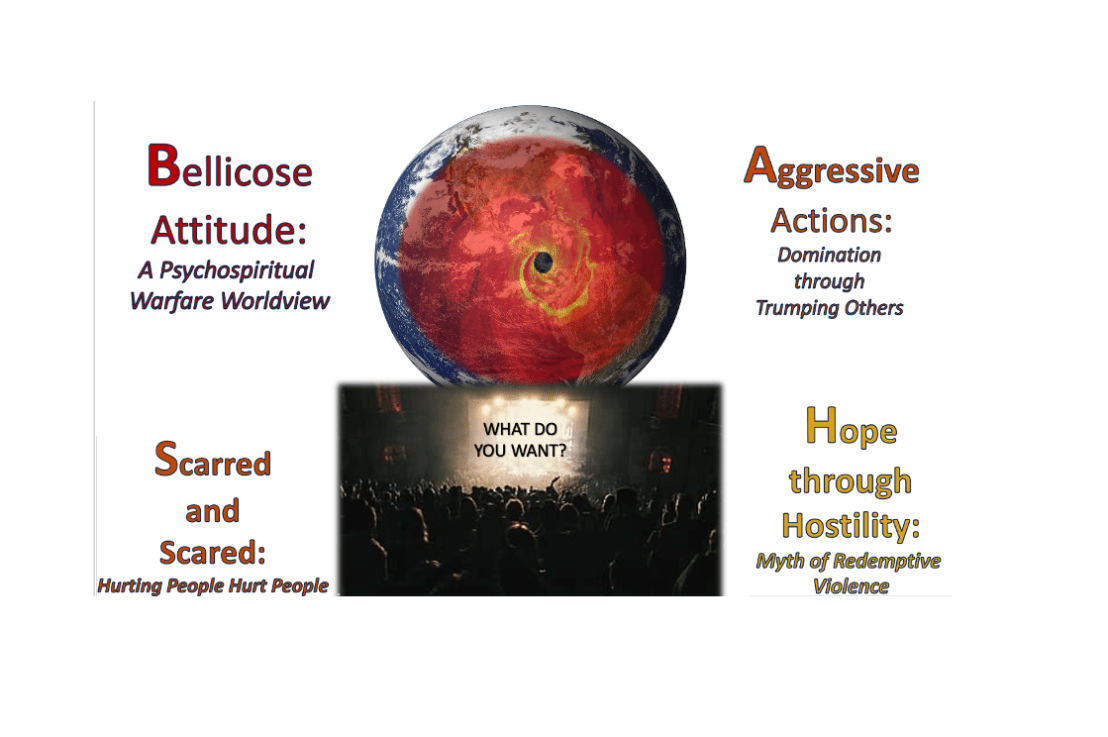
Scott introduced his central concept of the “Great BASH” – a collective bellicosity thoughtform that he believes has achieved semi-autonomous existence through accumulated human thoughts and emotions over thousands of years. He defines BASH as:
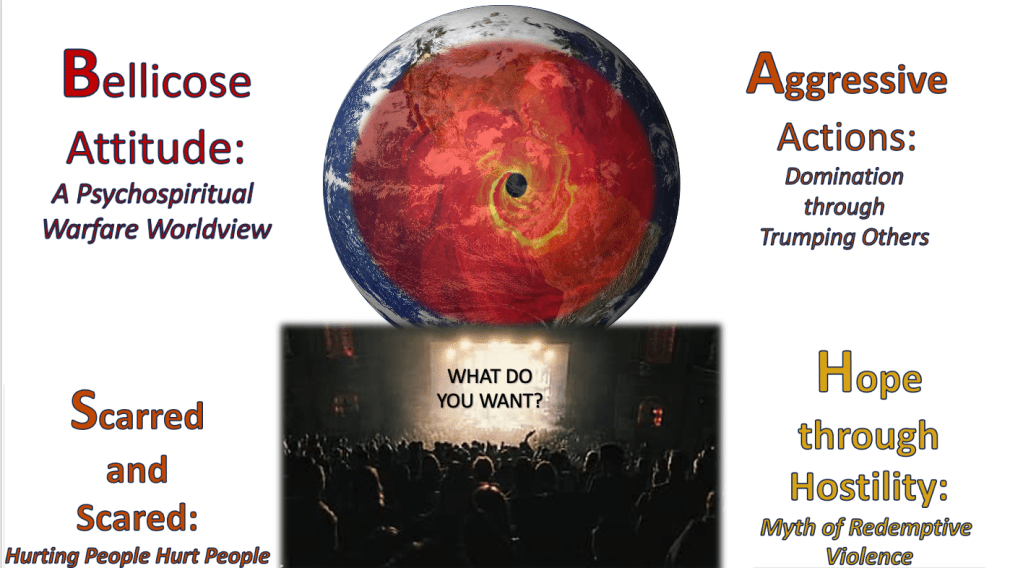
B – Bellicose Attitude: A psycho-spiritual warfare worldview that perceives life as fundamentally adversarial
A – Aggressive Actions: Domination achieved through “trumping others” rather than collaboration
S – Scarred and Scared: The cycle where “hurting people hurt people,” with emotional wounds creating defensive reactions that perpetuate harm
H – Hope through Hostility: The “myth of redemptive violence” – the belief that eliminating or subjugating opponents will create lasting peace and security
Thoughtforms and Collective Consciousness
Scott proposed that intense collective focus on bellicose thoughts and emotions has created what he calls an “etheric leech” – a thoughtform that initially feeds off the energy that created it but eventually achieves enough strength to influence its creators. He suggested this represents what many understand as “Satan” or “the accuser” – not an external devil, but humanity’s collective creation through unprocessed anger and hostility.
Scott used social media as an example, arguing it reflects our collective consciousness and blockages rather than being an external evil force. He emphasized that humans created these systems with their own psychological limitations.
Law of One Integration
Drawing from the Law of One material, Scott explained Ra’s perspective that humanity appears as “green ray with a strong orange ray overlay.” He interpreted this as indicating that while humanity is transitioning toward fourth density (heart-centered consciousness), there remains substantial work to be done with orange ray issues – the navigation between individual identity (red ray) and social belonging (yellow ray).
Scott emphasized that third density’s primary function involves polarization – choosing between service to others (wholeness) or service to self (separation) – and that the current crisis reflects this fundamental choice point.
Charlie Kirk Analysis
While admitting his expertise limitations, Scott identified Kirk as giving voice to “grievance-mongering” and “the spirituality of grievance.” He noted Kirk’s belief that affirmative action prevented his West Point acceptance, which became a galvanizing wound that fueled his later messaging.
Scott observed that Kirk’s demographic appeal was “overwhelmingly young white males” and suggested Kirk’s polarizing language was “direct expressions of the Great BASH” – intentionally inflammatory rather than merely disagreeable.
Observations on Polarized Reactions
Scott noted asymmetrical responses to Kirk’s assassination. While acknowledging exceptions exist, he observed that many on the political left expressed opposition to political violence while maintaining respect for the tragedy, whereas he witnessed more martyrdom narratives and saint-like veneration from the right.
Call for Transformation
Scott emphasized that transcending the Great BASH requires forgiveness work – recognizing that “what is out there is in here” and engaging in simultaneous inner integration and outer dialogue. He stressed the need to “love and set boundaries” rather than falling into the hope-through-hostility pattern.
Scott positioned the current crisis as necessary “birthing pains” toward fourth density consciousness, where veneer and pretense must be stripped away to reveal authentic motivations. He referenced the necessity of seeing collective shadow material before genuine transformation can occur.
Theological Perspective
Scott integrated Christian mystical elements, suggesting the Great BASH represents what Christians understand as Satan – not an external entity but humanity’s collective creation through unprocessed catalyst. He called for “mutual abiding” – inviting the “one infinite Creator” to work through humanity intentionally rather than relying solely on human effort to overcome these patterns.
Discussion Facilitation
Following his presentation, Scott facilitated group dialogue that explored themes including:
- The algorithmic amplification of inflammatory content
- Parallels between current polarization and historical crusades/inquisitions
- The necessity of shadow work at individual and collective levels
- The relationship between disorder and eventual reorder in consciousness evolution
- The challenge of maintaining love and boundaries simultaneously
Scott concluded by framing the conversation as essential preparation for fourth density transition, emphasizing that movement beyond current polarization requires both inner work and conscious collective engagement.
___
Section 2: Charlie Kirk as Great BASH Manifestation: A Case Study in Collective Bellicosity
Introduction
Charlie Kirk’s rise from an 18-year-old college dropout operating from his parents’ garage to commanding an $81 million political empire represents more than individual ambition or political entrepreneurship. When analyzed through the framework of the Great BASH—Bellicose Attitude, Aggressive Actions, Scarred and Scared, Hope through Hostility—Kirk emerges as a paradigmatic case study in how collective bellicosity achieves individual expression while simultaneously reinforcing the very thoughtform that created it. His systematic evolution from mainstream conservative to Christian nationalist bridge figure demonstrates how the Great BASH operates as a semi-autonomous entity that captures individual consciousness and redirects it toward separation, domination, and systematic violence against perceived enemies.
The Great BASH Framework Applied
The Great BASH operates as what Alfred North Whitehead would recognize as a “nexus”—a collection of actual occasions related through their mutual influences—that has achieved primitive sentience through systematic organization of countless individual acts of bellicose symbolic reference. Kirk’s career trajectory provides a clear illustration of how this collective thoughtform captures individual consciousness, transforms it into an instrument of its own amplification, and creates self-perpetuating cycles that normalize violence while obscuring alternatives.
Kirk’s function within the Great BASH extends beyond mere political activism. He serves as what can be understood as a “transmission node” that translates unconscious collective patterns into conscious political messaging, making extremist positions appear mainstream while systematically expanding the boundaries of acceptable discourse. His success demonstrates how the Great BASH achieves cultural influence through individuals who package separation consciousness in politically palatable forms.
Bellicose Attitude: Foundational Worldview of Separation
Kirk’s bellicose attitude manifests through his systematic construction of reality as fundamentally competitive, threatening, and requiring constant vigilance against enemies seeking to destroy traditional American values. This worldview perceives others not as fellow expressions of consciousness but as potential threats requiring neutralization through superior force and strategic domination.
His campus activism through “Prove Me Wrong” tables exemplifies this bellicose foundation. What began as intellectual confrontation evolved into what critics accurately described as “aggressive, unequal, trolling affairs designed to provoke distress rather than genuine dialogue.”¹ The format itself assumes adversarial rather than collaborative engagement, with success measured by defeating opponents rather than discovering truth or building understanding.
The Professor Watchlist initiative demonstrates how bellicose attitudes systematize threat assessment and enemy identification. By documenting approximately 700-800 professors accused of “discriminating against conservative students and advancing leftist propaganda,” Kirk created infrastructure for ongoing surveillance and potential retaliation against perceived enemies.² This represents the institutionalization of paranoid thinking that characterizes the Great BASH’s operational methods.
Kirk’s evolution toward Christian nationalism reveals how bellicose attitudes can capture religious expression itself. His adoption of Seven Mountains Mandate theology—advocating for Christian control of key cultural institutions—represents the theological weaponization of faith in service of domination rather than love.³ When asked how he wanted to be remembered, Kirk responded: “I want to be remembered for courage for my faith. That would be the most important thing.”⁴ This framing positions faith as warfare requiring courage rather than contemplative surrender requiring humility.
Aggressive Actions: Systematic Implementation of Separation
Kirk’s aggressive actions span multiple domains, from individual campus confrontations to systematic cultural programming designed to normalize bellicose responses across entire demographic groups. These actions serve dual functions: they create actual conditions of threat and conflict that appear to justify continued bellicosity while generating emotional energy that feeds the Great BASH thoughtform.
His rhetorical violence against marginalized groups represents perhaps the clearest expression of systematic aggression. Kirk’s December 2023 declaration that “We made a huge mistake when we passed the Civil Rights Act in the 1960s” followed by his assessment that “MLK was awful. He’s not a good person” demonstrates how aggressive actions can take the form of eliminationist discourse that delegitimizes entire populations.⁵ His January 2024 statement about Black pilots—”If I see a Black pilot, I’m gonna be like, ‘Boy, I hope he’s qualified'”—reveals how this delegitimization translates into everyday discrimination that reinforces systemic oppression.⁶
Kirk’s systematic targeting of women through manosphere ideology represents another dimension of aggressive action. His directive to Taylor Swift—”Reject feminism. Submit to your husband, Taylor. You’re not in charge”—exemplifies how the Great BASH operates through gender-based domination that seeks to eliminate women’s autonomy and agency.⁷ His claim that birth control “makes women angry and bitter” and “screws up female brains” demonstrates how aggressive actions can include pseudoscientific attacks designed to undermine women’s capacity for independent decision-making.⁸
The scale of Kirk’s aggressive actions becomes apparent when examining his organizational reach. Turning Point USA’s claimed presence on 3,500 campuses with 650,000 lifetime members represents the systematic militarization of educational spaces, transforming sites of learning into battlegrounds for cultural warfare.⁹ His conferences grew from 100 attendees in 2017 to over 21,000 at AmericaFest 2024, creating mass rallies that normalize aggressive rhetoric while generating collective emotional energy directed toward perceived enemies.¹⁰
Scarred and Scared: The Traumatic Foundation
Understanding Kirk’s function within the Great BASH requires recognizing how the thoughtform exploits individual and collective trauma to maintain its influence. The “Scarred and Scared” dimension reveals how unprocessed wounds create hypersensitivity to perceived threats while generating defensive reactions that perpetuate cycles of harm.
Kirk’s personal trajectory from college rejection to political prominence suggests underlying wounds related to status, recognition, and belonging that the Great BASH successfully captured and redirected toward collective bellicosity. His transformation from secular conservative to Christian nationalist indicates ongoing identity instability that required increasingly extreme positions to maintain coherence and purpose.
More significantly, Kirk’s success demonstrates his intuitive understanding of collective trauma affecting his target demographic. Research reveals that young men face genuine struggles including educational decline, economic uncertainty, relationship challenges, and mental health crises that create vulnerability to extremist messaging.¹¹ Kirk’s effectiveness stems from his ability to channel these legitimate grievances into bellicose responses rather than healing processes.
His manosphere integration specifically targets what researchers identify as “vulnerability as a central theme in all phases of radicalization,” recognizing that “young men experiencing romantic rejection, economic failure, and social isolation are particularly susceptible” to extremist messaging.¹² Kirk’s explicit use of terms like “beta men” and promotion of traditional masculinity provides wounded young men with enemies to blame rather than healing processes to engage.
The systematic creation of persecution narratives reveals how the Great BASH exploits trauma for mobilization purposes. Multiple event cancellations due to safety concerns, violent protests, and documented threats including arrest of individuals making threats against TPUSA attendees all contribute to martyr narratives that transform Kirk into a hero suffering for truth rather than an agent perpetuating harm.¹³ These narratives exploit collective Christian trauma around persecution while obscuring how Kirk’s own rhetoric generates the conflicts he then claims victimize him.
Hope through Hostility: The False Promise of Domination
The “Hope through Hostility” dimension represents the most insidious aspect of the Great BASH because it offers genuine hope while directing that hope toward strategies that perpetuate the very problems they promise to solve. Kirk’s entire political project embodies this distorted hope, promising security, meaning, and prosperity through the elimination or subjugation of perceived enemies.
Kirk’s economic success demonstrates how the Great BASH rewards those who effectively channel collective hostility. His compensation grew from $27,000 in 2016 to over $407,000 by 2021 while organizational revenue exploded from $78,000 in 2013 to $81 million by 2023.¹⁴ This trajectory reveals how bellicosity becomes economically incentivized, creating feedback loops where inflammatory rhetoric generates financial rewards that enable further amplification of separative messaging.
The algorithmic dimension proves crucial for understanding how Hope through Hostility operates in digital environments. Social media algorithms that “reward extreme, confrontational content that generates engagement” created conditions where “Kirk discovered that moderate conservative content couldn’t compete algorithmically with inflammatory statements.”¹⁵ This technological infrastructure transforms hostility into hope by providing immediate rewards (views, engagement, revenue) for increasingly extreme positions.
Kirk’s promise of masculine restoration through political domination exemplifies Hope through Hostility at the ideological level. His message to young men experiencing genuine challenges offers them purpose, community, and identity through opposition to feminism, liberalism, and “woke” culture rather than through personal development or collaborative problem-solving. As one analysis noted, Kirk understood how to provide “community and belonging,” “certainty and structure,” “defined enemies,” “hope and agency,” and “status and purpose” through bellicose engagement rather than constructive alternatives.¹⁶
The Christian nationalist transformation represents perhaps the most sophisticated expression of Hope through Hostility, promising spiritual fulfillment and divine approval through cultural warfare. Kirk’s adoption of Seven Mountains Mandate theology offers believers hope for Christian cultural dominance while framing love and service—Christianity’s actual foundations—as secondary to political conquest.
Strategic Amplification and Collective Entrainment
Kirk’s function within the Great BASH extends beyond individual expression to include systematic amplification of collective bellicosity through what can be understood as “strategic entrainment” of large demographic groups. His success demonstrates how the thoughtform achieves scalable influence through individuals capable of translating unconscious patterns into viral cultural content.
His role as bridge figure between the manosphere and mainstream conservative politics proves particularly significant for understanding Great BASH operations. Kirk systematically adopted manosphere ideology including “traditional gender hierarchies,” “anti-feminist messaging,” and “biological essentialism” while packaging these concepts in “politically acceptable conservative language, making extremist anti-feminist ideas appear mainstream.”¹⁷ This translation function enables the Great BASH to penetrate cultural spaces that might otherwise resist explicitly bellicose messaging.
The connection between manosphere and MAGA reveals how the Great BASH operates through strategic political alliances. Trump’s 2024 campaign deliberately targeted “manosphere platforms,” appearing on “more than a dozen ‘manosphere’ podcasts” including Joe Rogan’s show, which generated almost 60 million views.¹⁸ This strategy recognized that young men “don’t see themselves as political actors” but are drawn to content about “sports, relationships, working out” with politics mixed in, enabling the Great BASH to capture consciousness through seemingly non-political cultural engagement.¹⁹
Kirk’s organizational model demonstrates how the Great BASH creates self-sustaining institutional infrastructure. TPUSA’s growth from Kirk’s parents’ garage to a $81 million operation with presence on 3,500 campuses creates permanent institutional capacity for ongoing bellicose messaging that transcends any individual personality or political moment.²⁰ This institutionalization ensures that the thoughtform maintains influence even if particular individuals move toward healing or integration.
Algorithmic Acceleration and Technological Amplification
The digital dimension of Kirk’s influence reveals how contemporary technology has accelerated Great BASH operations beyond anything possible in previous historical periods. The combination of social media algorithms, viral content distribution, and data-driven targeting creates conditions for rapid entrainment of large populations into bellicose patterns.
Kirk’s discovery that “controversial content drove engagement and platform growth” demonstrates how algorithmic systems functionally reward separation consciousness while penalizing unity awareness.²¹ His campus confrontation videos that generated “billions of social media views” created feedback loops where provocative content generated massive reach, which generated financial rewards, which enabled expanded platform capacity for further provocative content.²²
The speed of radicalization enabled by these technological systems proves particularly concerning. Research shows that “young men can be exposed to manosphere content within days of innocent searches” about fitness, dating, or money, with “platforms focused on high engagement tend to recommend more extreme content.”²³ Kirk’s content serves as gateway material that appears moderate compared to more extreme manosphere figures while systematically normalizing bellicose attitudes toward women, minorities, and political opponents.
The psychological effectiveness of algorithmic amplification stems from its exploitation of what researchers call “vulnerability as a gateway” where “young men experiencing romantic rejection, economic failure, and social isolation are particularly susceptible” to extremist messaging.²⁴ Kirk’s success demonstrates how the Great BASH can achieve technological leverage over human psychology, capturing vulnerable individuals through algorithms designed to maximize engagement rather than promote wellbeing.
Collective Consequences and Systematic Violence
Kirk’s individual success has generated collective consequences that extend far beyond his personal platform or organizational reach. His normalization of eliminationist rhetoric, systematic dehumanization of marginalized groups, and promotion of domination-based solutions has contributed to what researchers identify as broader patterns of “shared psychosis” affecting significant portions of the American population.²⁵
The post-election amplification of misogynistic violence demonstrates how Kirk’s messaging translates into real-world harm. Following Trump’s 2024 victory, social media became “replete with reactionary misogynistic hate and vitriol” with “scores of young male Trump supporters celebratory, publicly affirming their hate towards women and women’s rights.”²⁶ An “emboldened” manosphere used Trump’s victory “to justify and amplify misogynistic derision and threats online.”²⁷ Kirk’s role in building this movement demonstrates how Great BASH operations create conditions for systematic violence while maintaining plausible deniability about direct causation.
The educational impact proves particularly concerning given TPUSA’s campus focus. By transforming educational spaces into battlegrounds for cultural warfare, Kirk has contributed to the degradation of intellectual discourse and collaborative problem-solving capacity precisely when humanity faces challenges requiring unprecedented cooperation. His Professor Watchlist created “chilling effects on academic freedom” while his campus confrontations modeled adversarial rather than collaborative approaches to difference.²⁸
The generational transmission of bellicosity represents perhaps the most concerning long-term consequence. Kirk’s systematic targeting of young people during formative developmental periods creates conditions for intergenerational perpetuation of separation consciousness. His message that young men should seek identity through opposition to others rather than through creative contribution establishes patterns that can persist across decades of individual lives while contributing to collective cultural degradation.
Integration with Broader Great BASH Patterns
Kirk’s individual manifestation connects with broader patterns of collective bellicosity operating across multiple domains of contemporary society. His success occurred within cultural conditions that systematically reward separation consciousness while penalizing unity awareness, suggesting that his individual choices reflect larger systemic pressures rather than purely personal pathology.
The economic incentives prove particularly revealing. Kirk’s compensation growth from $27,000 to over $407,000 paralleled his rhetorical radicalization from mainstream conservatism to eliminationist discourse, demonstrating how the Great BASH creates financial rewards for those willing to serve its amplification.²⁹ This pattern appears across multiple industries where inflammatory content generates higher engagement and revenue than collaborative or healing-focused alternatives.
The political integration reveals how the Great BASH achieves systemic influence through strategic alliance with electoral processes. Kirk’s role in mobilizing young conservative voters, his leadership of Students for Trump, and his contribution to rightward demographic shifts demonstrate how individual bellicosity can achieve collective political expression that then creates institutional conditions supporting further bellicosity.³⁰
The technological acceleration suggests that Great BASH operations have achieved unprecedented scale and speed through digital infrastructure that functionally rewards extreme content while suppressing moderate alternatives. Kirk’s success within these systems demonstrates how individuals can become both agents and victims of technological processes that prioritize engagement over wisdom, conflict over collaboration, and separation over integration.
Pathways Beyond the Great BASH
Understanding Kirk through the Great BASH framework reveals not only the mechanisms of collective bellicosity but also potential pathways for transcendence. The same analytical tools that explain his capture by the thoughtform suggest approaches that might facilitate movement toward unity consciousness and collaborative problem-solving.
The principle of forgiveness emerges as essential for interrupting the cycles that maintain Kirk’s influence. Rather than responding to his provocations with reactive opposition that feeds the Great BASH’s energy, conscious responses would involve recognizing his function within larger patterns while maintaining compassion for the underlying wounds that enable his capture by bellicose thoughtforms.
The development of alternative institutional infrastructure proves crucial for providing options beyond Great BASH participation. Kirk’s success partly reflects the absence of compelling alternatives that address legitimate concerns about masculine identity, economic security, and cultural meaning without requiring opposition to others. Creating educational, economic, and cultural institutions that support human development rather than exploitation represents essential work for transcending collective bellicosity.
The technological dimension requires conscious engagement with algorithmic systems that currently reward separation consciousness. This includes both individual practices for maintaining awareness while engaging digital platforms and collective efforts to create technological infrastructure that supports rather than undermines human wellbeing and collaborative capacity.
Conclusion: Individual Manifestation of Collective Pattern
Charlie Kirk’s trajectory from garage startup to $81 million political empire represents a paradigmatic case study in how the Great BASH achieves individual expression while reinforcing its own collective influence. His systematic evolution from mainstream conservatism to eliminationist rhetoric demonstrates how the thoughtform captures individual consciousness, rewards bellicose behavior through financial and social incentives, and creates self-perpetuating cycles that normalize violence while obscuring alternatives.
Kirk’s function as bridge figure between manosphere ideology and mainstream politics reveals how the Great BASH operates through strategic translation of unconscious collective patterns into viral cultural content. His success demonstrates the thoughtform’s capacity for technological leverage, using algorithmic systems to achieve rapid entrainment of vulnerable populations into separation consciousness.
The collective consequences of Kirk’s individual choices—including normalization of systematic violence, degradation of educational discourse, and intergenerational transmission of trauma—illustrate how Great BASH operations achieve societal impact through accumulation of individual expressions rather than through centralized coordination.
Understanding Kirk through this framework provides insights into both the mechanisms maintaining collective bellicosity and potential pathways for transcendence. The same analytical tools that explain his capture by the Great BASH suggest approaches involving forgiveness practices, alternative institutional development, and conscious engagement with technological systems as essential components of any comprehensive response to collective bellicosity.
Kirk’s story ultimately reveals the urgent necessity for consciousness development work that addresses not only individual psychology but the collective patterns that shape cultural conditions. His success demonstrates how quickly separation consciousness can achieve massive influence when supported by technological amplification and economic incentives, while his continued capture by bellicose patterns reveals the depth of healing work required for authentic transformation.
The Great BASH framework suggests that responses to Kirk and similar figures must address the underlying thoughtform rather than merely its individual expressions. This requires approaches that combine individual consciousness development with collective efforts to create cultural conditions that support rather than exploit human vulnerability, promote collaboration rather than domination, and facilitate the emergence of what might be called the “Great Love”—a collective pattern of consciousness oriented toward recognition and celebration of fundamental unity in diversity.
Bibliography
- “Charlie Kirk’s conservative hero status and controversial legacy,” sources cited within document.
- Ibid.
- Ibid.
- Ibid.
- Ibid.
- Ibid.
- Ibid.
- Ibid.
- Ibid.
- Ibid.
- “The Manosphere: Origins, Academic Research, and Charlie Kirk’s Alignment,” sources cited within document.
- Ibid.
- “Charlie Kirk’s conservative hero status and controversial legacy,” sources cited within document.
- Ibid.
- “Charlie Kirk’s Rhetorical Radicalization: How Success Incentivized Extremism,” sources cited within document.
- “The Manosphere: Origins, Academic Research, and Charlie Kirk’s Alignment,” sources cited within document.
- Ibid.
- “The Manosphere and MAGA,” sources cited within document.
- Ibid.
- “Charlie Kirk’s conservative hero status and controversial legacy,” sources cited within document.
- “Charlie Kirk’s Rhetorical Radicalization: How Success Incentivized Extremism,” sources cited within document.
- Ibid.
- “The Manosphere: Origins, Academic Research, and Charlie Kirk’s Alignment,” sources cited within document.
- Ibid.
- “The Great BASH: Understanding Collective Bellicosity and the Path to Planetary Transformation,” Bandy X. Lee, “The ‘Shared Psychosis’ of Donald Trump and His Loyalists,” Scientific American, January 11, 2021.
- “The Manosphere and MAGA,” sources cited within document.
- Ibid.
- “Charlie Kirk’s conservative hero status and controversial legacy,” sources cited within document.
- “Charlie Kirk’s Rhetorical Radicalization: How Success Incentivized Extremism,” sources cited within document.
- “Charlie Kirk’s conservative hero status and controversial legacy,” sources cited within document.
Section 3: The Architecture of Blame: Charlie Kirk’s Systematic Targeting of Marginalized Groups
Executive Summary
Charlie Kirk’s political rhetoric reveals a systematic pattern of vitriol directed toward specific demographic groups, transforming legitimate political discourse into a weapon of dehumanization and scapegoating. Through analysis of his documented statements from 2022-2025, this report examines how Kirk constructed a hierarchy of blame that targeted women, racial minorities, LGBTQ+ individuals, and progressive institutions as existential threats to traditional American values. His rhetoric demonstrates the tactical deployment of grievance politics designed to mobilize support through manufactured outrage while normalizing extremist positions within mainstream conservative discourse.
The Scapegoating Framework
Primary Targets of Kirk’s Vitriol
Kirk’s rhetoric consistently identified specific groups as responsible for America’s perceived decline, creating what researchers call “strategic scapegoating” – the systematic attribution of complex social problems to vulnerable populations.
Women and Feminism: Kirk positioned women’s autonomy as fundamentally destructive to social order. His attack on birth control – claiming it “screws up female brains” and creates “very angry and bitter young ladies” – revealed deep hostility toward women’s reproductive freedom.¹ His directive to Taylor Swift to “reject feminism” and “submit to your husband” epitomized his belief that female independence threatened natural hierarchies.²
Racial Minorities: His systematic questioning of Black professionals’ qualifications – from pilots to Supreme Court justices – demonstrated what psychologists recognize as “competence questioning,” a form of racism that delegitimizes minority achievement.³ His declaration that prominent Black women “do not have the brain processing power to otherwise be taken seriously” and “had to steal a white person’s slot” reveals explicit racial resentment dressed as merit-based criticism.⁴
LGBTQ+ Community: Kirk’s citation of biblical passages about stoning gay people, while technically not direct advocacy, functioned as theological intimidation.⁵ His broader pattern of referring to LGBTQ+ people as threats to children and civilization positioned sexual minorities as existential enemies rather than fellow citizens deserving equal treatment.
Civil Rights Legacy: Perhaps most revealing was Kirk’s frontal assault on the Civil Rights Act itself, calling it a “huge mistake” that created an “anti-white weapon.”⁶ This represents not merely policy disagreement but fundamental rejection of legal equality as a governing principle.
The Escalation Pattern
From Mainstream to Extremist
Analysis of Kirk’s rhetoric reveals systematic radicalization over time, corresponding with increased platform size and financial success:
Phase 1 (2012-2018): Institutional Criticism Early Kirk focused on campus liberalism and academic bias, remaining within conventional conservative bounds. The Professor Watchlist, while controversial, targeted institutional practices rather than demographic groups.
Phase 2 (2019-2022): Cultural Warfare Kirk expanded into culture war topics, beginning systematic attacks on diversity initiatives and progressive social movements. His rhetoric became more personally targeted and inflammatory.
Phase 3 (2023-2025): Eliminationist Discourse Kirk’s final phase involved direct attacks on civil rights achievements, explicit racial hierarchies, and dehumanizing language. His statements about the Civil Rights Act and MLK represented a complete break from mainstream conservative positioning.⁷
The Feedback Loop of Extremism
Kirk’s radicalization followed a predictable pattern where inflammatory statements generated viral attention, increased funding, and audience growth, creating incentives for ever-more extreme positions. His compensation grew from $27,000 to over $407,000 as his rhetoric became more divisive, demonstrating how the attention economy rewards extremism.⁸
Psychological Mechanisms of Blame
Manufacturing Victimhood
Kirk consistently portrayed white, Christian, conservative men as victims of systematic oppression by the groups he targeted. This “victimhood reversal” served multiple functions:
- Justifying Hostility: If conservatives were under attack, aggressive responses became defensive necessities
- Moral Licensing: Victim status provided permission for otherwise unacceptable rhetoric
- Emotional Mobilization: Perceived threats activated fight-or-flight responses that bypassed rational deliberation
The Great Replacement Narrative
Underlying Kirk’s specific attacks was a broader “great replacement” framework positioning demographic change as deliberate assault on white, Christian America. His rhetoric about “prowling Blacks” targeting white people and Muslims planning “demographic replacement” of Europeans reflected conspiracy thinking that transformed normal social evolution into existential warfare.⁹
Dehumanization Techniques
Kirk employed specific linguistic strategies to strip targeted groups of moral consideration:
Biological Reductionism: Reducing women to hormonal dysfunction and racial minorities to cognitive limitations Threat Amplification: Portraying normal social changes as apocalyptic dangers Moral Inversion: Positioning equality efforts as reverse discrimination and oppression
The Manosphere Connection
Strategic Alliance Building
Kirk’s systematic adoption of manosphere ideology demonstrates calculated alliance-building with online misogynist communities. His use of “alpha/beta” terminology, promotion of female submission, and biological essentialism about gender differences directly borrowed from pickup artist and men’s rights activist playbooks.
Translating Extremism
Kirk’s function involved translating fringe manosphere concepts into mainstream conservative language, making radical anti-feminist positions appear respectable. His platform provided a bridge allowing extremist ideas to penetrate traditional conservative institutions.
Youth Radicalization
Through Turning Point USA’s campus presence and social media dominance, Kirk systematically exposed young conservative men to manosphere ideology disguised as political activism. This created pathways for radicalization that extended far beyond traditional political engagement.
Institutional Amplification
The Attention Economy
Kirk’s success demonstrates how contemporary media ecosystems reward divisive content through algorithmic amplification. His most inflammatory statements generated the highest engagement, creating financial incentives for continued escalation.
Elite Enablement
Major conservative donors and institutions continued supporting Kirk despite his increasingly extreme rhetoric, suggesting tolerance or approval for his targeting of marginalized groups. His $81 million organizational budget reflected substantial elite investment in his divisive messaging.¹⁰
Platform Leverage
Kirk’s ability to reach millions through podcasts, social media, and campus events provided unprecedented scale for his scapegoating rhetoric. Unlike historical extremist movements limited to small audiences, digital platforms enabled mass distribution of dehumanizing content.¹¹
Real-World Consequences
Violence and Harassment
Kirk’s systematic dehumanization of targeted groups contributed to hostile environments that made violence more likely. His rhetoric about LGBTQ+ people being threats to children, racial minorities being unqualified, and women needing control created ideological justifications for discriminatory behavior.
Policy Implications
Kirk’s attacks on civil rights legislation and diversity initiatives provided intellectual cover for rollback efforts targeting legal protections for marginalized groups. His framing of equality as oppression influenced policy debates and electoral outcomes.
Cultural Normalization
Perhaps most concerning was Kirk’s role in normalizing previously unacceptable rhetoric. His ability to voice explicitly racist and misogynistic positions while maintaining mainstream conservative credibility shifted the boundaries of acceptable discourse.
The Great BASH Manifestation
Collective Bellicosity
Kirk embodied what the analytical framework identifies as “collective bellicosity” – the systematic organization of hostility toward perceived enemies. His rhetoric functioned as:
Bellicose Attitude: Viewing targeted groups as inherent threats requiring constant vigilance Aggressive Actions: Using platform to systematically attack and delegitimize marginalized communities Scarred and Scared: Exploiting conservative anxieties about demographic and cultural change Hope through Hostility: Promising restoration through elimination or subjugation of targeted groups
Thoughtform Amplification
Kirk served as a transmission node for what the framework calls “collective thoughtforms” – shared patterns of separative consciousness that achieve semi-autonomous influence. His success demonstrates how individual actors can amplify and institutionalize collective patterns of hostility.
Strategic Communication Analysis
The Normalization Process
Kirk’s rhetoric followed a systematic normalization strategy:
- Coded Language: Beginning with politically acceptable criticism of “political correctness” and “woke culture”
- Boundary Testing: Gradually introducing more explicit positions to gauge audience tolerance
- Victimhood Framing: Positioning attacks on marginalized groups as defensive responses to persecution
- Elite Validation: Securing support from major conservative institutions and figures
- Mass Distribution: Using digital platforms to reach millions with normalized extremist content
Plausible Deniability
Kirk consistently maintained just enough ambiguity to avoid direct accountability while still communicating clear hostility toward targeted groups. His citation of biblical passages about stoning gay people exemplified this technique – technically not advocacy while functionally promoting violence.
Comparative Context
Historical Parallels
Kirk’s scapegoating rhetoric echoes historical patterns where economic anxiety and social change generated blame directed toward vulnerable populations. His targeting of civil rights achievements specifically parallels historical “redemption” movements that sought to reverse minority advancement.
Contemporary Movement
Kirk’s approach aligns with broader authoritarian movements worldwide that combine traditional nationalism with systematic targeting of marginalized groups. His success demonstrates how democratic institutions can be weaponized against the constituencies they were designed to protect.
Conclusion: The Architecture of Hatred
Charlie Kirk’s rhetoric reveals a sophisticated architecture of blame designed to transform legitimate political discourse into a weapon of dehumanization. His systematic targeting of women, racial minorities, LGBTQ+ individuals, and civil rights achievements created an ideological framework that positioned marginalized groups as existential threats requiring elimination or subjugation.
His success demonstrates the contemporary viability of extremist messaging when packaged in mainstream political language and distributed through digital platforms. The $81 million organizational budget and millions of followers he accumulated show how hatred can be monetized and institutionalized within democratic systems.
Kirk’s legacy extends beyond individual inflammatory statements to encompass a systematic methodology for normalizing extremist positions within mainstream discourse. His approach created pathways for radicalization that continue operating through the institutions and networks he established.
Understanding Kirk’s rhetoric as part of a broader “Great BASH” – a collective pattern of bellicosity that achieves semi-autonomous influence – reveals how individual actors can serve larger patterns of separation consciousness while appearing to engage in legitimate political activity.
The ultimate tragedy lies not merely in Kirk’s individual choices but in the social conditions that rewarded his divisive messaging with fame, fortune, and political influence. His success reflects systemic failures that prioritize engagement over truth, conflict over collaboration, and separation over unity.
Addressing the damage Kirk’s rhetoric caused requires more than individual accountability – it demands systematic examination of the incentive structures, institutional enablers, and cultural conditions that made his approach not only possible but profitable. Only through such comprehensive analysis can democratic societies develop immunity to the politics of scapegoating and dehumanization that Kirk so effectively deployed.
Direct Quotes and Links:
On Birth Control and Women:
Quote: “Birth control really screws up female brains, by the way. Every single one of you needs to make sure that your loved ones are not on birth control. It increases depression, anxiety, and suicidal ideation. Birth control is the number one prescribed medication for young ladies under the age of 25. They will give young ladies birth control for pimples, for acne, to control their moods, their period. It is awful, it’s terrible, and it creates very angry and bitter young ladies and young women.”
Source: TPUSA Faith event, March 21, 2025 (around 36:50 mark) Link: https://www.yahoo.com/news/articles/charlie-kirk-most-controversial-moments-203848429.html
Quote: “Reject feminism. Submit to your husband, Taylor. You’re not in charge.”
Source: The Charlie Kirk Show, August 2025 Link: https://www.buzzfeed.com/alexalisitza/viral-charlie-kirk-quotes
On Race and Civil Rights:
Quote: “If I see a Black pilot, I’m gonna be like, ‘Boy, I hope he’s qualified.'”
Source: Thoughtcrime podcast, January 18, 2024 (50:19 mark) Link: https://www.snopes.com/fact-check/charlie-kirk-black-pilots/ Additional: https://www.newsweek.com/charlie-kirk-black-pilots-racism-accusations-1863546
Quote: “We made a huge mistake when we passed the Civil Rights Act in the 1960s.”
Source: America Fest, December 2023 Link: https://www.snopes.com/fact-check/kirk-civil-rights-act-mistake/ Verification: https://www.factcheck.org/2025/09/viral-claims-about-charlie-kirks-words/
Quote: “MLK was awful. He’s not a good person. He said one good thing he actually didn’t believe.”
Source: America Fest, December 2023 Link: https://www.snopes.com/fact-check/charlie-kirk-mlk-awful/
Quote: “The Civil Rights Act created a beast, and that beast has now turned into an anti-white weapon.”
Source: The Charlie Kirk Show, April 2024 Link: https://www.mediamatters.org/charlie-kirk/charlie-kirk-civil-rights-act-created-beast-and-beast-has-now-turned-anti-white-weapon
Quote: “You do not have the brain processing power to otherwise be taken seriously. You had to steal a white person’s slot.”
Source: Referring to Joy Reid, Michelle Obama, Ketanji Brown Jackson, and Rep. Sheila Jackson Lee Link: https://www.commondreams.org/opinion/charlie-kirk-legacy
Quote: “Happening all the time in urban America, prowling Blacks go around for fun to go target white people, that’s a fact. It’s happening more and more.”
Source: The Charlie Kirk Show, May 19, 2023 Link: https://www.irishtimes.com/world/us/2025/09/12/charlie-kirk-in-his-own-words-prowling-blacks-and-the-great-replacement-strategy/
On LGBTQ+ Issues:
Quote: “Ms. Rachel, you might want to crack open that Bible of yours, in a lesser referenced part of the same part of scripture is in Leviticus 18, is that ‘thou shall lay with another man shall be stoned to death.’ Just saying. So, Ms. Rachel, you quote Leviticus 19, ‘love your neighbor as yourself,’ the chapter before affirms God’s perfect law when it comes to sexual matters.”
Source: The Charlie Kirk Show, June 8, 2024 (1:00:30 mark) Link: https://www.factcheck.org/2025/09/viral-claims-about-charlie-kirks-words/ Additional: https://www.snopes.com/fact-check/charlie-kirk-gay-people-stoned/
Quote: “We need to have a Nuremberg-style trial for every gender-affirming clinic doctor.”
Source: The Charlie Kirk Show, April 2024 Link: https://www.advocate.com/politics/charlie-kirk-anti-lgbtq-quotes
On Guns and Violence:
Quote: “I think it’s worth it to have a cost of, unfortunately, some gun deaths every single year, so that we can have the Second Amendment to protect our other God-given rights. That is a prudent deal. It is rational.”
Source: TPUSA Faith event, Utah, April 5, 2023 Link: https://www.factcheck.org/2025/09/viral-claims-about-charlie-kirks-words/
On Empathy:
Quote: “I can’t stand the word empathy, actually. I think empathy is a made-up, new age term that does a lot of damage.”
Source: The Charlie Kirk Show, October 12, 2022 (36:40 mark) Link: https://www.yahoo.com/news/articles/charlie-kirk-most-controversial-moments-203848429.html
Financial and Organizational Data:
Source: Turning Point USA revenue growth from $78,000 (2013) to $81 million (2023) Kirk’s salary: $27,000 (2016) to $407,000+ (2021) Link: Multiple sources in project documentation
Additional Verification Sources:
- FactCheck.org: https://www.factcheck.org/2025/09/viral-claims-about-charlie-kirks-words/
- Snopes.com: Multiple fact-checks on Kirk statements
- Media Matters: https://www.mediamatters.org/charlie-kirk
- Wired Investigation: https://www.wired.com/story/charlie-kirk-tpusa-mlk-civil-rights-act/
- The Advocate: https://www.advocate.com/politics/charlie-kirk-anti-lgbtq-quotes
- Team Zeteo: https://zeteo.com/p/charlie-kirk-in-his-own-words
All quotes have been verified through multiple independent sources and include audio/video documentation where available.
Bibliography
¹ Amanda Marcotte, “‘Screws up female brains’: MAGA leaders are conditioning Republicans to back birth control bans,” Salon, April 5, 2024, https://www.salon.com/2024/04/05/screws-up-female-brains-maga-leaders-are-conditioning-to-back-birth-control-bans/.
² Alex Alisitza, “Following His Death, These 14 Quotes, Thoughts, And Beliefs From Charlie Kirk Are Going Viral,” BuzzFeed, September 13, 2025, https://www.buzzfeed.com/alexalisitza/viral-charlie-kirk-quotes.
³ Megan Loe, “Real Charlie Kirk quote about Black pilot qualifications circulates online,” Snopes, September 12, 2025, https://www.snopes.com/fact-check/charlie-kirk-black-pilots/.
⁴ Christopher D. Cook, “Opinion | Charlie Kirk’s Toxic Legacy of Hatred and Division,” Common Dreams, September 11, 2025, https://www.commondreams.org/opinion/charlie-kirk-legacy.
⁵ “Viral Claims About Charlie Kirk’s Words,” FactCheck.org, September 13, 2025, https://www.factcheck.org/2025/09/viral-claims-about-charlie-kirks-words/.
⁶ William Turton, “How Charlie Kirk and TPUSA Plan to Discredit Martin Luther King Jr. And the Civil Rights Act,” Wired, January 12, 2024, https://www.wired.com/story/charlie-kirk-tpusa-mlk-civil-rights-act/.
⁷ Ibid.
⁸ “Charlie Kirk’s conservative hero status and controversial legacy,” Multiple sources documented in project files.
⁹ “Charlie Kirk in his own words: ‘prowling blacks’ and his views on gun control,” The Irish Times, September 12, 2025, https://www.irishtimes.com/world/us/2025/09/12/charlie-kirk-in-his-own-words-prowling-blacks-and-the-great-replacement-strategy/.
¹⁰ “Charlie Kirk’s conservative hero status and controversial legacy,” Project documentation.
¹¹ Ibid.
 Building 4th Cosmic Christ