
Doug Scott, LCSW, MA
…
A note before I begin: What follows is a spiritual diagnosis offered from inside a particular framework—the Raian Process Metaphysics I have been developing over the past several years at this site and in my writing. I am not claiming the whole picture. I am claiming a partial view, offered in an open hand. Readers familiar with the Ra Material (aka Ra Contact) will recognize the conceptual vocabulary. Those new to it will find brief explanations as we go. What I am not offering is a purely political analysis—there are already plenty of those. What I am trying to name is something underneath the politics.
Where We Are: The Threshold
Something is happening that is not simply political. The past six weeks alone have given us the Obama apes social media post shared at the highest levels of the administration, the Greenland annexation gambit, sweeping tariffs announced with barely a legislative breath, an unauthorized war launched against Iran—one of the largest military operations in a generation—and, woven through all of it, a theology of violence that leaders in the Pentagon and the House of Representatives have offered with apparent sincerity as Christian witness. This is a lot to hold.
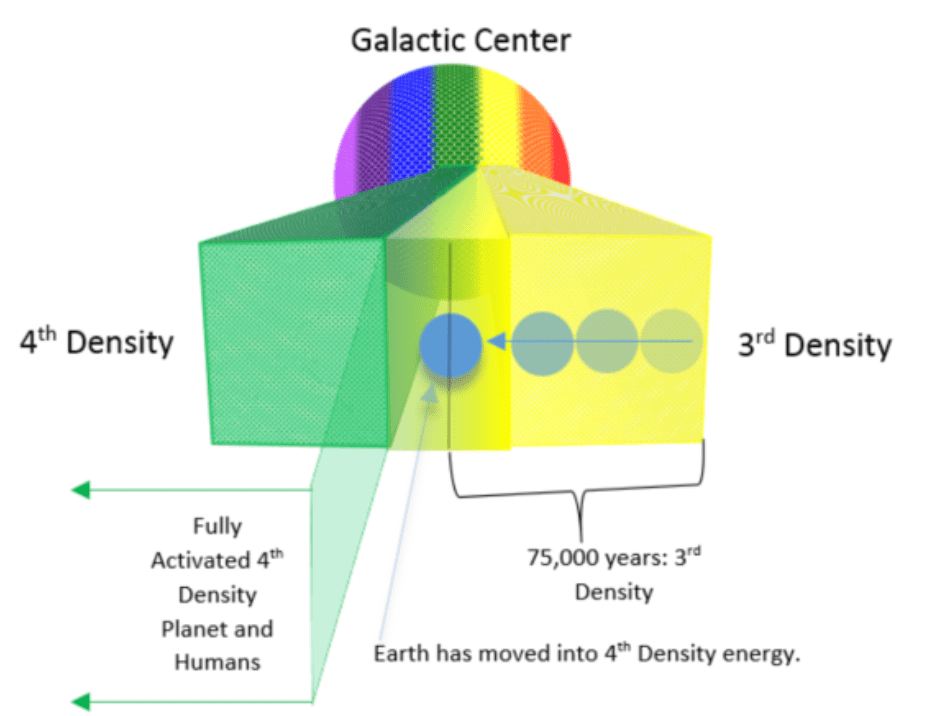
I want to try to hold it from a particular angle: the angle of someone who reads the current moment as a liminal threshold between two epochs of human consciousness—what the Ra Material calls the transition from third density to fourth density, from the age of individual choice-making under a veil of forgetting to the age of love and understanding, collective and transparent. That transition is not a smooth upgrade. It is a birth. And births involve pressure, blood, and the full surfacing of what has been held inside.
That surfacing is what I think we are watching.
The Framework: Density, Orange Ray, and the Great BASH
Third Density and Its Task
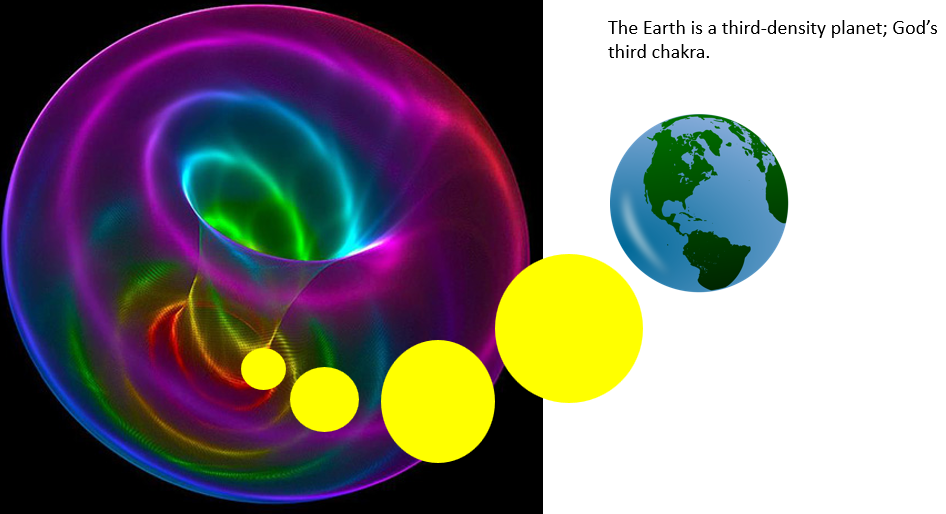
Third density is yellow-ray conditions writ large. Yellow ray is not simply one energy center among seven; it is the vibrational bandwidth of the entire density—the characteristic frequency of a world organized around self-conscious identity in relation to groups, communities, societies, nations. Ra describes yellow ray as “a focal and very powerful ray” concerning “the entity in relation to groups, societies, or large numbers of mind/body/spirit complexes.”2 When we look at our planetary civilization—its nations and tribes, its institutions and ideologies, its wars over collective identity—we are looking at yellow-ray reality expressing itself at every scale simultaneously.
The Law of One material, received through the channel known as Ra, describes human evolution as proceeding through a sequence of densities—stages of consciousness development, each with its characteristic color frequency and central lesson. Third density is not merely one stop among many; it is, in Ra’s phrase, “the axis upon which creation turns.”1 This is where consciousness, having evolved from mineral through plant through animal across the first two densities, finally crosses the threshold into self-awareness. The veil of forgetting descends. We no longer remember our cosmic origins, our previous incarnations, the larger architecture of reality. We wake up here, embodied, wondering who we are—and that wondering is the whole point.
The Lower Chakra Triad: Where the Real Work Happens
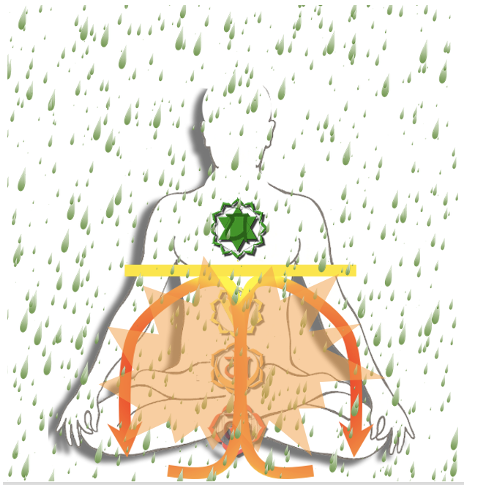
To understand what is going wrong right now, we need to go one level deeper—into the architecture of the lower chakra triad that sits beneath yellow ray and makes it possible.
Ra describes three foundational energy centers that every third-density being must work through before heart-centered consciousness becomes stable. In Session 15.12, the sequence is laid out plainly. Red ray governs basic survival and physical existence—the ground of being, the foundational security without which nothing else is possible. Orange ray is “the emotional or personal complex”: the energy center of individual identity, personal power, and self-concept. Blockages here “demonstrate themselves as personal eccentricities or distortions with regard to self-conscious understanding, or acceptance, of self.”3 Yellow ray, the solar plexus center, is where individual identity meets the social world—groups, hierarchies, power dynamics between communities. Ra warns that blockages here “manifest as distortions towards power manipulation and other social behaviors.” And then the sentence that ought to stop us cold: “Those with blockages in these first three energy centers, or nexi, will have continuing difficulties in ability to further their seeking of the Law of One.”4
The relationship between orange and yellow ray within this triad is the key to reading our moment. Orange ray is individual identity: the self knowing itself, asserting itself, finding its own boundaries, learning to neither dominate nor be dominated by other individual selves. Yellow ray is that same self navigating a pluralistic and diverse social landscape—learning to hold its own identity inside communities that are different from it, to exercise power responsibly in relation to groups, to find a way of being a self among many selves without collapsing into tribalism or losing itself in conformity.
This tension—orange ray individuation inside a yellow ray social world—is not a problem to be solved. It is the sacred design of the density. It is the catalyst. The friction between “who am I as an individual?” and “how do I belong to something larger than myself?” is precisely what forces the question Ra considers most essential: what do I fundamentally choose? Do I organize my energy around service to others, or service to self? That Choice—capitalized in Ra’s teaching as the fundamental orientation of third density—is what the entire architecture is designed to elicit. The orange-yellow tension thrusts our self-agency front and center. In other words, the very discomfort of navigating individual identity inside a pluralistic world is not a design flaw—it is the engine. It is what makes the Choice real rather than theoretical, what gives the decision weight and consequence. Without that friction, there is no genuine agency, only the appearance of it. The density is structured so that we cannot coast; we must actually decide who we are and how we will live in relation to others. And that deciding, repeated across lifetimes, is how the soul develops the stable polarity that makes harvest possible.
The Orange Ray Logjam
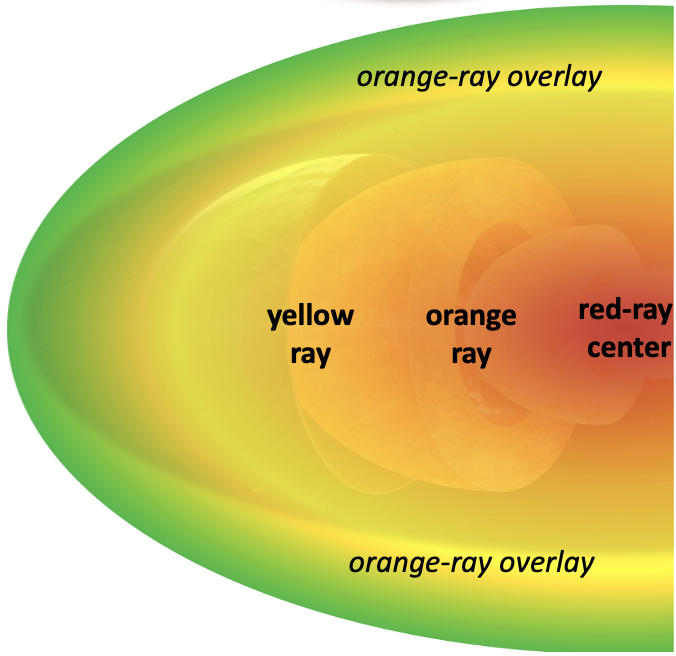
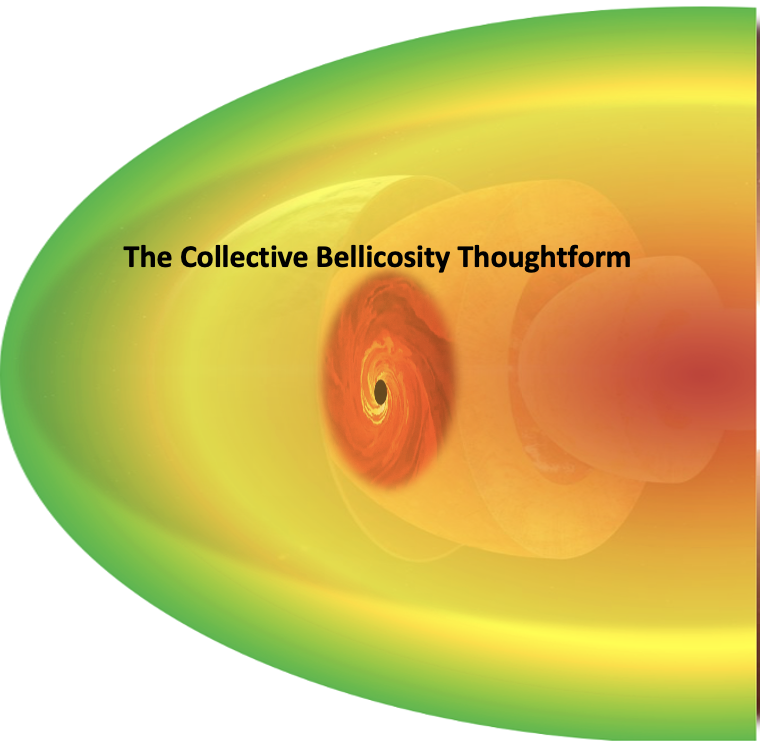
Here is the problem. That process—know the self, accept the self, forgive the self, balance the self, choose—requires that we actually stabilize our individual identity at the orange ray level before we can navigate the yellow ray social world with integrity. A self that does not know who it is cannot make a coherent Choice. A self that has not accepted its own shadow will project that shadow onto others. A self that has not learned to hold its own boundaries will either dominate others to compensate or collapse into them entirely.
As a civilization, we have not done this work. We have moved through millennia of yellow-ray social complexity—empires, nations, religions, ideologies—while leaving the orange-ray foundations largely unaddressed. The result is what I would call a massive logjam of consciousness right there in the individual and collective orange ray: unprocessed self-concepts, unintegrated shadows, wounded identities that cannot tolerate being questioned, selves that have never achieved the stable ground of genuine self-knowledge and self-acceptance from which a real Choice could be made.
Ra describes orange-ray blockage plainly: it is “power over individuals”—the self that can only know itself by dominating others, that treats other selves as “non-entities, slaves, or chattel.”5 At its most naked, orange-ray blockage is the inability to recognize the other as a self at all. The other becomes an object, a threat, a resource, an enemy—anything but a fellow expression of the same consciousness. And in Ra’s analysis, this is not primarily a yellow-ray phenomenon (though it manifests there)—it is the unresolved orange-ray wound driving yellow-ray behavior. The group domination, the tribal supremacy, the national aggression—these are orange-ray failures wearing yellow-ray clothing.
Now add the pressure of the density transition. Fourth-density energies—green ray, the frequency of love and understanding—have been intensifying since approximately 1936. These energies are not a reward for good behavior; they are the next vibrational wave arriving on schedule, pressing the entire planetary field toward heart-centered consciousness. But green-ray energy arriving before the lower triad is integrated does not produce elevation. It produces intensification of what is unresolved. As Ra puts it in Session 41.14, entities who have “not developed the yellow ray properly” find themselves pushed back toward “orange-ray manifestations.”6 The incoming light goes into the cracks.
This is the metaphysical situation we are in: a civilization at late third density, when the lesson is precisely the stabilization of identity within the Choice and the deepening of polarity, carrying a chronic early third-density mindset in which the orange ray has never been resolved. The green-ray pressure intensifies that gap enormously. The metaphysical requirements of where we are in the cycle demand choicemaking, agential clarity, and genuine polarization. What we are manifesting instead is the logjam—the collective orange-ray wound—surfacing under pressure in its most extreme and visible forms. What we are watching on the world stage is not the disease at its worst. It is the disease finally becoming visible enough to be diagnosed.
The Great BASH: Our Collective Egregore

The Great BASH is a term I have developed over several years to name the planetary-scale collective thoughtform that organizes this shadow. The acronym stands for:
Bellicose Attitude—the foundational worldview perceiving life as fundamentally competitive. Others are potential enemies. Security comes through strength and dominance. The whisper underneath all of it: you are not safe, strike first.
Aggressive Actions—the behavioral expression of that attitude, ranging from personal manipulation to systemic oppression to war. These actions create self-fulfilling prophecies: expectations of hostility generate hostile responses, validating the original premise.
Scarred and Scared—the traumatic foundation underneath the bellicosity. Unprocessed wounds—personal, generational, civilizational—create hypersensitivity to threat and defensive reactions that perpetuate harm cycles. Hurt people hurt people. That truth operates at civilizational scale.
Hope through Hostility—the deepest distortion: the conviction that security, peace, and redemption can be achieved through the defeat of enemies. This is the myth of redemptive violence. It never delivers what it promises. But it always promises.
In the vocabulary of process philosophy, the Great BASH is what Alfred North Whitehead would call a nexus—a collection of actual occasions organized through mutual relationship into something with its own momentum and, I would argue, its own primitive sentience. It is what esoteric traditions call an egregore: a collective thoughtform generated by sustained group attention that achieves independent existence. The Great BASH has been fed by millennia of human bellicosity. It is, in the deepest sense, ours. We made it. And the first step toward transformation is recognizing it as something we can actually see.
The Mirror: Two Theocracies
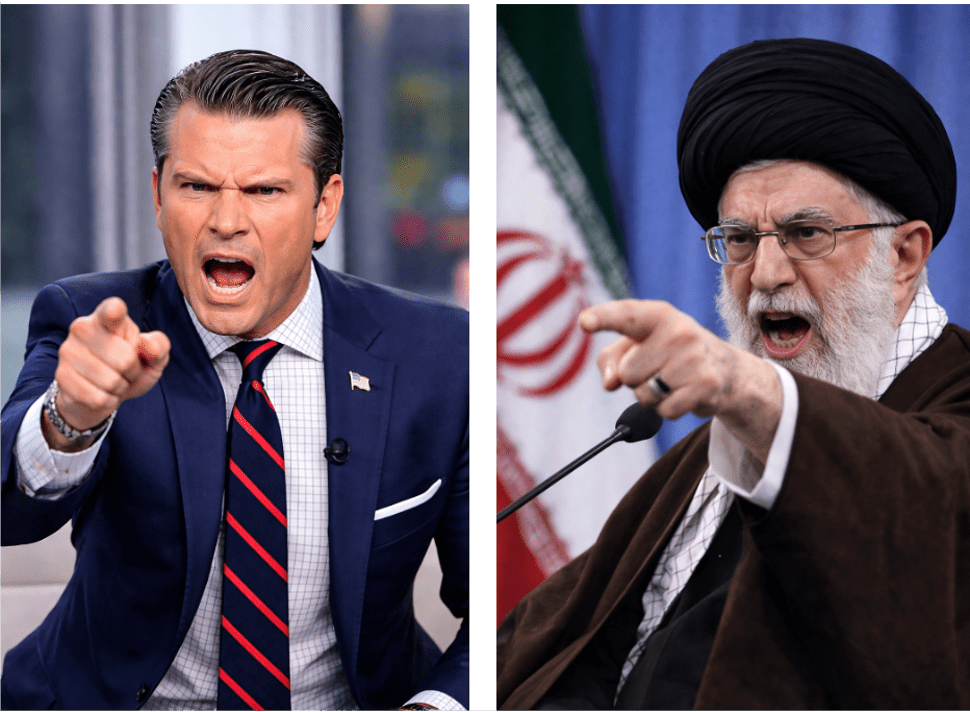
This is what strikes me as the spiritual core of the Iran campaign: the administration conducting it, and the regime it is fighting, are operating from structurally identical theological frameworks—each convinced that God is on their side, each locating redemption in the defeat of the enemy, each using sacred language to sanctify violence.
Speaker Mike Johnson told reporters that the United States must wage war against Iran because Iranians have “a misguided religion” that seeks destruction.7 Hegseth at the Pentagon called Iran a “crazy regime hell-bent on prophetic Islamic delusions.”8 And inside the U.S. military, the Military Religious Freedom Foundation received over 200 complaints from more than 50 installations, with commanders telling troops that the Iran war is “biblically sanctioned” and that President Trump “was anointed by Jesus to light the signal fire in Iran to cause Armageddon and mark his return to Earth.”9
Meanwhile, Iran’s leadership—before the killing of Khamenei—was invoking its own apocalyptic framework, its own sense of divine mission against the Great Satan, its own theology in which the enemies of God must be defeated before the Mahdi returns. The mirror is nearly exact.
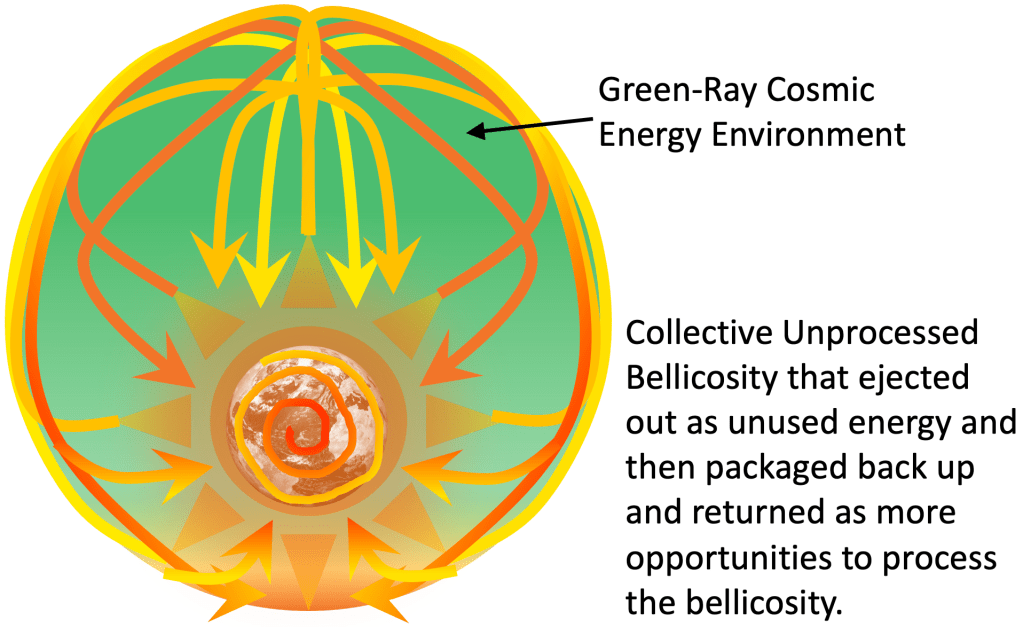
This is what Hope through Hostility looks like at civilizational scale: two systems, each genuinely convinced that violence in God’s name will produce the peace that God desires. This is not a theological argument about which side is right. It is a structural observation about what happens when the orange-ray drive for domination puts on sacred clothing. The sacred clothing does not transform the orange ray. It gives it permission.
The civilian casualty figures from the first days of Operation Epic Fury make that permission visible in its consequences. A girls’ school adjacent to a naval base in Minab was struck in the opening salvo—killing over 160 people, most of them children.10 The Red Crescent reported over 600 civilian deaths in the first days. As of this writing, seven U.S. service members have died, American and Israeli bombs continue to fall on Iranian cities, and the new supreme leader—Mojtaba Khamenei, son of the man killed by U.S. strikes—has pledged to continue his father’s path.11
What the Great BASH promises is security. What it produces is this.
The Spirituality of the Great BASH: Hegseth and the Theology of Crusade
Pete Hegseth is not simply a political figure who happens to have religious views. He is a theological actor whose theology is inseparable from his politics—and whose theology is, from my framework, a nearly textbook expression of the Great BASH wearing sacred garments.
The tattoos tell part of the story. The Jerusalem cross across his chest—a symbol associated with the medieval Crusades—is not incidental body art. It is a confession of faith in a particular reading of history: that Christian warriors fighting Muslims in the Middle East were doing God’s work, that the violence was sanctified, that the holy land requires holy force.12 Hegseth has in the past called for a new “crusade” against Islam. He leads monthly Christian prayer services in the Pentagon auditorium. He invited Doug Wilson—a pastor who believes women should not be permitted to vote and who advocates for a theocratic American government—to lead one of those services.13
This is not peripheral. It is the center. What Hegseth represents is a strand of American Christianity that has made a complete identification between divine will and military power—in which the Cross and the sword are not in tension but in alliance, in which the defeat of enemies is itself an act of worship.
From the perspective of Raian metaphysics, this is precisely what orange-ray transcendence looks like: the attempt to move beyond limitation—to contact something infinite and holy—through the mechanism of dominance. It cannot work, because orange ray reconciles itself not through conquest but through the recognition of the other as fellow consciousness. That recognition is the gateway to yellow and then green ray. Without it, the attempt at transcendence intensifies the blockage. The crusader who believes he is drawing closer to God through righteous violence is, energetically, moving in the opposite direction.
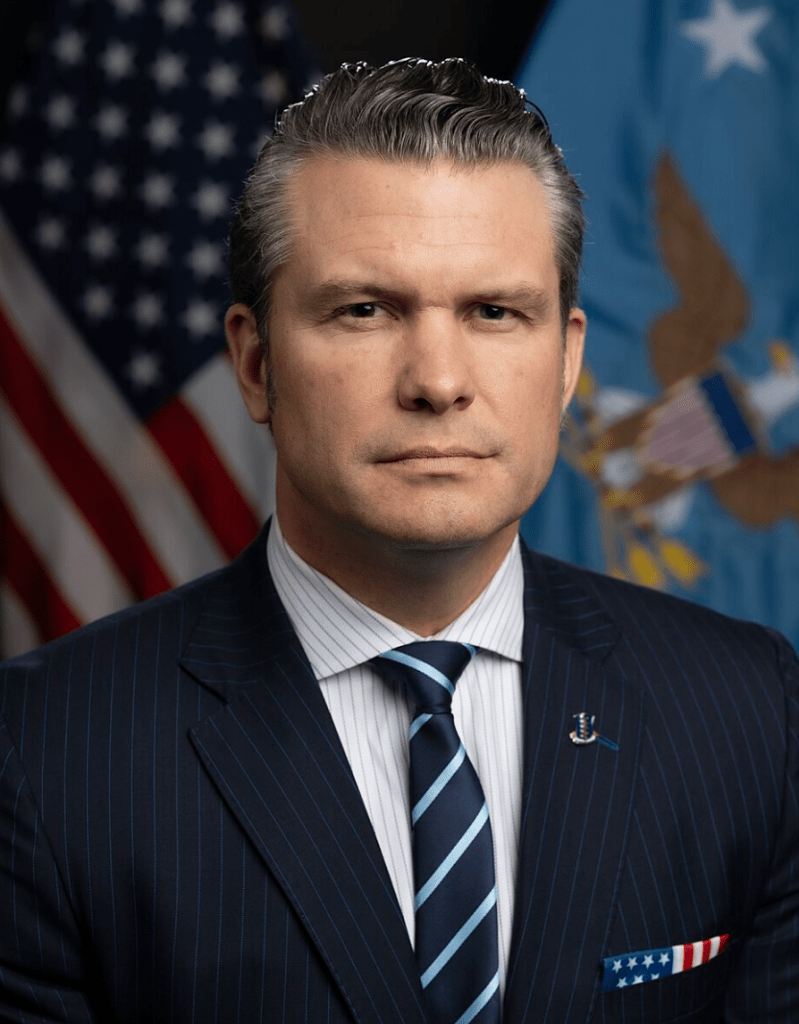
I am not dismissing Hegseth’s sincerity. The Great BASH does not require insincerity. It only requires that the wound remain unexamined and the myth of redemptive violence remain unquestioned.
The Catholic Drift: Barron, Strickland, and the Politics of Belonging
I come to this section as a Catholic—or more precisely, as someone who loves the Catholic tradition, who was formed by Franciscan spirituality, who finds in the mystical stream of the Church a home for the deepest things I know. I am also aware that my own tradition is not exempt from what I am describing. The Great BASH moves through every institution, including the Church. Especially the Church, perhaps—because the Church has the vocabulary of transcendence, and the Great BASH knows how to put on that vocabulary.
Two figures in American Catholicism illustrate different modes of the same underlying dynamic.
Bishop Joseph Strickland: The Aggressive Vector
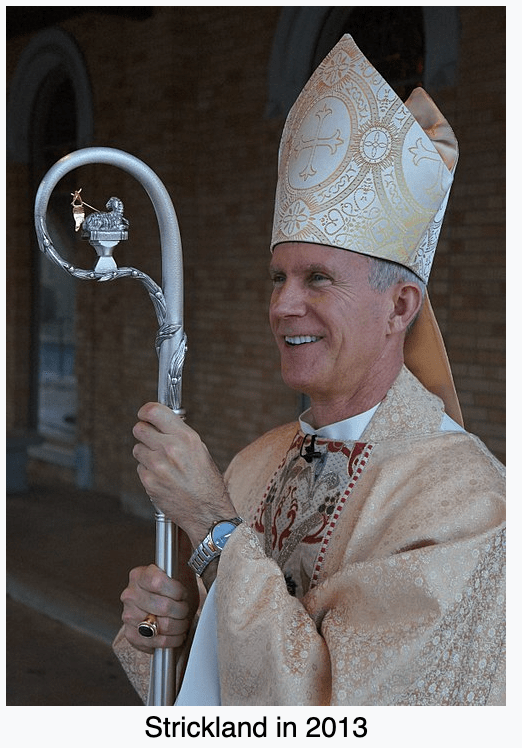
Joseph Strickland, the former Bishop of Tyler, Texas, was removed from office by Pope Francis in November 2023—a rare and drastic step that the Vatican took only after Strickland refused to resign when asked. In the years leading up to his removal, Strickland had publicly declared that Pope Francis was “undermining the deposit of faith,” called synodality “garbage,” spread vaccine misinformation, appeared at Stop the Steal MAGA events, and endorsed a video describing the Pope as a “diabolically disoriented clown.”14
Strickland represents what I would call the aggressive vector of the Great BASH within Catholicism—the open, confrontational assertion of power-over, the certainty that the enemy (in this case the Pope himself, the hierarchy, progressive culture) must be defeated before the Church can be redeemed. This is Hope through Hostility in explicitly ecclesiastical form: the conviction that the Church will be saved by vanquishing its internal enemies.
The energy signature is recognizable. The wound underneath the bellicosity is real—a genuine grief over perceived losses in the tradition, real fears about doctrinal change. But the strategy is pure Great BASH: dominate, resist, refuse to yield even when asked by legitimate authority, and frame the refusal as faithfulness.
Bishop Robert Barron: The Passive-Complicit Vector
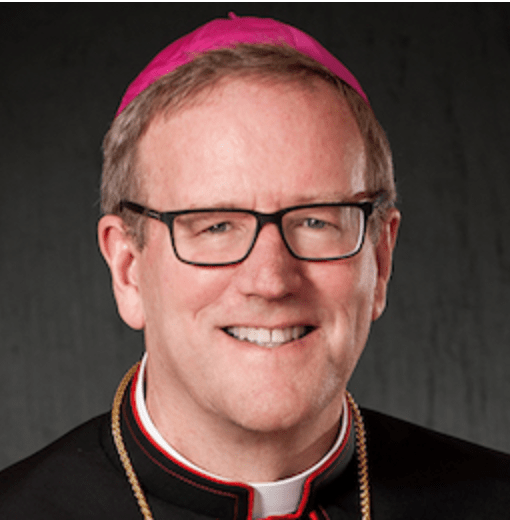
Robert Barron is a more complex case, and in some ways a more instructive one. He is a genuinely learned theologian, a gifted communicator, the founder of Word on Fire—one of the most successful Catholic media apostolates in American history. His early work, particularly his PBS Catholicism series, represented something genuinely valuable: an intellectually serious, aesthetically rich, accessibly presented Catholicism that could meet people where they were. I have benefited from that work.
Over the past year and a half, Barron has undergone what Catholic observers across the spectrum have described as a troubling drift. He attended Trump’s joint address to Congress as the guest of a Republican representative, then released a glowing video comparing the event to “a high liturgy of our democracy”—his only criticism directed at Democrats for not applauding.15 He was appointed to Trump’s Commission on Religious Liberty, delivered the invocation at a White House National Day of Prayer, and praised Marco Rubio’s Munich speech celebrating Western civilization and Christian heritage.16 He has accused Alexandria Ocasio-Cortez of promoting Marxism and Democrats broadly of trying to destroy religion.
What he has not said is equally telling. No substantive public comment on the administration’s mass deportation campaign—this despite the U.S. bishops’ conference issuing statements of deep concern, and despite Pope Leo XIV speaking repeatedly about migrants and the vulnerable. No statement on the gutting of Catholic Relief Services funding. No comment on the killing of a Catholic ICE detainee in his home state of Minnesota. And as of this writing, as bombs fall on Iranian cities and the MRFF is flooded with complaints about commanders telling troops God wants them to bring Armageddon—silence.17
National Catholic Reporter has noted that Vatican officials have reportedly begun an informal review of Barron’s conduct, concerned about his alignment with MAGA activists and his growing proximity to the Trump-Vance White House.18
I am not imputing malice to Barron. That is not the point. The point is structural. The Great BASH does not require that its participants be villains. It requires only that the pull of institutional belonging, social capital, and partisan proximity be stronger than the prophetic call. Barron has built a media empire whose primary audience is conservative Catholic men. He has cultivated relationships with Vance, with the White House, with the corridors of Republican power. These are real relationships with real social and institutional weight. When the prophetic call would require breaking those relationships—when speaking plainly about immigrant families, about children killed in Minab, about commanders invoking Armageddon—the cost is concrete and immediate.
This is the passive-complicit vector of the Great BASH: not the bellicose assertion of power-over, but the strategic cultivation of proximity to power at the cost of prophetic witness. The theological sophistication remains intact. The institutional ambition remains active. What goes quiet is the voice that would challenge the powerful on behalf of the vulnerable—which is, in the Catholic tradition, the oldest definition of what bishops are for.
Together, Strickland and Barron trace the spectrum of how the Great BASH moves through religious institutions: from the aggressive, confrontational mode that names enemies and wages war on them, to the quiet, complicit mode that maintains access by maintaining silence. Both are recognizable expressions of the same underlying pattern—the substitution of power-maintenance for genuine service.
The Mirror Is Ours
I want to be clear about what I am claiming and what I am not claiming.
I am not claiming that one side of the current political divide is the Great BASH and the other side is not. The Great BASH is a civilizational pattern, not a partisan affiliation. It has operated through every empire, every crusade, every inquisition, every revolutionary terror, every colonial project. It is in every human institution, including the ones I love and the one I am. The capacity for bellicosity, for scarred-and-scared reactivity, for locating hope in the defeat of enemies—these are not the exclusive property of any party or nation.
What I am claiming is that in this particular moment, in the most visible and powerful political actors of the current American administration, the Great BASH is being channeled with unusual concentration and unusual intensity. And that this is happening—this is the Raian point—precisely because the incoming fourth-density energies are increasing the pressure on everything that is unresolved. The density transition does not cause the BASH. It makes the BASH visible.
That visibility is, in the deepest sense, a gift—even though it does not feel like one. You cannot work with what you cannot see. The surfacing of the collective orange-ray blockage, the full public expression of the myth of redemptive violence, the mirror held up between Washington and Tehran showing the identical structure underneath the different sacred vocabularies—all of this is catalyst. In the Law of One framework, catalyst is not punishment. It is the mechanism of learning.
The question, as always, is what we do with it. In contemplative terms: can we see ourselves in the mirror? Not just the convenient version—the enemy is them, the shadow is theirs—but the full version? The Great BASH is ours. We built it. We feed it. When we dehumanize the dehumanizers, when we meet bellicosity with its mirror image, when we locate our own hope in the defeat of those who wrong us—we are participating in the same thoughtform. This is not a call for passivity in the face of harm. It is a call for the kind of discernment that knows the difference between challenging power and being absorbed into its logic.
A Catholic Speaks to His Own House
I come back to where I began: as someone who loves the Catholic tradition, who finds in Franciscan mysticism a vision of creation as sacrament, who believes that the Incarnation means God moving into embodied particularity—not away from it, but deeper into it—and who therefore cannot accept a Christianity that locates redemption in the destruction of those it names as enemies.
Francis of Assisi went to the Sultan at Damietta during the Fifth Crusade—walked into the camp of the enemy, not to convert him through force but to encounter him as a human being. He came back changed. The Sultan let him go in peace. That encounter is, for me, the Catholic alternative to what I am watching in the current moment: not the sword baptized as sacred, but the person encountered as sacred—even the enemy, especially the enemy.
What Bishop Barron might do with his platform, what Hegseth might discover if he moved past the crusader mythology toward the Christ who touched lepers—these are not rhetorical questions. They are genuinely open possibilities. The Great BASH is powerful but not inevitable. The whole architecture of the Law of One framework holds that consciousness can shift, that the thoughtform can be interrupted, that forgiveness—understood not as sentimental erasure but as the active release of the logismoi, the refusal to keep feeding the circuit—is a real metaphysical force.
That is what I am trying to practice here: not condemnation but diagnosis. Not the certainty that I see clearly—I don’t—but the willingness to look, and to say what I think I see, in the hope that naming the pattern is the first step toward choosing something different.
This is my limited, partial, open-handed offering. Take what is useful. Leave what is not.
Endnotes
1 Ra Material, Session 63.9; cf. 40.3. The phrase “axis upon which creation turns” is Doug’s synthesis of Ra’s treatment of third density’s unique role in polarity development.
2 Ra Material, Session 32.2: “The yellow ray is a focal and very powerful ray, and concerns the entity in relation to, shall we say, groups, societies, or large numbers of mind/body/spirit complexes.”
3 Ra Material, Session 15.12. The full progression: red ray (survival/foundation), orange ray (personal identity), yellow ray (social/group relations), green ray (universal love).
4 Ra Material, Session 15.12: “Those with blockages in these first three energy centers, or nexi, will have continuing difficulties in ability to further their seeking of the Law of One.” See also Ra 39.10 on red/orange/yellow as the “strong triad” that springboards the entity toward green ray.
5 Ra Material, Session 32.2: “The orange ray is that influence, or vibratory pattern, wherein the mind/body/spirit expresses its power on an individual basis. Thus power over individuals may be seen to be orange ray… You may see in this ray the treating of other-selves as non-entities, slaves, or chattel.”
6 Ra Material, Session 41.14: “not having developed the yellow ray properly so that it balances the personal vibratory rates of the entity, the entity then is faced with the task of further activation and balancing of the self in relation to the self, thus the orange-ray manifestations at this space/time nexus.” See also Raian Process Metaphysics, Chapter 12 (updv1-18-26 ms.).
7 Mike Johnson, remarks to reporters following administration briefing on Iran, Capitol, March 2, 2026; reported by Truthout, “Johnson: US Must Wage War With Iran Because of Its ‘Misguided Religion,'” March 4, 2026.
8 Pete Hegseth, Pentagon press briefing, March 2, 2026; reported by Al Jazeera, “Why are the US and Israel framing the ongoing conflict as a religious war?” March 4, 2026.
9 Military Religious Freedom Foundation, complaints filed from 50+ military installations; reported by Military.com, “Commanders Accused of Framing Iran War as Biblical Mandate, Jesus’ ‘Return,'” March 3, 2026; and “Lawmakers Want DOD, Hegseth Investigated For Biblical ‘Armageddon’ Claims,” March 6, 2026.
10 Encyclopaedia Britannica, “2026 Iran Conflict,” updated March 9, 2026. Israeli officials denied involvement in the school strike; the United States said it would investigate.
11 Breitbart News Livewire, “Operation Epic Fury Day Nine,” March 8, 2026 (citing Reuters and Iranian state media on succession and military deaths); Military Times, “First US Casualties of Operation Epic Fury Return,” March 8, 2026.
12 Rolling Stone, “Iran War Starts to Look Like Christian Crusade Under Pete Hegseth,” March 7, 2026. Robert P. Jones, president of the Public Religion Research Institute, quoted in Al Mayadeen, “Playing Crusader: Pete Hegseth Under Fire Over War on Iran Rhetoric,” March 10, 2026.
13 Common Dreams, “US Commanders Want to Make War With Iran as ‘Bloody’ as Possible to Bring About Biblical End Times,” March 3, 2026; Rolling Stone, ibid. Doug Wilson’s positions on women’s suffrage and theocracy reported by CNN and multiple outlets.
14 PBS NewsHour, “Pope forcibly removes Texas Bishop Joseph Strickland,” November 11, 2023; National Catholic Reporter, “Pope Francis Axes Firebrand Texas Bishop Strickland,” November 11, 2023; Newsweek, “Pope Backed by Thousands of Christians Over Bishop Strickland Removal,” November 14, 2023.
15 National Catholic Reporter, “Bishop Barron Compares Trump’s Address to Congress to the Holy Sacrifice of the Mass,” March 2025 (annotated transcript of Barron’s video reflection).
16 Christopher Hale, “Bishop Barron’s Latest MAGA Crusade Sparks Vatican Alarm,” Letters from Leo, February 2026; National Catholic Reporter editorial, “Bishop Barron Goes to Washington,” March 2025.
17 Christopher Hale, “Bishop Barron Silent Again After ICE Kills Catholic in His Own Backyard,” Letters from Leo, January 28, 2026; National Catholic Reporter, “Word Extinguished: Bishop Barron’s Digital Silence,” 2025. Word on Fire’s published content during the first week of Operation Epic Fury consisted of gospel reflections with no statement on the war.
18 Christopher Hale, “Bishop Barron’s Latest MAGA Crusade Sparks Vatican Alarm,” Letters from Leo, February 2026. The Vatican review was described as informal and has not been publicly confirmed by the Vatican.
 Building 4th Cosmic Christ