The Red Ray and the Elements: Reflection from the Ra Material and Q’uo

The Red Ray and the Elements: Reflection from the Ra Material and Q’uo

The Tears of Things: A Sacrament of Solidarity The Building 4th Podcast

Doug joins the circle from a backyard, phone propped in the grass, raking leaves for an eighty-five-year-old piano teacher who can no longer garden. What follows is a teaching on sorrow — what it's for, how to hold it without gripping — and then a guided practice for letting personal pain become a blessing for others. Drawing on Richard Rohr's The Tears of Things, the Law of One, and the Christian Paschal Mystery, this episode moves from reflection into experience with the Sacrament of Solidarity, a heart-centered practice offered entirely under free will. In this episode The mundane is sacred. Why an ordinary evening of raking leaves is exactly the right ground for this teaching. Spiritual melancholia and clinical depression. Doug, a therapist, draws the line carefully: depressive disorders are real and deserve real treatment. Alongside them sits a spiritual sadness that works less like a malfunction and more like a gift. Gratitude for all that was; yes to all that will be. The Hammarskjöld refrain that anchors the evening, prayed over one member of the circle standing between a home she is leaving and a home she is entering. The Paschal Mystery. Loss and renewal. Learning to die well without gripping — or, as M put it more beautifully than any theology that night, learning to keep your hands open. Joy is not happiness. Happiness may be the opposite of sadness; joy is something else — the felt movement of life, available inside heartbreak wherever there is perspective and a sense of meaning. Everything laments. The phrase lacrimae rerum comes from Virgil; the wisdom of Rohr's book comes from the Hebrew prophets, whose arc runs from rage through sorrow into compassion. Lament as an archetype of release rather than revenge or repair. One body, one Earth. Humanity as the feeling, self-aware membrane of the planet — and what happens when the cells refuse to grieve. Ra's "quiet horror." Why a world where the positively oriented outnumber the negative can still feel so negative — and why it's the good ones who carry that particular ache. The Sacrament of Solidarity. The full guided practice, offered step by step. The practice, in brief A free-will meditation moving undirected energy up through the centers and out as directed blessing: Unite your heart with the others — you are not alone. Find the swirling red-orange sphere of sorrow and anger below the navel. Surrender the need to control the outcome; let it rise to the membrane below the heart. Watch it turn emerald green as it enters the heart, the seat of universal love. Ask, freely: Do you wish to use your pain to bless others? Let it settle behind the throat as a message of love, ready to be delivered. Open the indigo inner eye to those carrying heartache across the world. Release a violet ray from the crown, directed with will and faith: You are not alone. I am here with you. Your pain is understood. I will help you carry this. Breathe. Out: I wish you well-being and peace. In: I wish for myself well-being and peace. Return to the body with gratitude, and with the sense of having transmuted pain into blessing. Sources & references Richard Rohr, The Tears of Things: Prophetic Wisdom for an Age of Outrage (Convergent, 2025). Rohr's most personal book, which he has described as a summation of his teaching. See also his conversation with Oprah, and his Greenbelt Festival interview on how the title came about. On the title and its sources. The phrase lacrimae rerum — "the tears of things" — is Virgil's, from Aeneid I.462, where Aeneas weeps before a mural of the war dead. Rohr has said the phrase stayed with him from his Latin studies. The book's substance, though, comes from the Hebrew prophets — Amos, Hosea, Isaiah, Jeremiah, Ezekiel, Jonah — whose writings move from rage and accusation into lamentation and, finally, compassion. Rohr calls this pattern "sacred criticism": confronting evil and injustice while holding the wholeness of history and the interconnectedness of every living being. Dag Hammarskjöld — "For all that has been, thanks; to all that shall be, yes." The Law of One (Ra Material): Session 17.23 — the Earth only seems negatively oriented; the appearance comes from "the quiet, shall we say, horror which is the common distortion which those good, or positively oriented, entities have towards the occurrences" of the present. Session 46.9 — anger as "the undirected, or random, energy." Ra teaches acceptance as the key to the positive use of catalyst, and control as the key to the negative — the same turn the practice asks for below the heart. The Paschal Mystery — the Christian pattern of death, letting go, and renewal. The Bodhisattva tradition — those who return to help humanity with its suffering by teaching us to lament well. Brené Brown — on "foreboding joy," the reflex to brace for catastrophe in our happiest moments. For reflection this week Hold one another in your hearts. If sadness or disappointment surfaces, don't fret it — it's an opening to transmute into shared blessing. That's the gateway back to joy. This episode touches on grief, despair, and suicidal pain. If you're carrying that kind of weight, please don't carry it alone — reach out to someone you trust or to a professional. The whole point of a sacrament of solidarity is that no one is meant to lament by themselves.

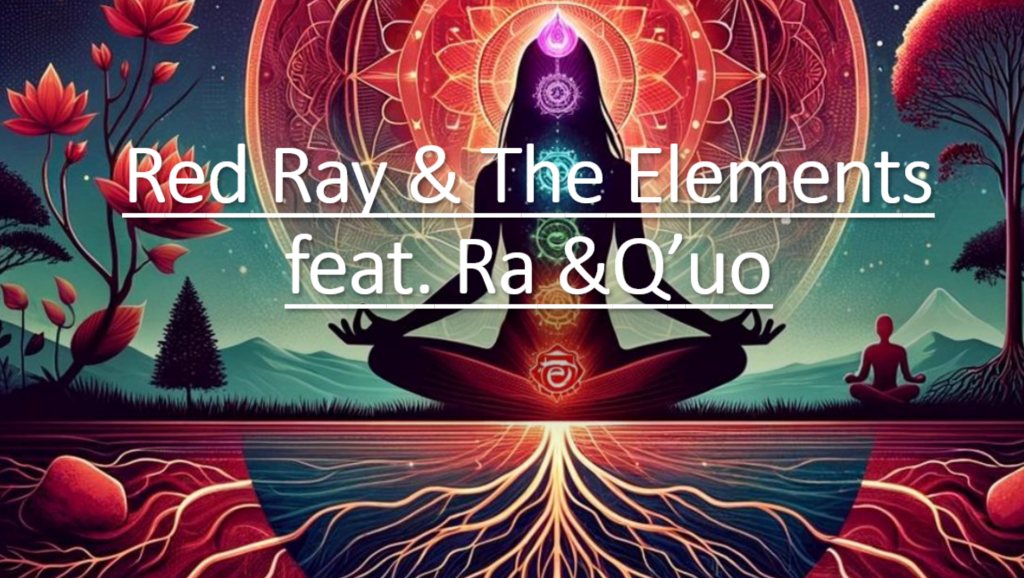
This profound presentation by Neal Marx explores the fundamental metaphysical concept of the “red ray” – the first and most primordial energy center in spiritual cosmology. The discourse weaves together insights from the Law of One material, contemporary spiritual practices, and experiential wisdom to illuminate our understanding of this foundational aspect of consciousness.

The presentation begins with a contemplative opening prayer that establishes a sacred container, incorporating a seven-second breathing practice that connects participants to the infinite Creator. This ritual opening exemplifies the integration of physical practice with metaphysical understanding that characterizes the entire exploration.

Key themes that emerge include:

The Nature of Red Ray Energy:

  • Functions as the foundational energy center representing basic survival, grounding, and life force
  • Manifests as our “chemical body” – the elemental form before conscious structuring
  • Serves as the gateway through which all higher energetic expressions must flow
  • Requires balance and acceptance for spiritual evolution to proceed organically

Practical Applications:

  • Visualization techniques for clearing and energizing the red ray center
  • Integration of breathing practices to strengthen foundational energy
  • Methods for charging water with intention and healing properties
  • Recognition of joy and acceptance as key catalysts for red ray activation

The presentation delves deeply into the relationship between elemental forces (earth, air, fire, water) and consciousness, exploring how these primal energies contribute to our spiritual understanding. Marx draws fascinating parallels between ancient wisdom traditions and contemporary scientific perspectives on consciousness and perception.

Of particular significance is the exploration of how red ray energy interfaces with higher spiritual functions:

  • The role of acceptance and gratitude in energy center activation
  • The relationship between physical incarnation and spiritual evolution
  • The importance of grounding metaphysical understanding in embodied experience

The discourse concludes with profound reflections on how understanding and balancing the red ray center can facilitate deeper spiritual communion while maintaining practical functionality in physical existence. Throughout, Marx maintains a delicate balance between theoretical depth and practical application, offering participants both conceptual understanding and experiential techniques for working with this fundamental energy.

The presentation received enthusiastic response from participants, who noted its comprehensive integration of spiritual theory with practical application, and its accessibility despite the complexity of the subject matter. The session ended with a beautiful closing prayer that reinforced the themes of gratitude, embodiment, and spiritual evolution.

This work represents a significant contribution to understanding how foundational energetic systems interface with higher spiritual development, offering both theoretical framework and practical methodology for spiritual seekers.

Leave a comment